


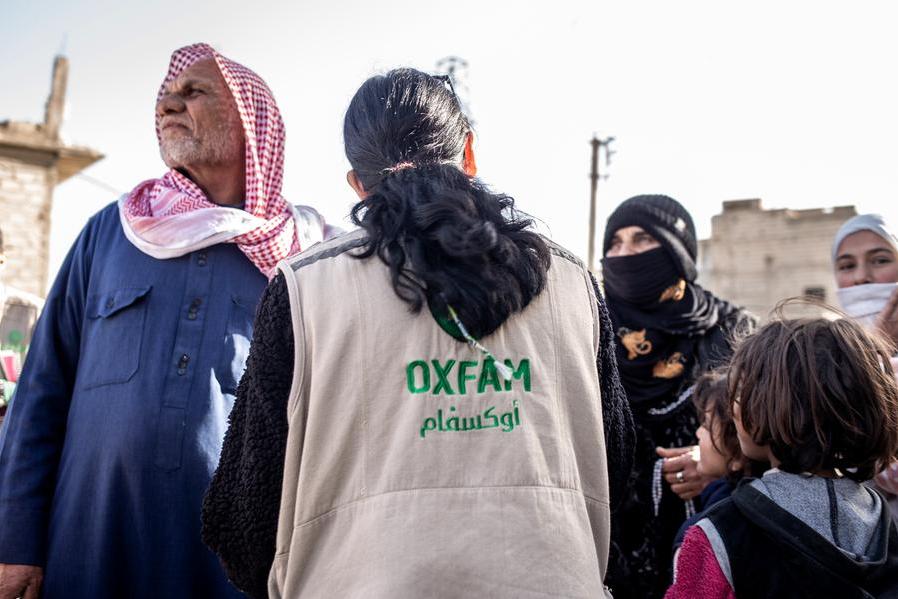
«The land is our destiny, we have always cultivated these fields. But without water it is impossible to make them productive.” Sarah al Ashrafani he is 52 years old and lives in Zabadani, in southwestern Syria, near Damascus and the border with Lebanon. «During the war years», she says in her testimony to the NGO Oxfam, «it was difficult to carry on with four children and without my husband who left in 2015. The wells have dried up, the drought seems to be the cause of this shortage, which has become chronic.” The land, he says, was once like a garden, where many types of vegetables were grown. Today it’s all over. Yet, Sarah does not lose hope: «The inhabitants forced to leave by the war are returning to Zabadani. And, God willing, one day everything here will be a fertile garden again.”
Also for Um Mohammad50 years old, the war years were devastating. His voice comes from Duma, not far from Damascus. “With ten children it was hard to get by, there was no electricity and water, I had to travel long distances to get water.” Today things have changed. Thanks to Oxfam, who took steps to fix the water network in the area, Um Mohammad’s house finally has running water: she no longer has to reach the well on foot, with enormous weights, on a journey that deformed her hips, forcing her to have an operation.
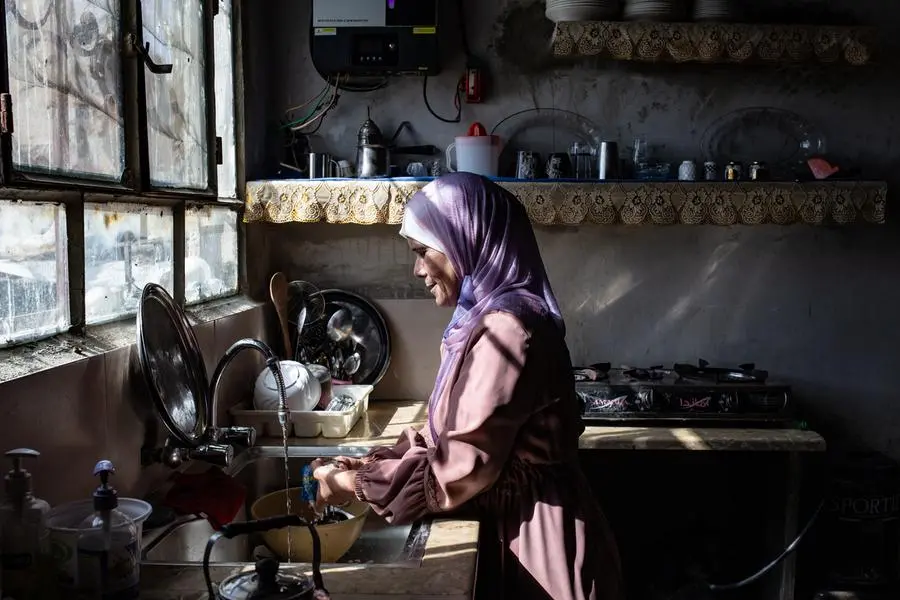
A Syrian woman in the kitchen of her home which today is equipped with running water.
(LORENZO PALLINI/OXFAM)
Syria is trying to heal the wounds of the long civil war: the survival of 70% of the population depends on humanitarian aid, 9 million people are affected by serious food insecurity and nearly 14.5 million Syrians – just under half the population – need assistance accessing clean water and sanitation.
The Iranian crisis, which has inflamed the Middle East, also has an impact on Syria, which plays a strategic role in the region. With the fall of Bashar al-Assad’s regime, Iran and Russia have lost their iron ally. The Syrian government of Ahmad al Sharaa has undertaken a new political course, has moved closer to Washington and has limited Tehran’s influence on Damascus. Iranian attacks also hit Syria. The standoff between Damascus and the pro-Iranian Lebanese Shiites of Hezbollah has reignited tensions along the border between Syria and Lebanon. Due to Israeli attacks on Lebanese territory, many Syrian refugees are returning to their country and find themselves in serious difficulty.
It added to the war the most severe drought in the world in the last 40 years which hit Syria in 2025. Oxfam is intervening with the rehabilitation of water and sewerage infrastructure; by strengthening waste management and promoting safe hygiene practices in schools and the poorest and most vulnerable communities; with access to drinking water and adequate sanitation for the prevention and spread of epidemics, such as cholera. “Access to water is not just about immediate survival but about social justice,” he observes Emilia Romanopresident of Oxfam Italia, «where there is a shortage, disease, poverty and inequalities grow».
World Water Day is on March 22nd. Oxfam has launched the “Donate water, save a life” campaign: in addition to donations through traditional channels, until 31 March you can donate 2 euros with a text message, 5 or 10 euros from a landline to 45593 to support projects in Syria and other countries experiencing a water emergency. For information on the activities of Oxfam Italia Ets and on how to donate you can visit the website.
MARCH 22, WORLD WATER DAY
In the world, one in four people does not have access to clean water, 1.7 billion people cannot count on basic sanitation services. World Water Day was established in 1992 by the United Nations to raise awareness among governments, businesses and citizens across the planet on the global water crisis, scarcity of resources, inequality of access to them, pollution and to promote good practices of responsible water consumption. The theme chosen by the UN for World Day 2026 is “Water and gender equality”: in many areas of our planet the lack of water resources impacts women and girls much more heavily, undermining their rights and well-being.