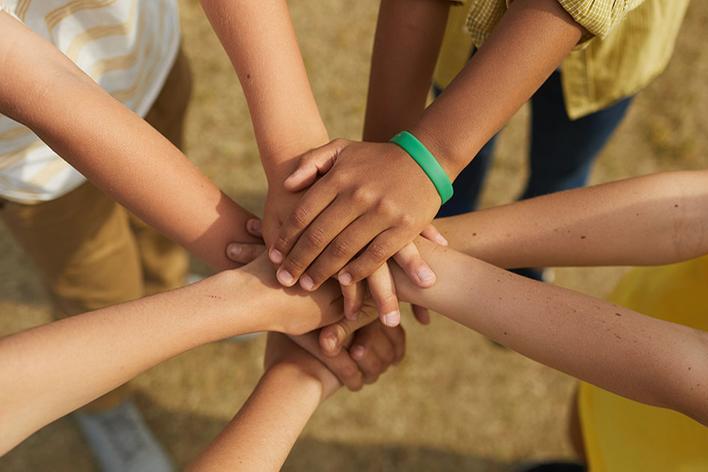






The fifth classes of an elementary school in Marostica, in the province of Vicenzaparticipated in a civic education project that led them to Trieste to distribute meals to migrants from the Balkan route. Before the visit, the children had prepared in class by studying the migratory phenomenon and experimenting, blindfolded and barefoot, with something that would remind them of the journey of those they would meet. An initiative that sparked controversy, including the sending of ministerial inspectors.

«When the school tries to educate respect for others, to make children more empathetic, to make them understand that we are all part of the same humanity, there are those who immediately contest it, forgetting however that the school is called into question every time an attack or anti-social behavior explodes; and that’s when she is asked to intervene” commented Paola Spotornoschool expert.
«The first case concerns the controversies that involved children, teachers, families and an entire primary school in Marostica» he continues. «Marostica, a Venetian municipality of around 14,000 inhabitants, famous for its costumed chess game, perhaps precisely because of this tradition of representation and identification pushed the teachers and the school board of the elementary school to promote a real experience of civic education. The children, guided by their teachers, tried to identify with the many migrants who cross the Balkan route, and then actually went and distributed food to those who arrived. What’s more civic than that?” asks the teacher who concludes.
«Experiencing others in the most human, civil and even religious sense of the term. Everything was carried out following the educational planning and necessary authorizations. Yet there were those who saw fit to consult the Ministry, which sent inspectors to verify what was happening and how “subversive” that evangelical message of loving one’s neighbor as oneself was. In the same way, however, no one was indignant, called inspectors or consulted the ministry to understand why four teenagers from Taranto, at five in the morning, had nothing better to do than hunt down a poor Malian laborer, insult him, beat him and finally kill himin the indifference of the only adult present. Perhaps, in this case, a few more lessons in civic education experienced first-hand would have been useful.”