




There is a moment, entering the Stairsin which you immediately perceive that the evening will have a different pace: a lively, curious energy, capable of keeping research and involvement together.
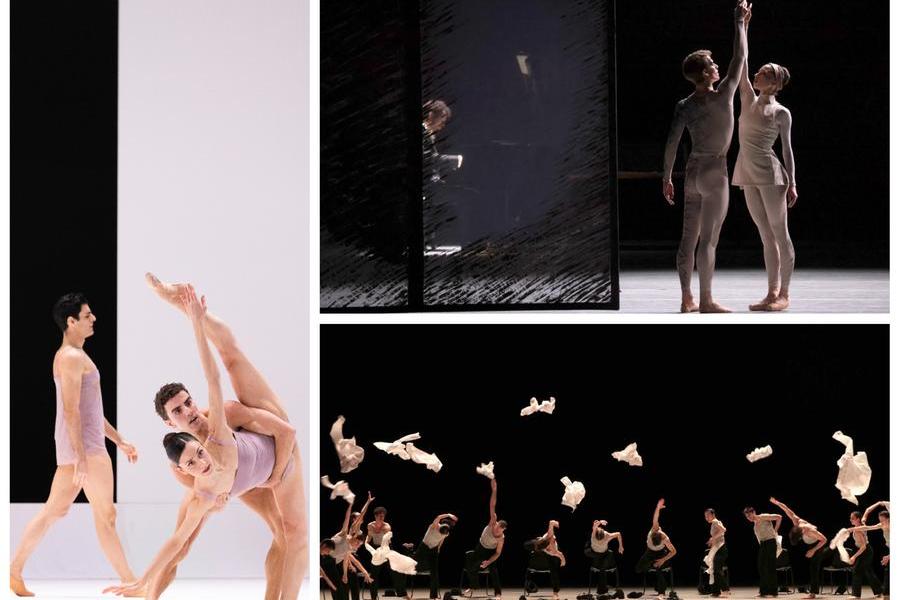
The contemporary triptych brought to the stage by the corps de ballet directed by Frédéric Olivieri in fact, it confirms itself as a successful and convincing event, capable of speaking to different audiences without giving up the complexity of the choreographic language.
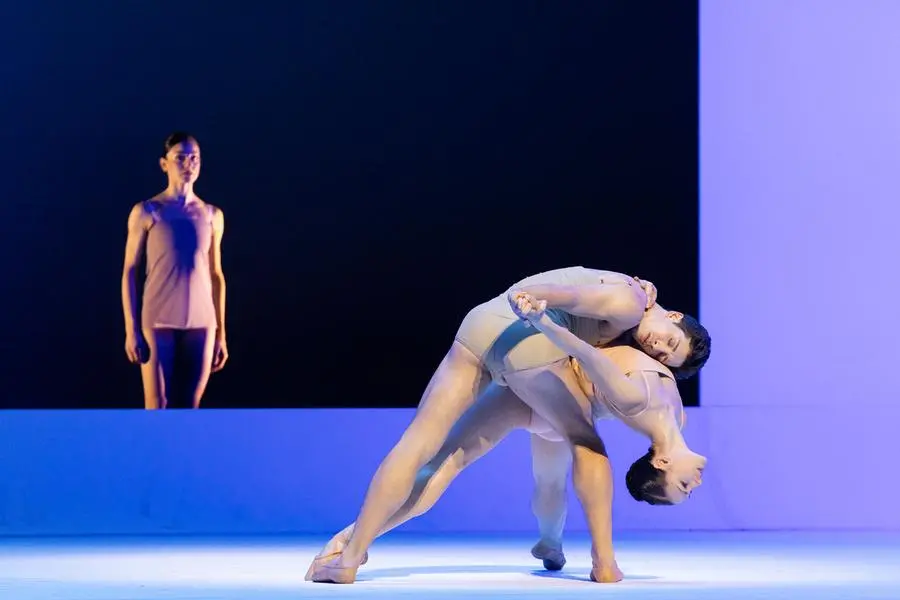
To open it is Chromacreation with which Wayne McGregor won at the Royal Ballet in 2006. The title refers to a sensorial saturation that becomes a choreographic feature: broken lines, extreme twists, dynamics at the limit of physical possibility. The scene, essential and bright, designed by John Pawson, dialogues with the sound score by Joby Talbot and Jack White. A “surgical” writing emerges, which demands absolute precision and bodily intelligence from the dancers, in line with McGregor’s own reflection in the recent book We Are Movement. The result is a continuous, almost abstract tension: more than telling, Chroma impresses with its kinetic force, with that “energy” which becomes its most immediate key.
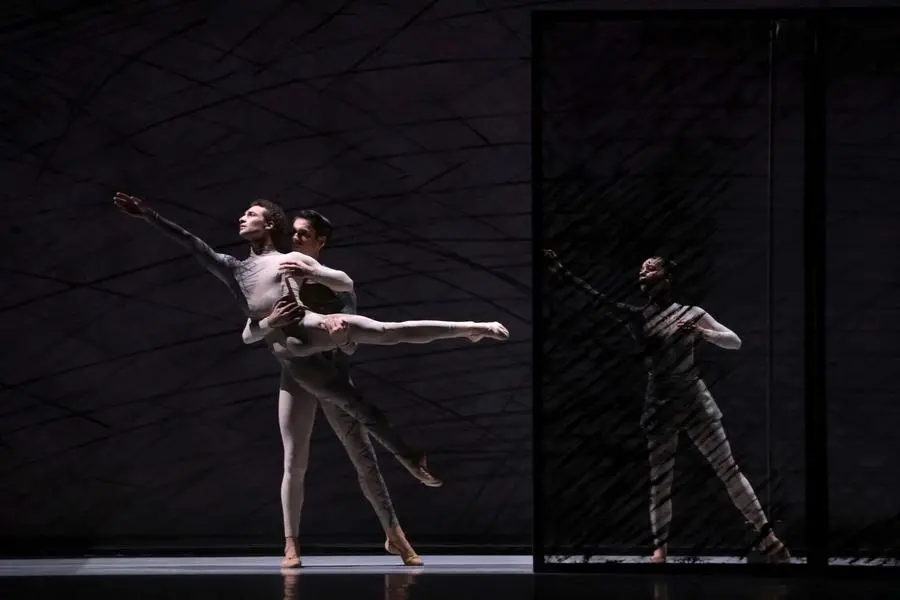
Changing register with Where is the moon Of Jean-Christophe Maillota page of rare delicacy born in the nineties as a sign of personal mourning. On the notes of Alexander Skriabinperformed live on the piano, the choreography is constructed as a meditation on detachment: a fabric of meetings and separations, symmetries and suspensions. Here the language becomes more lyrical, almost a “secular prayer”, entrusted to the sensitivity of the interpreters – including Roberto Bolle – capable of giving shape to that fragile area in which pain transforms into shared memory. Echoes of the great twentieth-century tradition emerge, from Roland Petit to Maurice Béjart, but filtered by a more intimate, almost restrained writing.
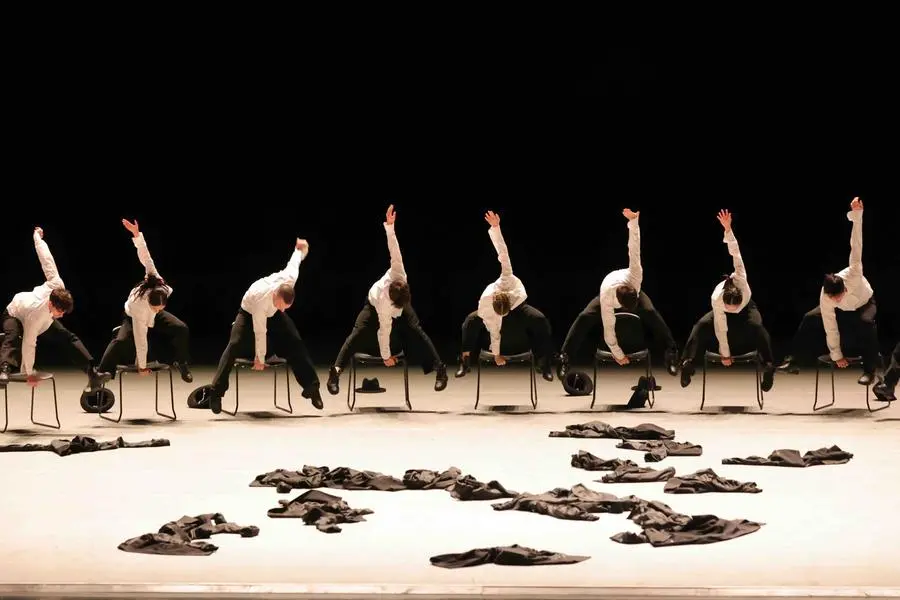
With Minuses 16 Of Ohad Naharin the evening changes skin again. The Israeli choreographer, creator of the Gaga language, breaks every convention right from the start: the show begins during the interval, among distracted spectators and the lights still on. It is an invitation to get involved, to enter a flow of movement that arises from internal impulses rather than from codified forms. The famous sequence on “Echad mi yodea” becomes an enthralling collective moment, while the finale – with the dancers descending into the audience and bringing the audience onto the stage – definitively dissolves the distance between stage and hall. It is not just a theatrical expedient, but a declaration: dance as a shared experience, capable of generating, even just for a few minutes, an unexpected community. With Minuses 16 it has been seen many times, at La Scala it is the first.
Three works, three visions: the almost abstract energy of McGregor, the “post-neoclassical” intimacy of Maillot, the participatory experimentalism of Naharin. Thus rigor and freedom, memory and the present coexist at La Scala.
And the result is a lively, successful evening, capable of leaving the spectator not only with questions, but also with a contagious feeling of vitality.
Repeats until March 28th.