





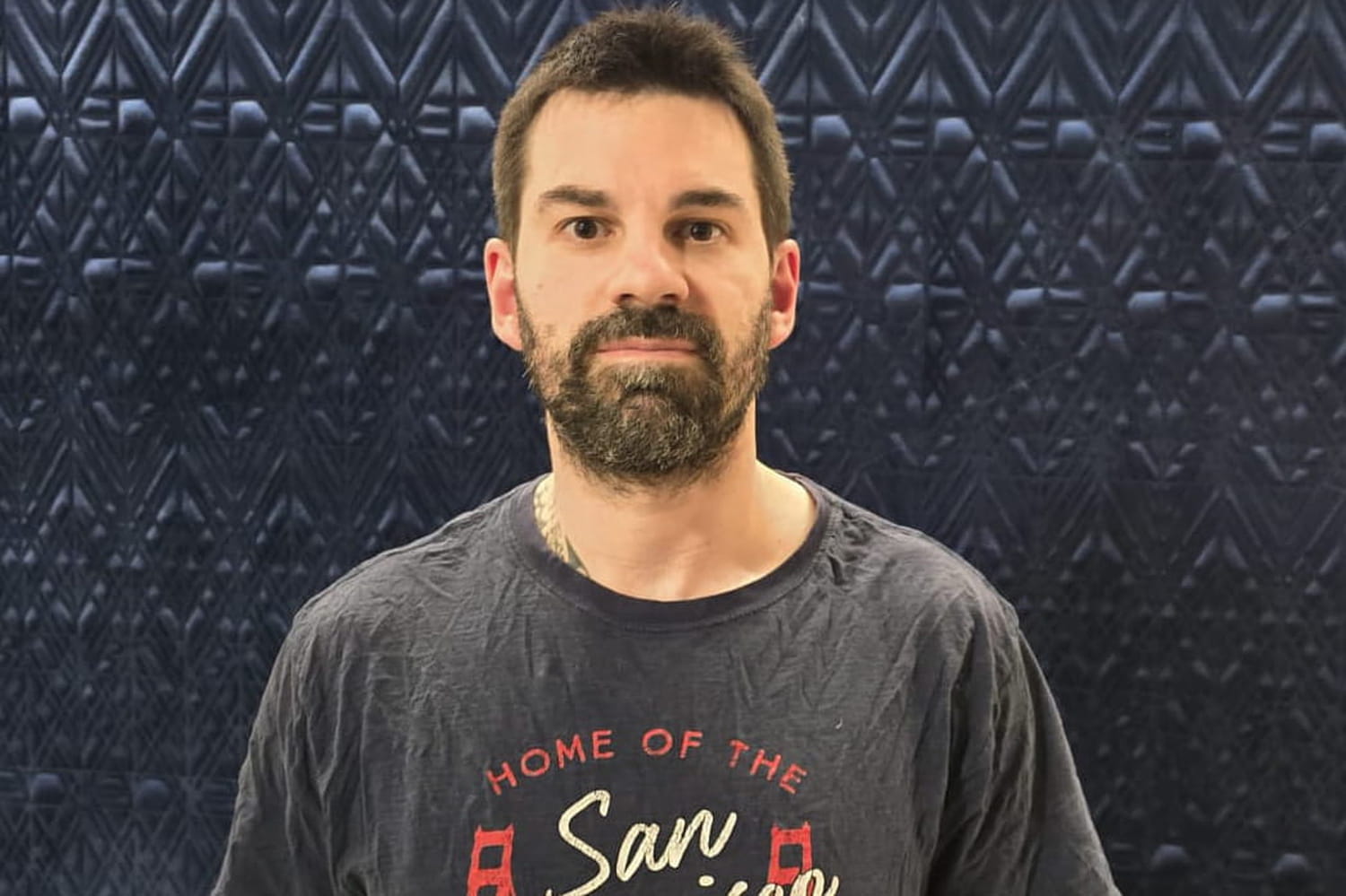
For years, Dr. Michaël Sikorav lived with bipolar disorder without knowing it. Now a psychiatrist, he has chosen to put his experience of illness to the service of his patients. He delivers a rare testimony for the Journal des Femmes.
Bipolarity is a disease which has typical signs identified immediately by psychologists, but more rarely by people who suffer from it. Michaël has suffered from bipolarity since childhood and has now become a psychiatrist. How is this possible? How to manage mood disorders and your profession? He tells his story to the Journal des Femmes.
A happy, social and very turbulent child
Michaël grew up in a loving and stable home, with a certain amount of material comfort. From childhood, he showed symptoms of ADHD (attention deficit disorder with or without hyperactivity). “I had to go outside all the time, otherwise I was difficult. I broke my bones I don’t know how many times. There were times when I was unable to calm down over trivial things.” This aspect of his personality contrasts with the social and happy child he was then. He is convinced, his ADHD is the first symptom of his bipolarity: “20% of bipolar people also have ADHD, I include it in my first symptoms.” Despite therapeutic monitoring, the disease is not considered. “I didn’t regulate my emotions well. I did 8 years of psychotherapy in a disjointed way because when I was well, I considered that I no longer had a problem. No one spoke to me about bipolarity.”
“It was thought that my symptoms were linked to my adolescence”
At 15, Michaël went through his first heavy depression. “I could go days without washing. My need to move had disappeared. I spent hours bedridden. I no longer ate.” The diagnosis of bipolar disorder is still not made, because adolescence offers obvious alibis. “At first, we just said to each other, ‘He’s not happy in class,’ and I experienced a romantic breakup.” Without a diagnosis, his school career is fraught with pitfalls and his teachers do not perceive the seriousness of the situation. “The teachers assumed that I was a little stupid. I learned that there are teachers who don’t care, bad teachers and very good teachers.”
Medical studies between depression and the “high” phase
In the spring, Michaël comes out of depression, but these periods return and sometimes lead to suicidal thoughts. In his book, he explains these alternations: “Bipolar depression sometimes has nothing to do with sadness. You can be sad without being depressed, and be depressed without being sad. Mania is also very different from joy. You can go through a manic phase while being depressed, and hospitalized manic patients often complain of depressive symptoms.” Michaël manages to obtain his baccalaureate and begins medical studies. His journey always oscillates between depression phase and “high” phase.
“I can’t sleep, I can’t stop, I keep thinking”
“My first semester was catastrophic and then I made up for everything in a month, because I was in a high phase. The information came in better, it was a stroke of luck.” He describes this state as follows: “I can’t sleep, I can’t stop, I think in loops, I don’t listen to people. I also have whims, video games or music. I know everything better than everyone else and I’m furious all the time.” After passing his exams, he falls back into a deep depression despite a healthy lifestyle. “However, I was really good: I did sports, I ate healthily, I had a girlfriend, a friend…”
And in 2015, the diagnosis fell. Michaël is 26 years old and is in his final year of psychiatric externship. He’s not doing well. “I was on the verge of taking action. I went to see a psychoanalyst. In 15 minutes, she told me: ‘You have a mood disorder, go see my colleague’.” It’s a first shock. Then the second doctor confirms: “You have bipolar disorder.” The disease had never been considered “even though I have a bipolar father who was followed for years” he teaches us.
Quetiapine stabilizes his condition “in two days”
It takes years to find balance. “I went through psychiatrists and medications that didn’t work. But if a doctor told me something I didn’t agree with, I left.” His condition finally stabilized at age 28, thanks to quetiapine. “I was better in two days. I was a little scared because I felt happy even though I had been in the same situation for 10 years.“Today, he is still receiving treatment based on quetiapine combined with thyroid hormones, “effective against depression”. His wife plays a key role in his follow-up: “She became my psychiatrist: the one who judges the stability of my mood and the effectiveness of treatments. Her assessment has always taken priority over mine.”
“Being high all day from medication is an experience every psychiatrist deserves to experience.”
Michaël made his career a strength by becoming a psychiatrist. “Mental illness fascinates me. I said to myself: ‘If I see young people who are like me at 15, wandering, I will save them time and save their lives’.” For him, psychiatry is a mixture of rigor and improvisation. “I’ve been a victim of people not keeping up with new scientific studies. I’ve read the studies, but I’ve also experienced the problems. Being high all day from medication is an experience every psychiatrist deserves to experience.”
Michaël cares for patients suffering from severe or psychotic mood disorders: bipolar disorders, resistant depression, schizophrenia and related areas. “Patients who only need an antidepressant or who have not yet undergone psychotherapy are redirected to psychologists or their general practitioner, I only take “resistant” patients – for whom treatments are the only solution.” He also receives minor patients when they have already had a failure of care, “when psychotherapy hasn’t worked, and it’s the last chance: me or nothing”.
Today, Michaël is 36 years old. He says to himself “stable and solid” : “All that the disease has left me is an energy that ordinary people don’t have. I have no side effects, I have no stigma.” For him, “health professionals need to be trained”. As for patients, his message is simple: “I would like to tell them that we have never tested everything, there is always something to do. There is hope, even if we don’t realize it when we are doing badly.”
Thanks to Dr. Michaël Sikorav, author of “White Coat, Dark Ideas” (ed.DBS). Comments collected on March 30, 2026.