

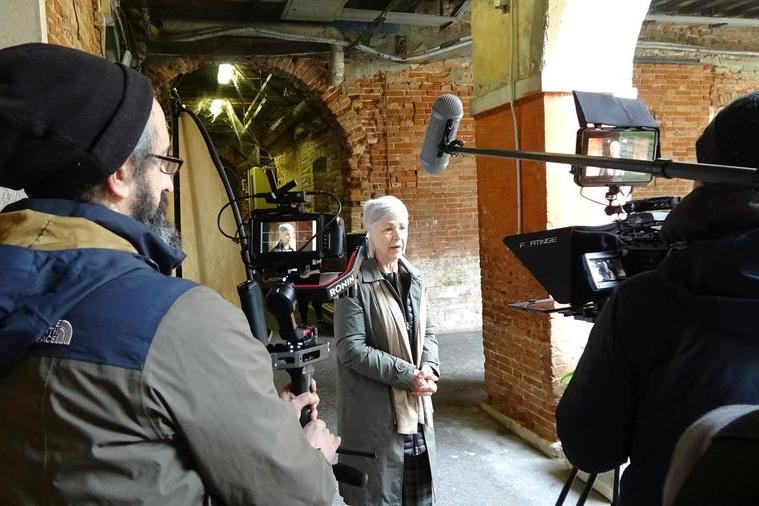


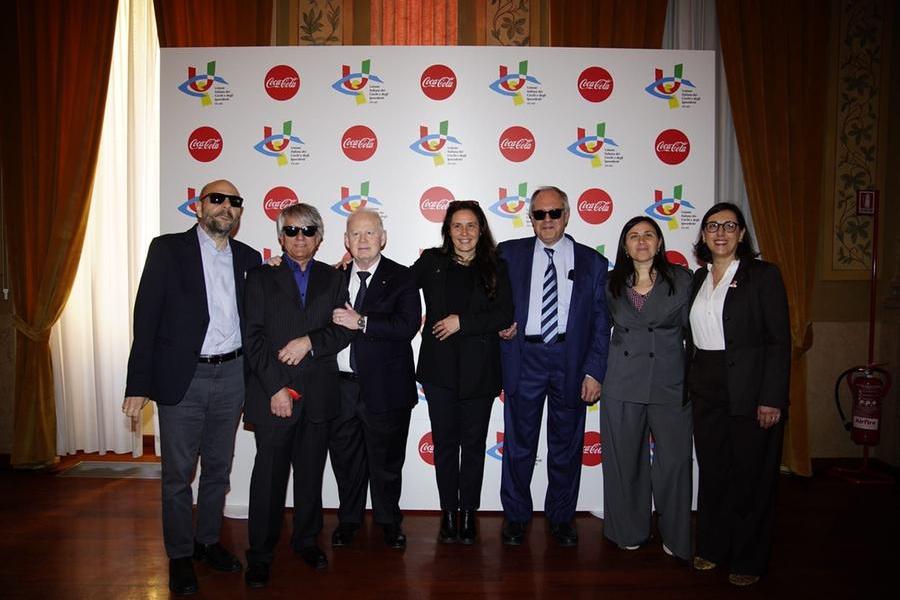
The Winter Paralympic Games of the Winter Paralympic Games Milan Cortina 2026 they not only represent a major sporting event, but also an opportunity to leave a concrete legacy of inclusion and accessibility. This is the message that emerged from the meeting “Paralympic Winter Games: a legacy of inclusion”promoted byItalian Union of the Blind and Visually Impaired (UICI) together with Coca Cola and hosted at the Istituto dei Ciechi Foundation in Milan.
The initiative brought together institutions, associations and the business world on Friday afternoon to reflect on how the Paralympic spirit can be translated into concrete actions that improve the daily lives of people with visual disabilities.
They were the ones who opened the works Mario Barbutonational president of UICI, e Rodolfo Mastopresident of the Institute for the Blind Foundation of Milan. «Inclusion is not an abstract principle: it is a social infrastructure that is built by making life contexts, information and services accessible. When a blind or visually impaired person can choose independently, move without obstacles and access the same opportunities, then we are talking about rights that become reality», underlined Barbuto. Masto highlighted the cultural value of accessibility: «Accessibility is a collective responsibility: it concerns culture, spaces, information and participation. Every initiative that makes living, orienting and choosing easier expands the rights and strengthens the quality of our community.”
Italians and the Paralympic spirit
The results of the research were also presented during the meeting “Italians and the Paralympic spirit”created by SWG for Coca-Cola. The survey shows a growing attention among Italians towards the Paralympic Games as an opportunity for social change: for 87% of those interviewed the event strengthens attention to the accessibility of spaces and services, while 86% consider it a driving force for spreading positive models of participation in social challenges.
A concrete example of this “legacy” concerns the introduction of technology NaviLens on the packaging of 33 cl cans of Coca-Cola Original Taste and Coca-Cola Zero Sugars. Thanks to a code that can also be scanned remotely via smartphone, blind or visually impaired people will be able to access product information more easily, listening to it with a voice assistant or viewing it in larger characters. “Talking about legacy means translating the values of the Paralympic Winter Games, which we believe in and have been promoting for some time, into solutions that remain,” he explained Cristina Camillidirector of Institutional Relations, Communication and Sustainability of Coca-Cola Italia. «Accessibility also comes from everyday gestures, such as making the information on our packaging more immediate. The objective is a more autonomous experience for blind and visually impaired consumers, evaluating their feedback and contributing to the dissemination of best practices in the consumer goods sector.”
Accessibility, sport and culture
The initiative is part of a long-term collaboration between Coca-Cola and UICI, which in 2020 had already led to the creation of limited edition cans with messages in Braille.
During the meeting Linda Timbernational vice-president of UICI, presented some activities that will be strengthened in 2026 with the company’s contribution, including projects to introduce people to sport and the Spoken Book, an audiobook service dedicated to people with visual disabilities. «Accessibility is not just about spaces», Legname observed, «it is also about opportunities. Accompanying blind and partially sighted people and their families in their first approach to sport means opening more doors for them, building trust and autonomy. And making culture accessible, even through audiobooks, means defending an essential right: to fully participate in social life.”
The discussion also dedicated space to the work of the Milanese section of the UICI, represented by president Alberto Piovani, involved in projects to improve the accessibility of spaces and cultural experiences, also through tools such as audio guides for visitors.
The meeting was closed by the Minister for Disabilities Alessandra Locatelli, who recalled the shared responsibility, public and private, in transforming the attention generated by the Games into lasting change: «The Paralympic Winter Games represent an extraordinary opportunity for our country: accessibility and inclusion must become design and communication criteria, not an addition», stated the minister, «when we do something, we must do it for everyone: this is how sport leaves a legacy that remains in people’s daily lives».