



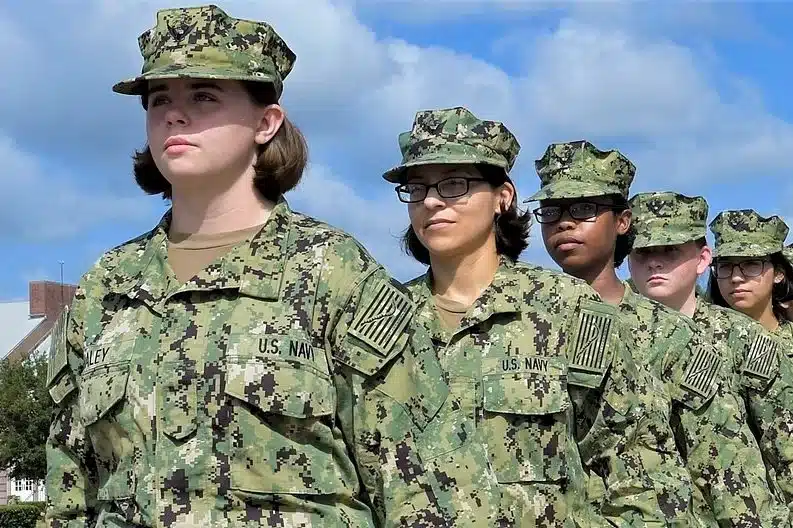


Military service is one of the nation’s most rewarding yet consequential careers, offering purpose and honor while exposing those who serve to profound and lasting health risks. For women, these perils are often amplified by biological differences as well as occupational exposures and other factors—thereby creating distinct medical challenges that require tailored attention. Mounting medical research has revealed that males and females differ significantly in brain structure, including how their illnesses and symptoms manifest and how their treatments work. Women, in particular, can be more susceptible to specific life-altering ailments as protective hormones such as estrogen decline with age. And this reality even takes on greater significance considering the steadily surging number of these individuals in the armed forces.
Women have increasingly shaped every facet of the US military, with their immense contributions in critical operational, technical, and leadership roles across all branches. Today, more than two million female veterans live in the country. By 2040, they are expected to comprise nearly 20% of the total veteran population—making them the fastest-growing group of former service members. But notwithstanding their expanding presence, women retirees continue to face systemic gaps in the healthcare system that often compel them to confront the drastic repercussions of their profession head-on without sufficient support. Strikingly, a study shows that these personnel are more likely to receive assistance in civilian settings than through the Department of Veterans Affairs (VA)—raising serious concerns about why they cannot rely on the very institution meant to champion and respond to their needs.
To address these long-standing issues, the agency took decisive steps and established programs focused on diversity, equity, and inclusion (DEI). These efforts practically strengthened outreach and expanded gender-informed clinical training, as well as other endeavors that align with their medical and mental health conditions. The recent conclusion of these efforts, however, represents a shift in approach that prompts ongoing discussion about how the VA will maintain equitable and specialized care for female veterans.
Military Hazards and Mental Health: A Dual Burden for Women Veterans
Women in the military face a unique convergence of physical and psychological risks that greatly influence their health outcomes for decades. Service in the Armed Forces inherently involves exposure to a myriad of hazardous substances that are silently lurking in numerous facilities nationwide, including Agent Orange, asbestos, mustard gas, Lewisites, burn pits, per- and polyfluoroalkyl substances (PFAS), lead, and radiation. For instance, asbestos —a naturally occurring mineral in at least 34 states— was extensively used in a range of military equipment and infrastructure, like Fort Lewis in Washington, due to its low cost and fireproof properties. Consequently, female service members stationed at these installations may also have encountered asbestos dust through their day-to-day duties. However, inhaling asbestos fibers has been associated with several severe and often fatal diseases that carry particular consequences for women. Notably, malignant mesothelioma—a tumor that typically develops in the protective tissue of vital organs—has directly impacted these groups, who now account for roughly one-fifth of all cases. Furthermore, in the past two decades, annual related deaths among them have also increased by approximately 25%. Besides this, asbestos exposure has also been identified as a cause of ovarian cancer, further underscoring the gender-specific health risks tied to military contamination.
On the one hand, PFAS—a broad class of nearly 15,000 human-made substances—have been extensively employed in the production of firefighting foams and protective equipment for their excellent heat and water resistance. But although these compounds offered practical benefits, their chemical stability also allows them to persist and accumulate in the environment and the human body for very long periods. To date, over 720 military sites dispersed in different states reported alarming discharges of PFAS, putting the stationed personnel and nearby communities at grave risk, among them female service members. Yet while these dangerous compounds impact both men and women, hormonal factors make the latter more vulnerable. PFAS have increased female veterans’ susceptibility to distinct conditions, such as endometriosis, polycystic ovary syndrome, premature ovarian failure, breast cancer, reproductive system tumors, pregnancy complications, and adverse pregnancy outcomes.
Beyond physical exposures, women veterans also face increased risks for mental health conditions that often intersect with these toxic effects. Female military personnel are about twice as likely to endure post-traumatic stress disorder (PTSD) compared to their male counterparts—a considerable portion of which are tied to military-related assault and sexual trauma, which affects about one in three women screened by the VA. In addition, depression, anxiety, and several other psychiatric disorders are more prevalent among female veterans, thereby contributing to a troubling statistic: military women are approximately 65% more likely to succumb to suicide than those in the general population.
Sustaining Specialized Care for Women Veterans
Women veterans have long faced a combination of medical risks and healthcare gaps that made specialized, gender-informed services even more critical. That is why, in 2021, the VA implemented DEI initiatives to enhance training, broaden their scope, and advance research to better address the distinct health needs of females in the military. However, recent policy changes compelled winding down relevant efforts. And although the intent was to reallocate resources to core services, the change still raises pressing questions about how women veterans—especially those in rural or underserved areas—will continue to benefit from vital services.
Without dedicated programs, many of these individuals may not know the various services available to them, including breast and gynecological care, hormone therapy, maternity and fertility support, preventive cancer screenings such as Pap smears and mammograms, and mental health or substance abuse services. Limited awareness may also contribute to misdiagnosis, leaving conditions undetected until they become more serious. These gaps are not theoretical—they translate into the care women actually receive and how effectively their necessities are met. In fact, a study found that roughly half of female personnel receiving primary care reported needing mental health services. But while the majority—about 84%—have indeed accessed some form of care, only around 50% of the more than 6,000 individuals surveyed felt that the support they received adequately addressed their needs. These shortfalls point to ongoing barriers—including stigma, limited clinic accessibility, and hurdles concerning women, such as the lack of gender-sensitive treatment options as well as comfortable sessions with healthcare providers.
To address these challenges, female veterans should report any concerning symptoms to their healthcare providers and share their full service history, including potential exposures. Ask about gender-informed, women-specific care—from cancer screenings and reproductive services to mental health support—and emphasize the value of sustaining specialized programs that improve long-term outcomes. By providing this information and advocating for continued, tailored care, they can help ensure timely diagnoses, effective treatment, and the ongoing availability of services designed for their unique needs.
About the Author: Cristina Johnson serves as a veteran advocate at the Asbestos Ships Organization, a nonprofit that raises awareness of veterans’ exposure to toxic substances.