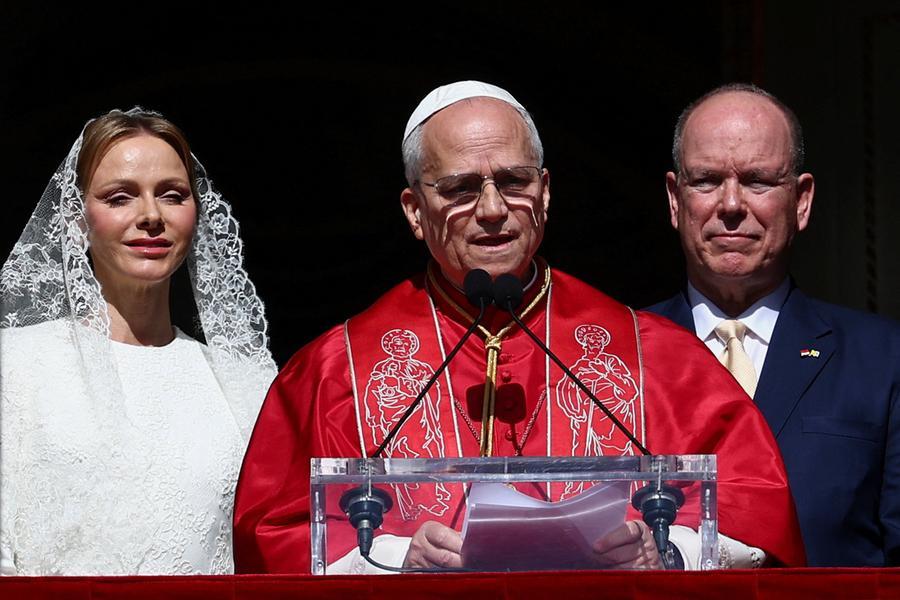





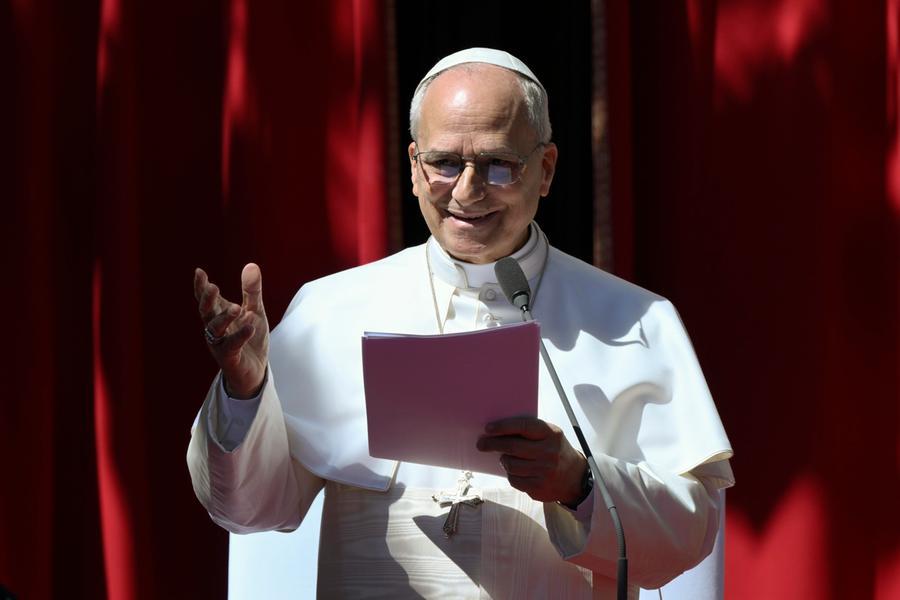
There were those who, on the eve, wondered about the opportunity of a pastoral visit by Leo And yet it is precisely in this apparent dissonance that the deepest and most courageous coherence of the gesture was revealed.
The homily delivered in the Cathedral of the Immaculate Conception of the Principality of Monaco dispelled any hesitation. The Pope deliberately chose one of the places most marked by opulence to pronounce a word on money that was both evangelical and prophetic. Not a speech against the rich, but a reminder of the truth of wealth. Not an ideological condemnation, but a moral discernment.
What is already emerging as the “Monte Carlo speech” follows the social teaching of the Church and reiterates, with contemporary accents, its essential core: money is never an absolute evil. It is, rather, a penultimate reality, which finds its meaning only if ordered to the integral development of the human person. It is here that the echo of the great tradition of Catholic social doctrine resonates: wealth is not an end, but a means; it is not power, but responsibility, starting with the duty to pay taxes (on which the Gospel and doctrine are very clear, the single step “give to Caesar what is Caesar’s” would be enough).
In the heart of a context marked by inequalities, Leo XIV forcefully recalled the evangelical logic of the Beatitudes. God does not look at social distinctions, he does not measure man with the yardstick of possession. Indeed, in the revelation of Christ a predilection for the poor is manifested, which is not the exclusion of the rich, but an invitation to conversion of heart.
The reference to the Rerum Novarum of Pope Leo XIII – a constant reference in the pontificate of Leo XIV, starting from the name chosen – appears here to be anything but ornamental. In that encyclical of May 15, 1891, the first great synthesis of the social doctrine of the Church, money is removed both from demonization and from absolution.
The perspective is clear: private property is a natural right, rooted in the dignity of the person and their work. Man has the right to possess, to improve his condition, to reap the fruits of his labor. But this is precisely where the moral dimension comes in: possession is never free from duty.
Money, in fact, is not neutral. It is marked by the use made of it. When it becomes the ultimate goal, when it is transformed into an exclusive criterion of value (and there is no shortage of examples in the world), then the order of things is altered. Leo XIII stated it soberly, but clearly: the unlimited accumulation and exploitation of human labor are wounds inflicted on justice.
The crucial point is that wealth brings social responsibility. Goods, although legitimately owned, retain a universal destination. It is not a question of denying ownership, but of orienting it. It is not socialism, which envisaged the dictatorship of one of these classes, the proletariat, nor simple liberalism: it is a vision that holds together freedom and justice, initiative and solidarity.
In this light we can also understand the firmness of the condemnation of exploitation also reiterated in the Monte Carlo homily. Wages cannot be left to the logic of the market alone. It must allow for a dignified life. If money becomes an instrument of compression of rights, it contradicts its own legitimacy.
Leo XIV, in Monte Carlo, re-proposed this truth with pastoral language but with precise moral content: the economy cannot be separated from ethics, because man cannot be separated from his dignity.
Ultimately, the tradition of the Church has never denied the value of money, but has always relativized it. He accepts it as necessary, but subjects it to one condition: it must serve the common good. However, when it becomes power that crushes, sterile accumulation, a single measure of value, hypocrisy, then it becomes corrupted.
There is a happy image evoked by Cardinal Jaime Sin, archbishop of the Philippines, who passed away in 2005, who with pastoral wisdom knew how to translate a complex truth into simple words: «Money is the devil’s dung. But it’s an excellent fertilizer.”