Next Thursday, July 16th, it arrives in Italian cinemas “Odyssey“, the thirteenth film of Christopher Nolan. It is a choice that returns to shine the spotlight on one of the most solid foundations of Western literature, quethe poem that Homer composed thousands of years ago and which still today, in 2026, continues to speak to us with a singularly contemporary voice. It is not for nothing that Nolan, one of the most esteemed directors in the world, was able to spend more than 250 million dollars to bring the film to the screen. legendary adventure of Ulysses towards Ithaca. It is a bet that reveals something profound: the Odyssey is not simply a story, as Nolan himself said in an interview, but the Historythe narrative DNA of all the civilization that comes from here, from the Mediterranean and its heroes.
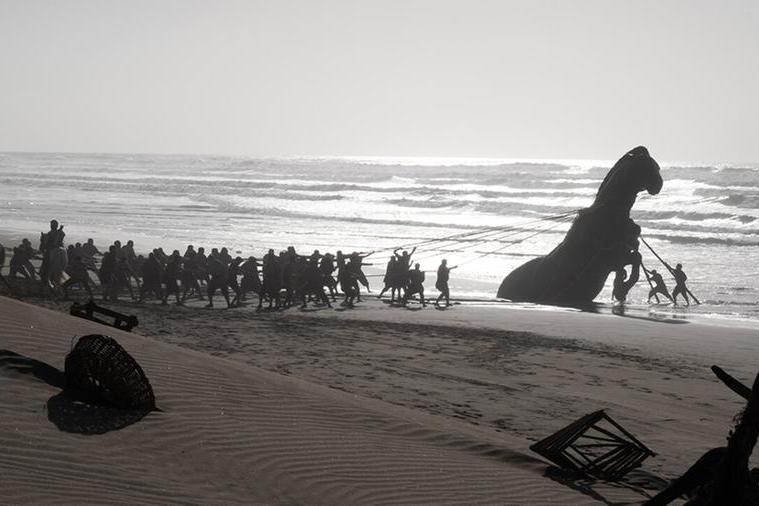
When we open the Odyssey, we enter a world where reality and myth intertwine so naturally that the distinction becomes meaningless. The poem tells of Ulysses’ long return home after the Trojan War, won by the Achaeans thanks to the horse stratagem he devised. A journey that lasts ten years and which forces him to face trials of almost unbearable severity: the Cyclops Polyphemus, the sorceress Circe, the sirens, Scylla and Charybdis, the gods who oppose and sometimes help. But it is not the catalog of adventures that makes the poem immortal. It is rather the way in which Homer constructs the figure of his hero. Odysseus is not the invincible warrior who dominates everything he encounters. He is a man, and herein lies the true innovation of the poem, who wins thanks to a combination of cunning, courage, patience and humanity. He is afraid, he wavers, he cries. And precisely in this mixture of weaknesses and strengths, of virtue and cunning, of intelligence capable of finding a way through the impenetrable walls of fate, Homer traced the profile of what Western man still recognizes today as a model of himself.

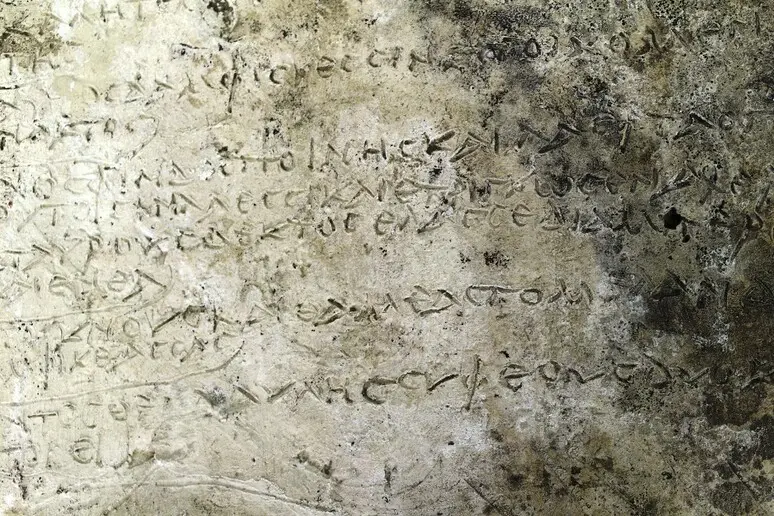
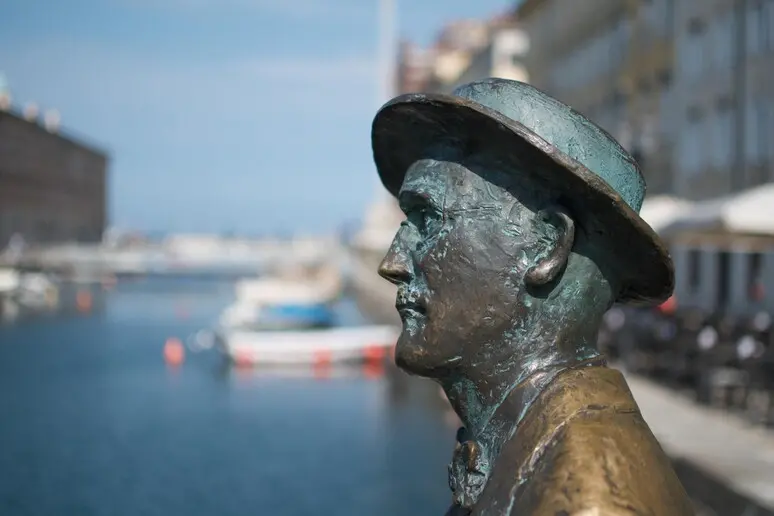
For twenty-seven centuries this figure has continued to live. Not only in the pages of Homeric texts, but in every form of expression that humanity has found to tell its story: in the poetry of Dantewho placed Ulysses in his Hell; in the verses of Leopards and of Tennyson; in the masterpiece of James Joycewho titled his most famous novel “Ulysses”; in the paintings that portray the hero tied to the ship’s mast to escape the call of the sirens. And now, with Nolan’s film, Ulysses continues this pilgrimage through time, finding himself once again in front of usonce again capable of questioning ourselves on what it means to be human, what courage, loyalty, the desire to return home mean. This is the profound value of the Odyssey: it is not a story closed in the past, but an eternally refracted prism through which each generation reads itself.
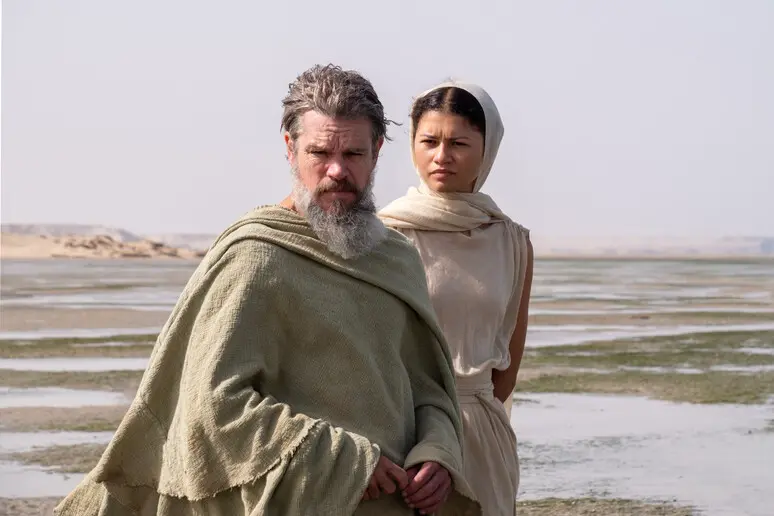
Coming to the film specifically, here’s what you need to know. Nolan has chosen an exceptional cast: Matt Damon as Odysseus, Tom Holland as Telemachus, his son, Anne Hathaway as Penelope, the wife who awaits him. Alongside them, Robert Pattinson as Antinous, one of Penelope’s suitors, Zendaya like Athena, protective goddess, Charlize Theron like Calypso, and many more. As for the narrative structure, the director has clearly indicated that it will not follow a linear chronology, exactly as the Homeric poem itself does: the story will be fragmented, intertwining different temporal planes, reconstructing the events in a mosaic. This approach reflects both the very nature of the Odyssey and the narrative style of Nolan, who has always loved to disseminate pieces of reality in his stories that the viewer must gradually assemble. The film was shot entirely on film 70mm IMAXan analog format that allows images of extraordinary quality; unfortunately in Italy only five cinemas have the necessary technology to screen it in this version.

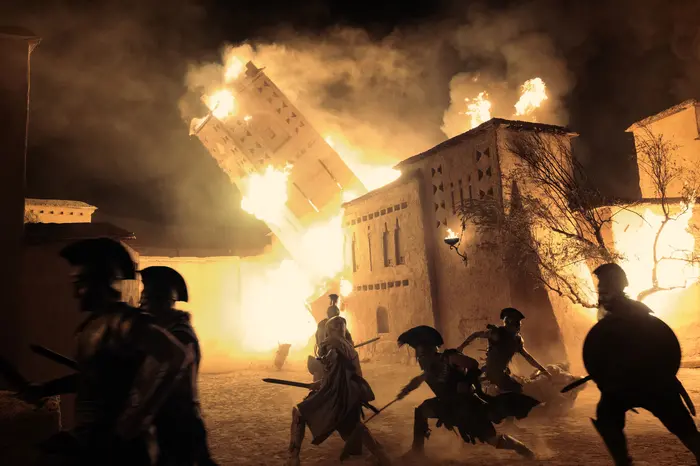
One issue that has sparked debate concerns language: in the original film, all the characters speak American English. It is an unusual and surprising choice, because British English is almost always used in Hollywood films set in antiquity. Some expressions in the trailers, such as the colloquial term “daddy“or the exclamation”Let’s go!” – have aroused perplexity among enthusiasts due to their tone being too modern compared to the atmosphere of a masterpiece of ancient literature. Equally interesting is the question of the name of the protagonist: in the original version Nolan chose the Greek name “Odysseus” rather than “Ulysses”, thus opting for a more philologically conscious approach. It was a crucial choice, because “Ulysses” instinctively refers in the minds of English-speaking readers not so much to the Homeric poem but to the Dante variant and to modern literary reworkings, starting with Joyce. Nolan’s “Odysseus” is instead an explicit signal: this is a contemporary adaptation of the original text, not one of its infinite variations.
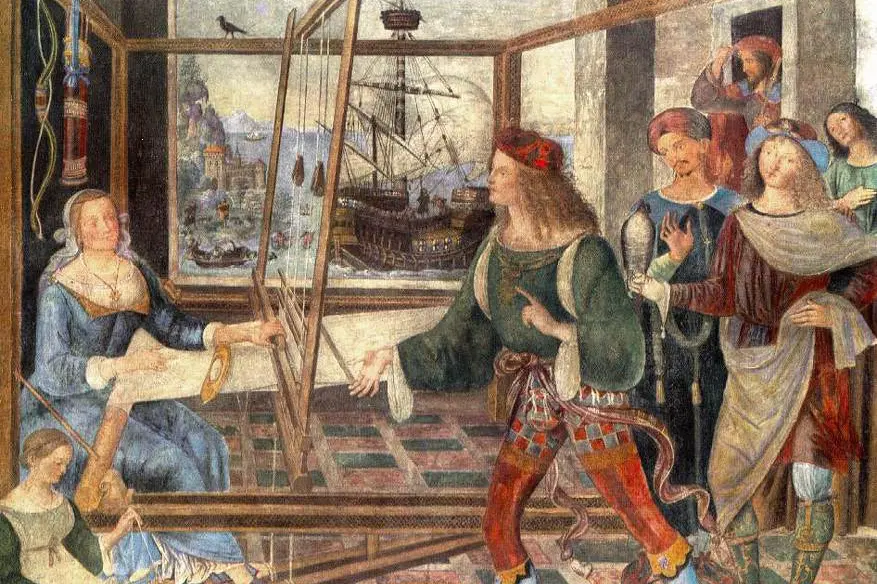
But beyond the production details, what makes this film’s arrival significant – at the highest cultural level – is the fact that it represents yet another chapter in a story that never stops telling itself. The Odyssey taught all subsequent literature what it means to narrate, what it means to build a character, what it means to make the reader resonate with that gratitude that Aristotle called catharsis (κάθαρσις). Homer, and the cultural humus that he translated, interpreted and handed down, “invented” the psychological novel two thousand years before the novel existed as a genre. He showed how a hero is made of contradictions, of instincts and reason, of greatness and doubt. When Penelope, waiting for her husband, spends her nights unraveling and during the day what she has woven, carrying out an endless work, we recognize in this the symbol of all human loyalty, of every sacrifice, of every hope renewed every day against the certainty of desperation. When Telemachus sets out to find his father without knowing if he will find him alive, we see the theme of each generation trying to reconnect with the past.

The fact that a contemporary director, one of the most important of our time, dedicates two years of his life and the astronomical sum of 250 million dollars to the adaptation of a poem dating back over two thousand years is a statement: the Odyssey still matters. Not as an archaeological monument, not as an academic text relegated to school textbooks, but as a living source, as a mirror in which we can still recognize ourselves. Why the Odyssey isn’t really about ancient Greeks: talk about us. It speaks of the human desire to return home, of the effort of a search that lasts longer than we expect, of the value of cunning in the confrontation with power, of loyalty towards those we love. Talk about that particular virtue that the Greeks called it sophrosyne (σωφροσύνη), the wisdom in living with moderation, the balance between desire and reason. And in an era like ours, fragmented and sometimes lost, these teachings do not sound at all antiquated.
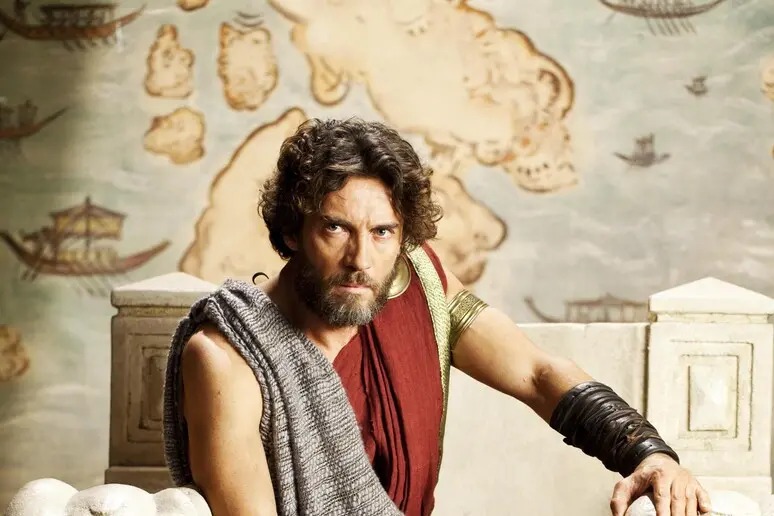
When Odysseus finally arrives in Ithaca, in the poem, his homeland is not what he expected. The suitors occupied the house and threatened his wife. Everything has changed. The return, therefore, is not the end, but the beginning of a new trial. And this truth, that returning home does not restore the past but forces us to confront the present, is a lesson that every generation must learn anew. Nolan’s film will have the task of bringing this truth back to light, of showing the beauty and difficulty of that ancient tale on a gigantic screen. And if it does this with intelligence and sensitivity, it will do more than entertain: it will do what the Odyssey has always done. It will speak to that part of us that recognizes the universal in the particular, that sees in the destiny of an ancient hero the reflection of its own search, of its own way home.