





text and photos by Carlos Solito
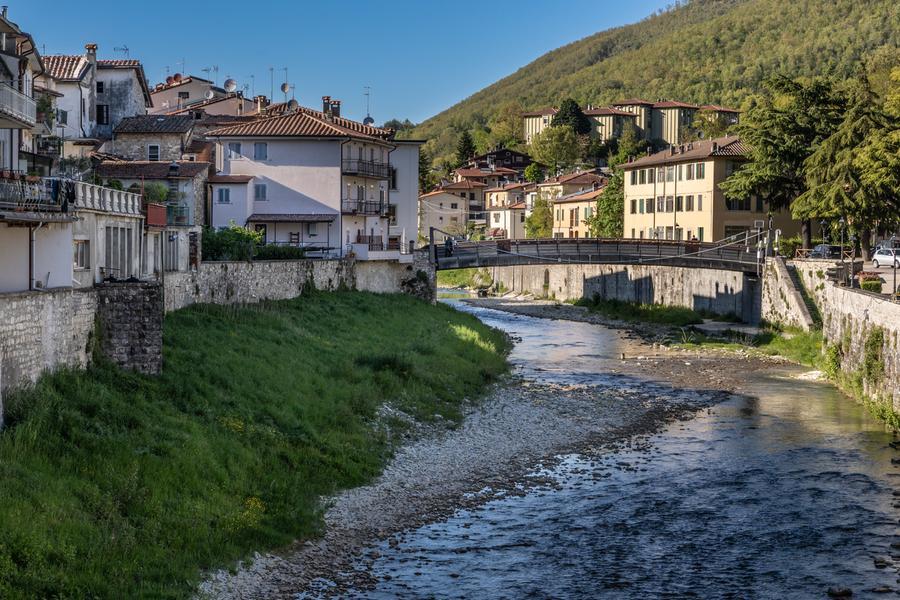
If the first stage of our journey was marked by the verticality of the Tuscan rock, the entry into Umbria (www.umbriatourism.it) is announced with a change of breath. THEThe landscape becomes horizontal, the slopes soften and the eye finally rests on the Tiber Valley. Crossing this threshold means entering the “land of the saint”, where every hill seems designed to host a hermitage and every village preserves a fragment of the passage of the Poverello. It is here that the Via di Francesco (www.viadifrancesco.it) reveals its profound nature: not only a physical challenge, but the grammar of the encounter.
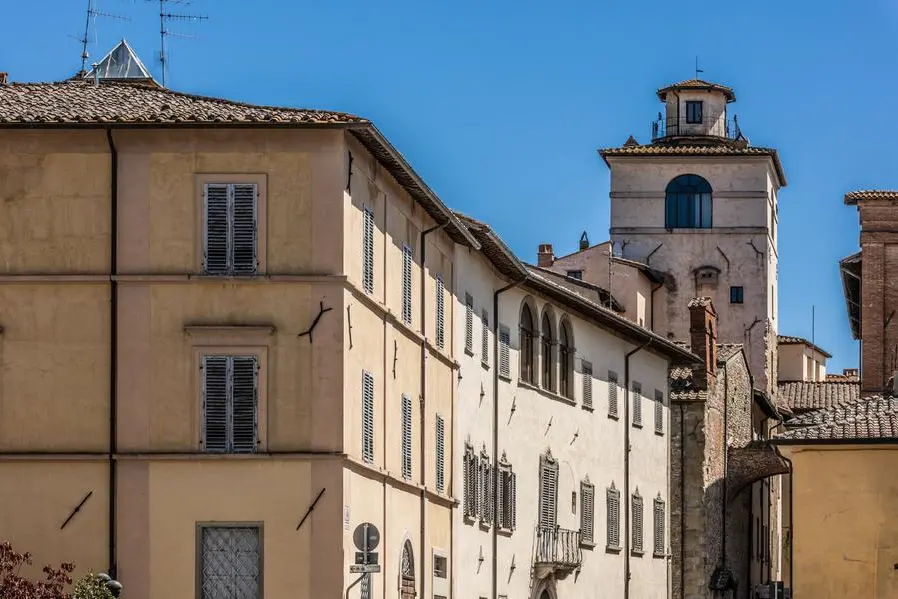
My entry into Umbria was sanctioned by the beauty of Citerna (www.citernaturismo.it), medieval sentinel overlooking the valley. Between the walls of the castle and the Monastery of the Santissimo Crocifisso, the village welcomes the traveler with a breathtaking viewpoint, where a metal sculpture of a pilgrim seems to scan the horizon. At the Vita Frenetica bar, I meet Adriana Tifernati and Enrico Chialli, former workers who at the age of fifty have chosen to reinvent themselves as bartenders. Adriana tells me about Flora Volpini, visionary mayor and renowned writer, a feminist ante litteram who brought modernity to the village in the post-war period.

But Citerna holds a terracotta secret. In the church of San Francesco, Gilberto Presenti accompanies me in front of Donatello’s Madonna. It is a work saved by chance, the 79-year-old guide is keen to point out with passionate enthusiasm: «Until the early 2000s it was on an empty pedestal, no one imagined it was so precious. It was a young scholar, Laura Ciferri, who understood its value, leading to the restoration of the Opificio delle pietra dure. They removed three layers of repainting to arrive at the original from 1415. A layer of lead paint from 1839 had paradoxically preserved it. In essence, he saved her.”
This route, about 20 kilometers in total (6 and a half hours of walking), goes up and down to the hamlet of Lerchi, in the singular Orchard of the Arboreal Archeology Foundation (www.archeologiaarborea.it). Here Isabella Dalla Ragione saves ancient local varieties of fruit (“plants of civilization”) that have nourished generations. «Francis and his followers sought wonder in nature as it presents itself», Isabella tells me as we walk among the apples and citrus fruits that perfume the church of San Lorenzo. And he continues: «Saving a plant, for me, means grafting gems of memory into the heart of Italy».
Just outside, the climb leads to the Eremo del Buon Riposo (tel. 333.540.77.82), nestled among the caves where Francesco sought refreshment. In the cloister I meet Antonio, a Ligurian pilgrim who arrived from Rapallo. He is a physiotherapist and yoga teacher who has chosen to measure his doubts on the path. For him, walking is a form of asceticism: «I felt the need to unravel my skein step by step», he confides to me. «The journey brings to light what is dormant; you fall into a state of presence that allows for a profound connection with the world.”

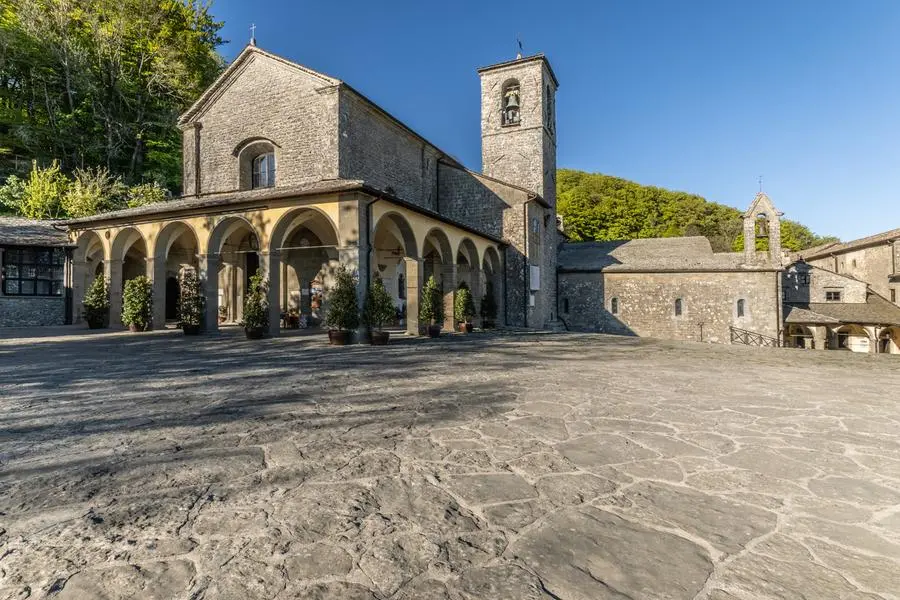
Sanctuary of La Verna.
In the garden I meet the lively gaze of Manuela De Crescenzo, soul of the “La Via di Francesco in Umbria” Association (www.viadifrancesco.it). Manuela does not live here, but lives along these paths, coordinating the volunteers so that the traveler never feels alone: «Our aim is to ensure that the pilgrim feels welcomed into a structured network, beyond regional borders». I go down towards Città di Castello (www.cittadicastelloturismo.it), where the Tiber moves still young waters. The profile of the historic center is an embroidery of history: Piazza Matteotti opens like an elegant living room, while Piazza Gabriotti – or Piazza di Sotto, dominated by the majestic Torre Civica, cathedral and Palazzo del Vescovo – observes unchanged the ferment of a center that smells of the Renaissance and the Middle Ages.
In Pietralunga – which is called so not because of the stones, but because of its “Long Meadows” (Pratalunga) – the walk (31 km, 9 hours) becomes international. At Bar Asia, among the vapors of Nicolas’ coffee, I encounter the Central European efficiency of Andrea Knaller and Hans Großhammer. VThey come from Styria, Austria, and march an average of 30 kilometers a day on the Florence-Rome route of the Way of Francis. Next to them, the contrast is powerful: Enzo Petrocchi, 73 years old, from Frosinone. Alpine guide of the CAI with a thousand kilometers of Francigena in his legs, I find him with a bag of ice on his knee. “We need to put the pain to rest in order to start again,” he says with the calm of a veteran. For Enzo, the stop at the Pietralunga hostel (www.visitpietralunga.it) is not a surrender, but the «maintenance of the dream». The welcome here has the face of Don Francesco Cosa, a Romanian parish priest who lived under the Ceausescu regime. He manages the “Bethany”, a donation-based welcome: «Here the pilgrim is Jesus who knocks at the door. It’s a huge commitment, but every evening I see the light in their eyes.”
After Pietralunga, the Candeleto Oasis. Twenty-six kilometers and over seven hours of walking, I enter the solemnity of Gubbio. I stop first at the Convent of San Francesco, built where the Spadalonga family welcomed the Poverello after he was stripped, and then at the little church of Vittorina, the exact place where the “deal” with the wolf took place. In both places, bronze statues portray the embrace between man and beast, making the miracle of meekness tangible.
I leave the slope of Monte Ingino. From Donatello’s Madonna to Isabella’s ancient apple, every encounter is a spark of infinity on its way to Assisi.