
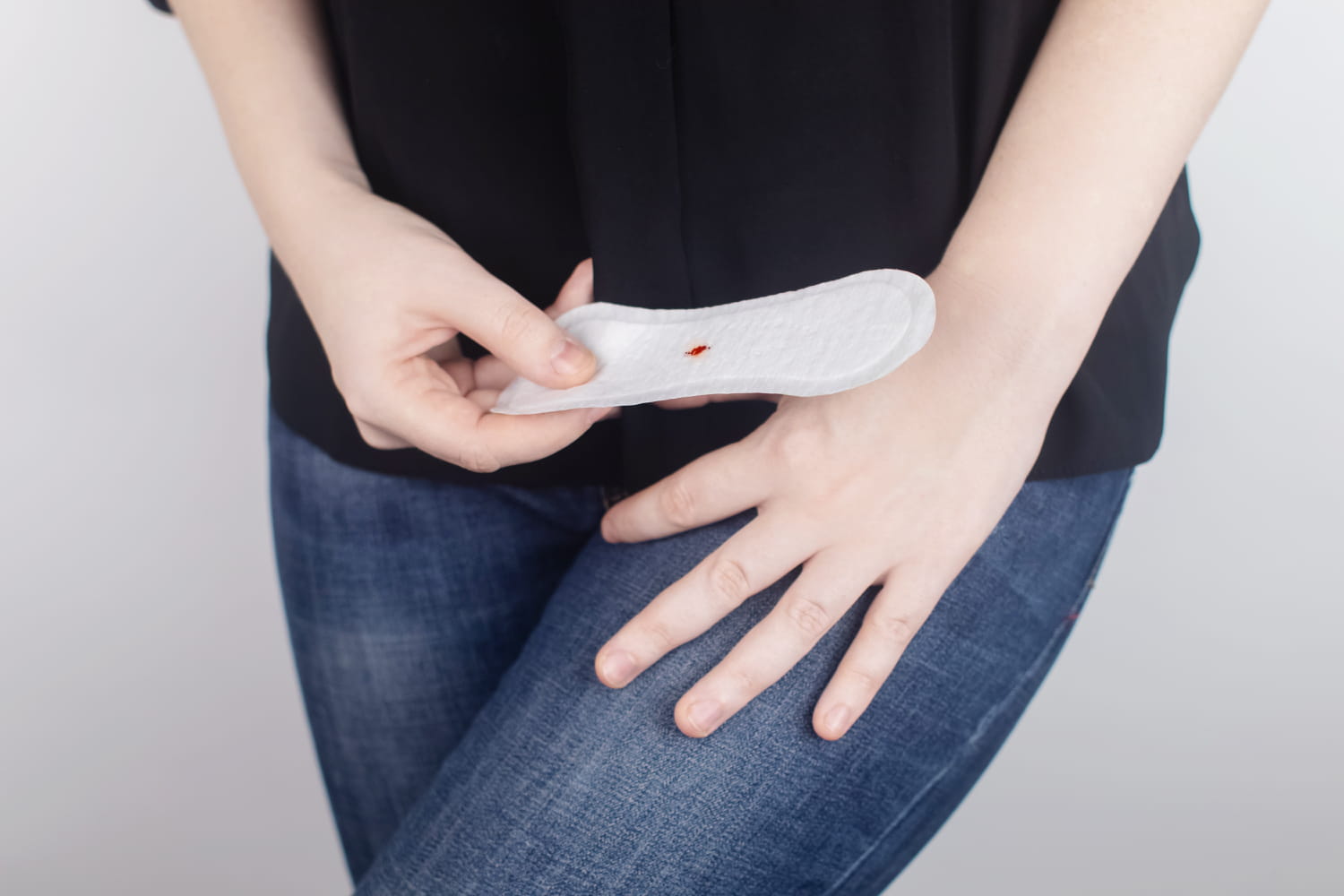





A study suggests that a simple sample during menstruation could, in the long term, facilitate the detection of the HPV virus, involved in certain cancers in women.
No more smear? Screening for human papillomavirus (HPV), the main cause of cervical cancer, could evolve towards a simpler and less restrictive method. According to a large study published in early 2026 in the BMJ, the analysis of menstrual blood would make it possible to detect the virus with a reliability close to that of the classic cervical sample.
Today, screening is based on an HPV test or a smear taken from the cervix by a health professional, often a gynecologist or midwife. Although effective, this examination can still be a source of embarrassment, discomfort or apprehension. For some women, these obstacles, associated with difficulties accessing care or a lack of time, lead to delaying or even avoiding screening. It is in this context that Chinese researchers explored an alternative: using period blood as a screening tool. Between 2021 and 2025, 3,068 women aged 20 to 54, living in urban and rural areas of Hubei province, were included in this population-based study. All had regular menstrual cycles.
Each participant provided three types of samples: self-collected menstrual blood using a small sterile device attached to a sanitary napkin, a cervical swab taken by a clinician for HPV testing, and a sample for cytology analysis. In the event of a positive result, additional examinations (colposcopy and biopsy) were carried out to confirm the presence of precancerous lesions of the cervix, called CIN2 or higher. The results show that the HPV test carried out using menstrual blood achieves a sensitivity of 94.7% for detecting these high-risk lesions, compared to 92.1% for the traditional cervical sample. The specificity is slightly lower, but the negative predictive value is identical in both methods (99.9%). In practice, this means that a negative test is equally reassuring, regardless of the technique used.
For researchers, this approach could constitute an important lever for improving participation in screening, particularly among women who opt out of a gynecological examination. The sample could be taken at home, during menstruation, without immediate medical consultation. The study also mentions the possibility of digital monitoring, with transmission of results and recommendations via a mobile application.
The authors emphasize, however, that these results must be confirmed. As the study is observational, additional work will be necessary before considering the integration of this method into existing screening programs. At this stage, HPV screening using menstrual blood does not replace recommended examinations, but opens a promising avenue towards more accessible and patient-centered monitoring.