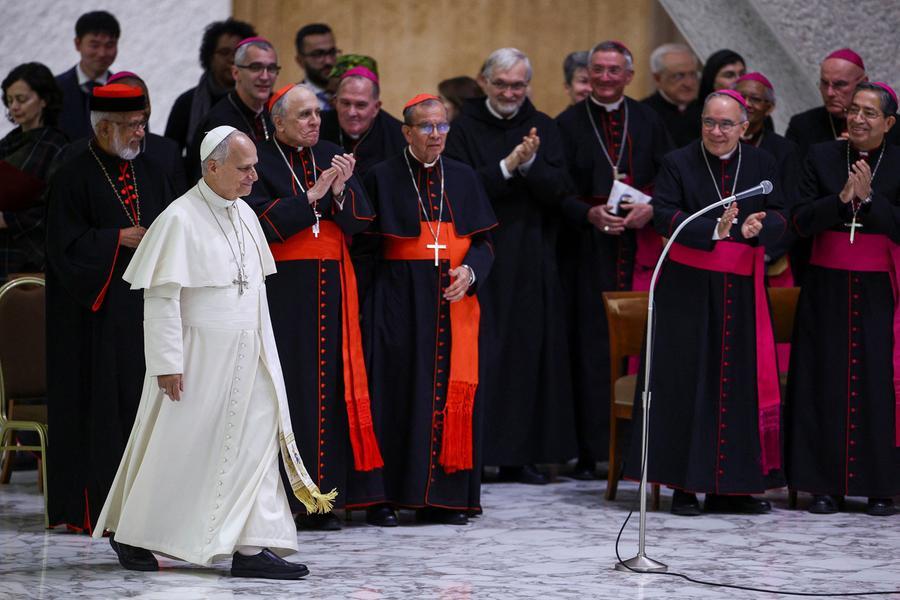






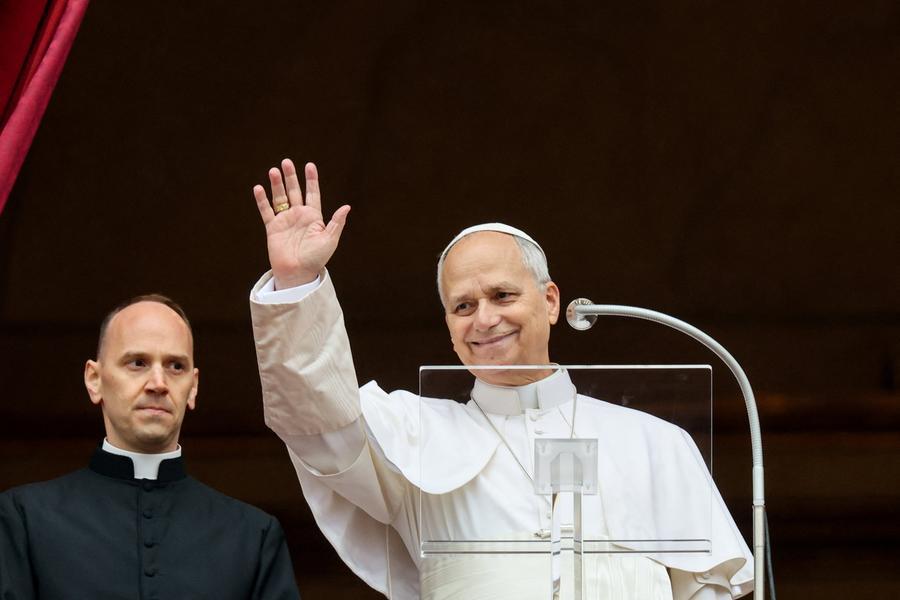
It looks out from the Loggia of Blessings instead of from the window of the apostolic palace to announce, on the feast of the Epiphany and at the end of the Jubilee Year, a hope that is “down to earth”. Because, says Leone, «it comes from heaven, but to generate, down here, a new story. In the gifts of the Magi, we see what each of us can put in common, can no longer keep for ourselves but share, so that Jesus may grow among us.” AT the end of the Jubilee the Pontiff invokes: «May his Kingdom grow, may his words be realized in us, may strangers and adversaries become brothers and sisters, may there be equity in place of inequalities, may the craftsmanship of peace assert itself instead of the industry of war. Weavers of hope, let us set out towards the future along another path.”
The Pope speaks of joy, even “in difficult times”. Possible because “it is born from a Mystery that is no longer hidden”. The Epiphany says it, whose word means, precisely, “”manifestation””. Because the life of God has revealed itself: «many times and in different ways, but with definitive clarity in Jesus, so that now we know, even amidst many tribulations, that we can hope. “God saves”: he has no other intentions, he has no other name. It comes from God and only that which liberates and saves is an epiphany of God.” Then we must kneel “like the Magi before the Child of Bethlehem”. And this means, “for us too, confessing that we have found true humanity, in which the glory of God shines. In Jesus, true life appeared, the living man, that is, that not existing for oneself, but open and in communion, which makes us say: “on earth as it is in heaven””. He speaks of communion which “cannot be a constraint, but what more could you want?”.
Explaining the presence of the wise men who lead to Jesus gold, incense and myrrh underlines that «they do not seem like useful things to a child, but they express a desire that makes us think a lot, having reached the end of the Jubilee Year. He who gives everything gives a lot. We remember that poor widow, noticed by Jesus, who had thrown her last coins, everything she had, into the Temple treasury. We do not know what the Magi, who came from the East, possessed, but their departure, their risk, their very gifts suggest to us that everything, truly everything we are and possess, asks to be offered to Jesus, an inestimable treasure. And the Jubilee has called us to this justice based on gratuitousness: it originally has within itself the call to reorganize coexistence, to redistribute land and resources, to return “what we have” and “what we are” to God’s dreams, greater than ours”.