
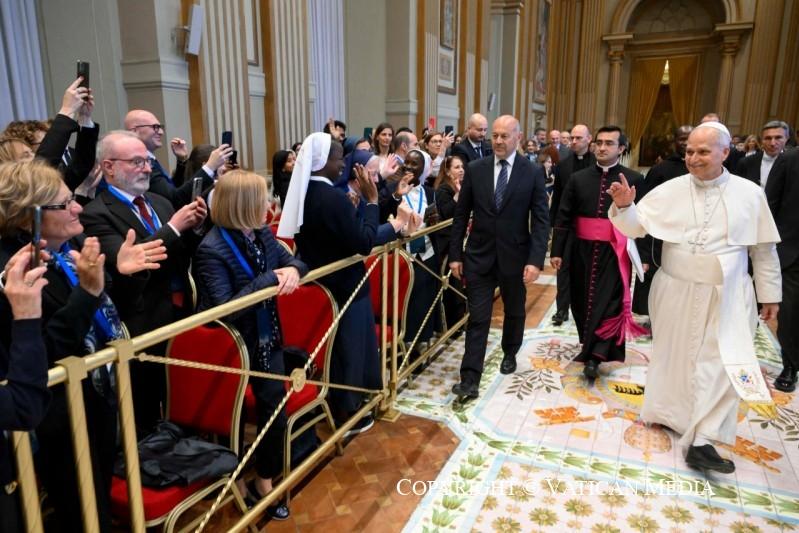




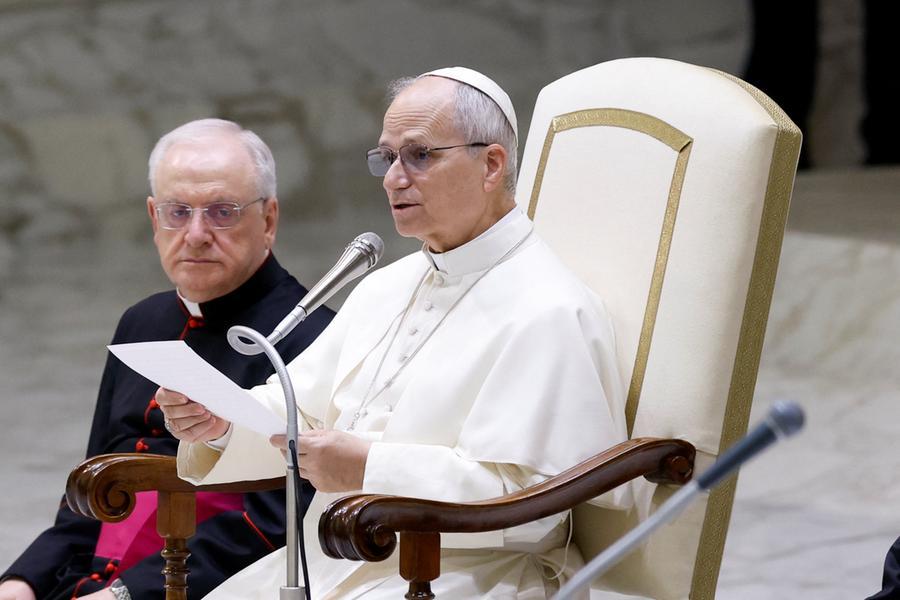
The profound connection between the Word of God and the Church. Pope Leo, in continuing the explanation of the dogmatic constitution Dei Verbum, focuses the catechesis on the sixth chapter of the document which recalls how «the Church is the proper place of Sacred Scripture. Under the inspiration of the Holy Spirit, the Bible was born from the people of God and is intended for the people of God. In the Christian community it has, so to speak, its habitat: in the life and faith of the Church it finds the space in which to reveal its meaning and demonstrate its strength”.
The Church, the Council recalls, “has always venerated the divine writings as it did for the very Body of the Lord, never failing, especially in the sacred liturgy, to nourish itself with the bread of life from the table of both the Word of God and the body of Christ and to offer it to the faithful”. Furthermore, Dei Verbum always says, “together with Sacred Tradition, the Church has always considered them and considers them as the supreme rule of her faith”.
Leo also recalls the synod on the Word of God, wanted by Pope Benedict and underlines what Ratzinger wrote in the post-synodal exhortation Verbum Domini (30 September 2010), where he states: «Precisely the intrinsic link between Word and faith highlights that the authentic hermeneutics of the Bible can only be found in ecclesial faith, which has its paradigm in Mary’s “yes”. (…) The original place of scriptural interpretation is the life of the Church.”
In the Churchtherefore Scripture «finds the context in which to carry out its particular task is to achieve its goal: to make Christ known and open to dialogue with God. Because, as Saint Jerome said, Christ cannot be known without Scripture. «“Ignorance of Scripture – in fact – is ignorance of Christ”. This famous expression of Saint Jerome reminds us of the ultimate purpose of reading and meditating on Scripture: to know Christ and, through Him, to enter into a relationship with God, relationship that can be understood as a conversation, a dialogue”. In Scripture God speaks to men as friends. This is why Leo invites everyone to read the Bible, because, when we meditate on it, «God comes to meet us and enters into conversation with us. The Sacred Scripture, entrusted to the Church and safeguarded and explained by it, plays an active role: in fact, with its effectiveness and power it gives support and vigor to the Christian community”.
Everyone is invited to “drink from this source, first of all in the celebration of the Eucharist and the other Sacraments”, continues the Pontiff. And he adds that «love for the Holy Scriptures and familiarity with them must guide those who carry out the ministry of the Word: bishops, priests, deacons, catechists. The work of exegetes and those who practice biblical sciences is precious; and the place of Scripture is central to theology, which finds its foundation and soul in the Word of God.”
Because the Church wants the Word of God to reach everyone and nourish the journey of faith. «The Word of God», he adds, «pushes the Church beyond itself, continually opens it to the mission towards everyone. In fact, we live surrounded by many words, but how many of these are empty! Sometimes we also hear wise words, which however do not affect our ultimate destiny.”. Instead, the Word of God «meets our thirst for meaning, for truth about our lives. It is the only Word that is always new: revealing to us the mystery of God is inexhaustible, it never ceases to offer its riches.”
Finally he brings his victim to the Lourdes cave, in the Vatican gardens, to entrust the suffering of the sick to the Madonna on the day dedicated to them.
The profound connection between the Word of God and the Church. Pope Leo, in continuing the explanation of the dogmatic constitution Dei Verbum, focuses the catechesis on the sixth chapter of the document which recalls how «the Church is the proper place of Sacred Scripture. Under the inspiration of the Holy Spirit, the Bible was born from the people of God and is intended for the people of God. In the Christian community it has, so to speak, its habitat: in the life and faith of the Church it finds the space in which to reveal its meaning and demonstrate its strength”.
The Church, the Council recalls, “has always venerated the divine writings as it did for the very Body of the Lord, never failing, especially in the sacred liturgy, to nourish itself with the bread of life from the table of both the Word of God and the body of Christ and to offer it to the faithful”. Furthermore, Dei Verbum always says, “together with Sacred Tradition, the Church has always considered them and considers them as the supreme rule of her faith”.
Leone also recalls the synod on the Word of God, wanted by Pope Benedict and underlines what Ratzinger wrote in the post-synodal exhortation Verbum Domini (30 September 2010), where he states: «Precisely the intrinsic link between the Word and faith highlights that the authentic hermeneutics of the Bible can only be in ecclesial faith, which has its paradigm in Mary’s “yes”. (…) The original place of scriptural interpretation is the life of the Church.”
In the Church, therefore, Scripture “finds the context in which to carry out its particular task and achieve its goal: to make Christ known and open to dialogue with God. Because, as Saint Jerome said, Christ cannot be known without Scripture. «”Ignorance of Scripture – in fact – is ignorance of Christ”. This famous expression of Saint Jerome reminds us of the ultimate purpose of reading and meditating on Scripture: to know Christ and, through Him, enter into a relationship with God, a relationship that can be understood as a conversation, a dialogue.” In Scripture God speaks to men as friends. This is why Leo invites everyone to read the Bible, because, when we meditate on it, «God comes to meet us and enters into conversation with us. The Sacred Scripture, entrusted to the Church and safeguarded and explained by it, plays an active role: in fact, with its effectiveness and power it gives support and vigor to the Christian community”.
Everyone is invited to “drink from this source, first of all in the celebration of the Eucharist and the other Sacraments”, continues the Pontiff. And he adds that «love for the Holy Scriptures and familiarity with them must guide those who carry out the ministry of the Word: bishops, priests, deacons, catechists. The work of exegetes and those who practice biblical sciences is precious; and the place of Scripture is central to theology, which finds its foundation and soul in the Word of God.”
Because the Church wants the Word of God to reach everyone and nourish the journey of faith. «The Word of God», he adds, «pushes the Church beyond itself, continually opens it to the mission towards everyone. In fact, we live surrounded by many words, but how many of these are empty! Sometimes we also hear wise words, which however do not affect our ultimate destiny.” Instead, the Word of God «meets our thirst for meaning, for truth about our lives. It is the only Word that is always new: revealing to us the mystery of God is inexhaustible, it never ceases to offer its riches.”
Finally he brings his victim to the Lourdes cave, in the Vatican gardens, to entrust the suffering of the sick to the Madonna on the day dedicated to them.