


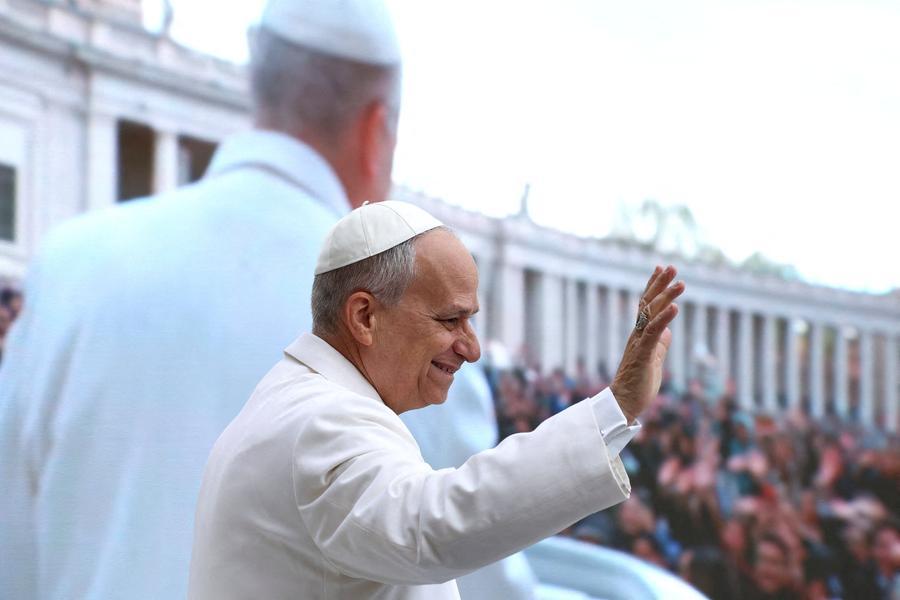


Who are the lay people? Pope Leo explains this by rereading the fourth chapter of the conciliar Constitution Lumen gentiumthe one that deals with the topic. «We all remember what Pope Francis loved to repeat», says the Pontiff: «The laity are simply the immense majority of the people of God. At their service there is a minority: the ordained ministers”.
Lumen Gentium, the great novelty of the Council, speaks of the laity in positive terms, after which for centuries “they had been defined simply as those who are not part of the clergy or the consecrated”. Leone rereads «a very beautiful passage, which speaks of the greatness of the Christian condition: “There is therefore only one people of God chosen by him: ‘one Lord, one faith, one baptism‘; common is the dignity of the members for their regeneration in Christ, common the grace of filial adoption, common the vocation to perfection; there is only one salvation, one hope and one charity without divisions'”.
The «Council affirms the equality of all the baptized. The Constitution does not want us to forget what it had already stated in the chapter on the people of God, that is, that the condition of the messianic people is the dignity and freedom of the children of God.”
Along with dignity the Council also emphasizes the mission of the laity both in the Church and in the world. A mission founded in Christ. «The name of lay people means all the Christian faithful (…) who, incorporated into Christ by baptism and constituted as the people of Godmade participants in their own way of the priestly, prophetic and regal function of Christ, exercise in the Church and in the world, for their part, the mission of all the Christian people”, we read in number 31 of Lumen Gentium. «The holy people of God, therefore, is never a shapeless mass, but the body of Christ or, as Augustine said, the Christus totus: it is the organically structured community, by virtue of the fruitful relationship between the two forms of participation in the priesthood of Christ: common priesthood of the faithful and ministerial priesthood”, underlines Leone. «By virtue of Baptism, the lay faithful participate in the same priesthood of Christ. In fact, “Jesus Christ, high and eternal priest, wants to continue his testimony and service through lay people; therefore he vivifies them with his Spirit and incessantly pushes them to undertake every good and perfect work”.
The Pontiff also recalls the Apostolic Exhortation Christifideles laici by John Paul II in which it is underlined that «the Council, with its very rich doctrinal, spiritual and pastoral heritage, has reserved extremely splendid pages on the nature, dignity, spirituality, mission and responsibility of the lay faithful. And the Council Fathers, echoing Christ’s call, called all the lay faithful, men and women, to work in his vineyard.”
The lay apostolate, adds Leone, is not limited to the field within the Church, but extends to the world. «The Church, in fact, is present wherever its children profess and bear witness to the Gospel: in the workplace, in civil society and in all human relationships, where they, with their choices, show the beauty of Christian life, which anticipates here and now the justice and peace that will be full in the Kingdom of God.” Why if it is true that the world needs to “be imbued with the spirit of Christ and achieve its goal more effectively in justice, charity and peace”, this is “only possible with the contribution, service and testimony of the laity!”. For this reason, the invitation that Pope Francis has spoken of so many times to be echoes Outgoing Church: «A Church incarnated in history, always open to mission, in which we are all called to be missionary disciples, apostles of the Gospel, witnesses of the Kingdom of God, bearers of the joy of the Christ we have encountered!”.