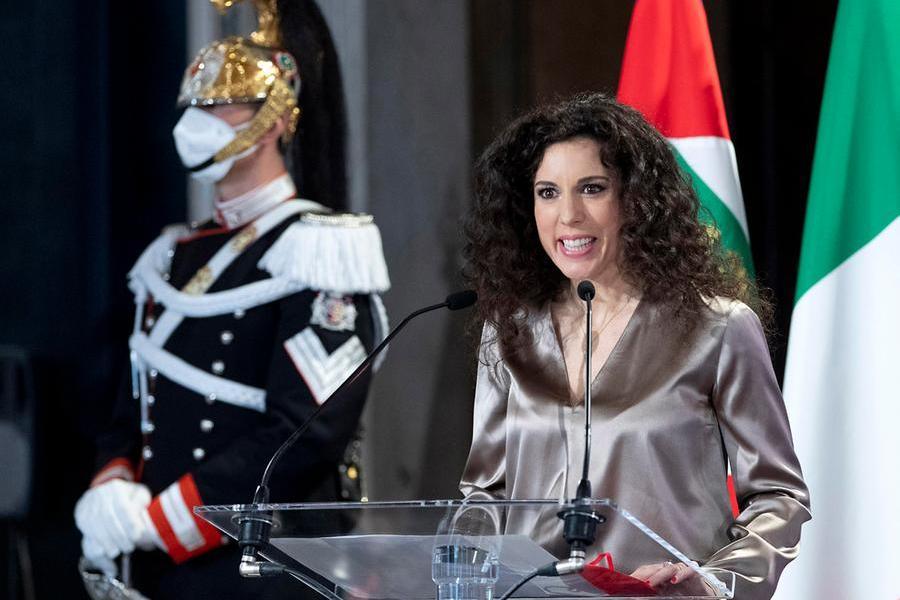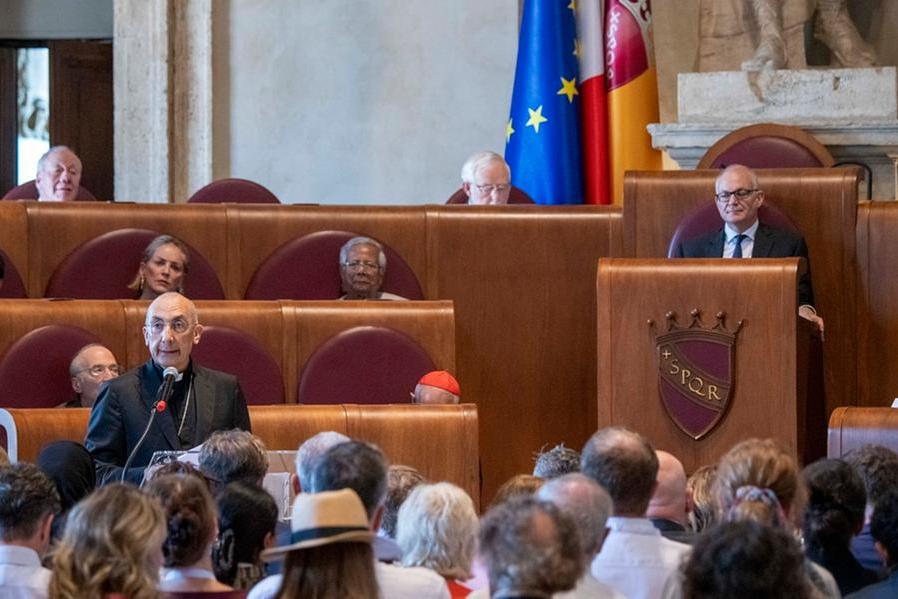
«The Declaration being presented today strongly reminds us that no machine, no algorithm, no autonomous system can be placed at the center of decisions on which the survival of humanity depends”. At the end of the two-day Global Nobel Laureates Assembly on Artificial Intelligence and Nuclear War, which brought together Nobel Prize winners, world leaders and AI experts at Borgo Laudato si’ in Castel Gandolfo, the final document was presented in the Capitol. In the “Rona Declaration for an Unarmed and Disarming Peace in the Era of Artificial Intelligence, Nuclear and Autonomous Weapons, New Digital Protocols and Emerging Models of Digital Development” we ask to slow down the arms race. The Cardinal Vicar of Rome, Baldo Reina, in presenting the text, clarifies that «peace cannot be founded on the balance of fear» and that the Declaration commits the signatories to «prevent artificial intelligence from authorizing or autonomously activating the use of nuclear weapons». Furthermore, the cardinal underlines, we must promote an international governance that strengthens international law and diplomacy. Because, he reiterated, «disarming does not just mean reducing arsenals, but it means disarming mindslanguages, economies, international relations”.
And again the cardinal recalled that «decisions that affect life and death, peace and war, the future of peoples and generations to come, must remain under full, responsible and meaningful human control» and that «the speed of artificial intelligence cannot erase the value of consciousness. The efficiency of digital systems cannot replace moral discernment and the importance of choices. The power of technology cannot become higher than the dignity of man.”
The Declaration, added Cardinal Reina, comes at a particularly complex time, «marked by rapid changes and profound risks: artificial intelligence, nuclear weapons, geopolitical instabilitycrisis of multilateralism and the temptation to entrust security to fear, deterrence and mutual threats.”
But that’s right when «the capacity for destruction grows more rapidly than the capacity for dialogue, when automation accelerates more than prudence, when distrust between nations becomes a permanent structure, then the whole of humanity is called to stop and to choose the path of responsibility again.”
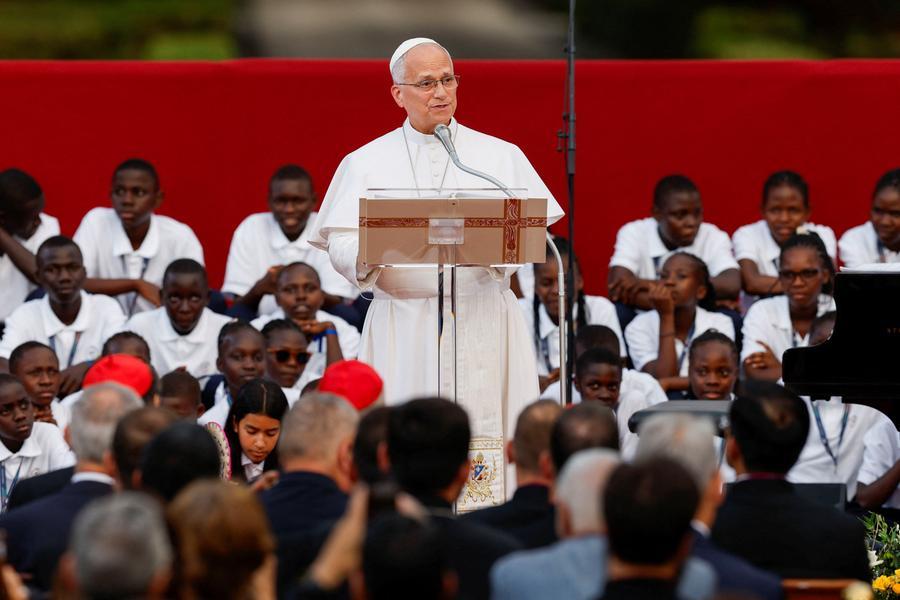
The two days of reflections and the text of the Rome Declaration were inspired by the encyclical Magnifica humanitas by Pope Leo XIV. The text, presented in the Campidoglio, in the presence of the mayor Roberto Gualtieri, also a signatory, also reiterates that Rome is the city in which the search for justice and peace can and must become a “concrete choice, a common commitment” because «Rome is not just a city. Rome is a memory, a responsibility, a vocation. It is the city in which different peoples, cultures, institutions, faiths and languages meet.”
The cardinal Reina warned that we are at a “crucial moment” in history: “Scientific and technological progress offers extraordinary opportunities for healthcare, education, public health, environmental protection, the fight against poverty and peace building. Yet progress itself, if separated from ethics, responsibility and respect for the dignity of the human person, it can become an instrument of domination, exclusion and even destruction”.
In the text of the Declaration, in the article regarding nuclear risk, we read: «The final decision to use a nuclear weapon must never be entrusted to an automated system». The signatories call for “the adoption of an international treaty that prohibits the irresponsible integration of artificial intelligence into the command, control and launch systems of nuclear weapons, ensuring that effective and meaningful human control remains at all times.”
The document continues with a call for security: «We must prevent the malicious use of artificial intelligence in cyber operations and attacks against critical nuclear infrastructure. Nuclear-weapon states must subject their systems to fail-safe reviews.”
At the same time, the Declaration promotes the positive use of AI «to improve human well-beingaccelerate scientific and medical progress, protect the environment, strengthen the resilience of societies and promote peace, sustainable development and the common good.”
On the governance front, the Declaration invites «governments, businesses and international organizations to make possible a coordinated slowdown in the development of the most advanced forms of artificial intelligence, establishing shared verification mechanisms and solid evaluation processes, both internal and independent”. The United Nations Independent International Scientific Panel on Artificial Intelligence is also supported.
Among the excellent signatories also the actress Sharon Stone, who declared that she was present as a “citizen of the world and mother of three intelligent young men». Addressing the audience he added: «Human dignity is not an algorithm», «we must be united in the pursuit of the common good, united in respect for the rule of law and responsibility. We have to relearn what we think we already know.” He then warned about ethical responsibilities: “As the capabilities of machines expand, so must the intellectual and ethical responsibilities of those who create them.” And he concluded with a call for simplicity and common sense: “We must behave exactly in the same way we tell our children to do.”