


The name of Saint Agatha is inextricably linked to the city of Catania: «His patronage has always held a “civil role”, that of a model and defense against all the evils that can afflict our territory». They are the words ofarchbishop Luigi Renna in this year’s pastoral letter – entitled In the footsteps of Saint Agatha to explain our hope – dedicated to the virgin and martyr whose 900th anniversary of the transfer of her relics will be celebrated in 2026.
Over time the city community has intertwined history, memory, tradition and daily life around the figure of the young Christian who continues to be a spiritual and identity reference. «During the persecution of Decius in the middle of the third century AD», says Monsignor Renna, the young woman «was faced with the dilemma of denying her faith or sacrificing to idols; Saint Agatha did not recant. When the governor Quinziano asked what social condition she was from, she replied: “I am not naive, but I am also from a noble family, as all my relatives attest.” Quinziano sensed Agata’s indignation, but in surprise added: “If you claim to be free and noble, how come you show that you live and dress like a slave?”. At this point the young woman declared her most authentic identity: “I am a servant of Christ, which is why I show that I am a slave”.
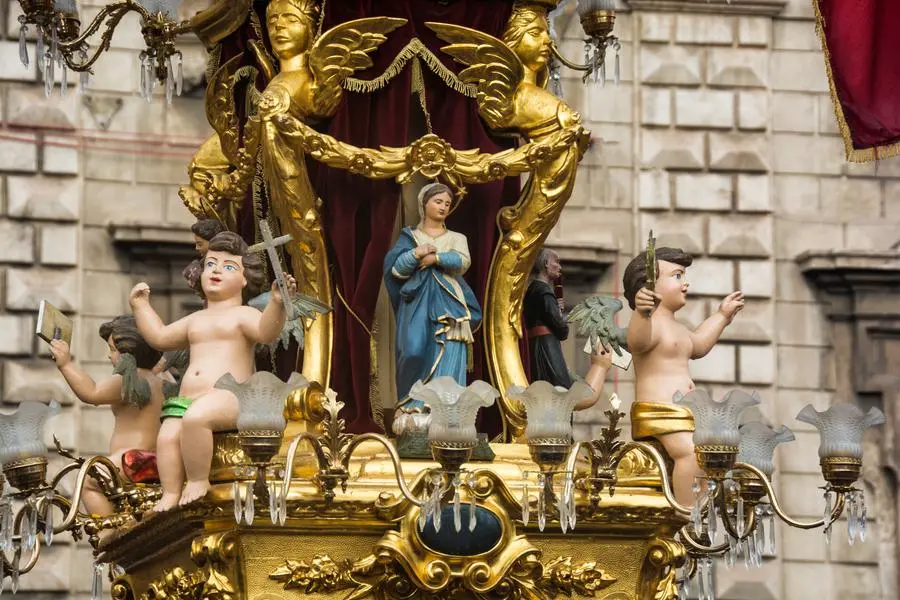
The name Agatha, in Greek, means “good” or “noble” and in fact she is a martyr remembered for the radical love that linked her to God, to the nascent Church and to its people. Her refusal to give in to blackmail and renounce her faith was followed by torture including the amputation of her breasts, which were then miraculously healed during her imprisonment thanks to the apostle Peter, until her martyrdom on hot coals in 251. Her body rests in the cathedral of Catania.
The cult of Saint Agatha has its roots in antiquity and the bond with the people of Catania is so deep that it seems like a family relationshipas if it continued to be a living presence in the city. «It helps us discern what makes our life beautiful», adds the archbishop, «and who we believe in. The healing of the breast thanks to the prayer of Saint Peter is a symbol of everything that the Church gives us, as an instrument of salvation: the Word of God and the sacraments, in particular those called “of healing”: Reconciliation and the Anointing of the Sick. The sacrifice of Agatha, united with Christ, is a sign of love for our ecclesial community, for the whole Church.”
The 9th centenary of the translation of the relics is celebrated in 2026 as a true Agathan Jubilee which began on January 11th and continues until August 18th, the day of the dedication of the cathedral. Monsignor Renna recalls: «On 17 August 1126, as reported in the letter of Bishop Maurizio in a codex from the 15th century, the relics of Saint Agatha returned to Catania after a long period in which they had been in Constantinople. It would have been the Byzantine general Maniaces who brought them to Constantinople in 1040 and two soldiers, the Breton Gisliberto and the Calabrian Goselmo, who returned them to the city”.
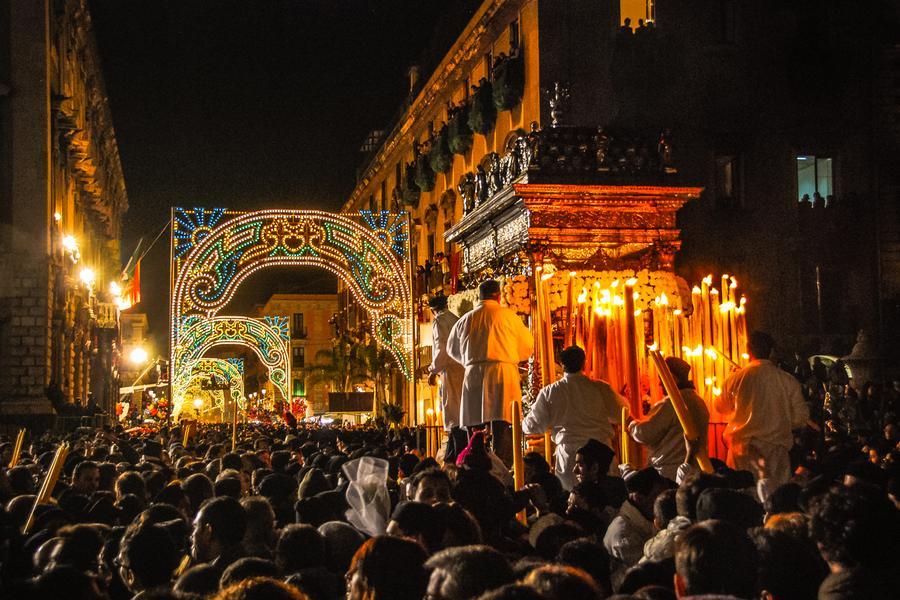
Every year the period of maximum tribute to the saint is divided into six days of celebrations, centered on February 5th, the anniversary of her martyrdom. In view of the festival, from early January everything comes alive with religious, cultural, sporting and solidarity initiatives. During the celebrations, streets and squares are filled with devotees in “sacks” – the white tunic with cord, black cap and white gloves – together with tourists and emigrants from Catania who return for the occasion. For a few days the city regains a sense of unity, showing its more welcoming face.
The February 3 it opens with the offering of wax, a procession that starts from the church of Sant’Agata alla Fornace and reaches the cathedral basilica. There are civil and religious authorities, brotherhoods, associations, devotional baroque candlesticks, the carriages of the city senate.
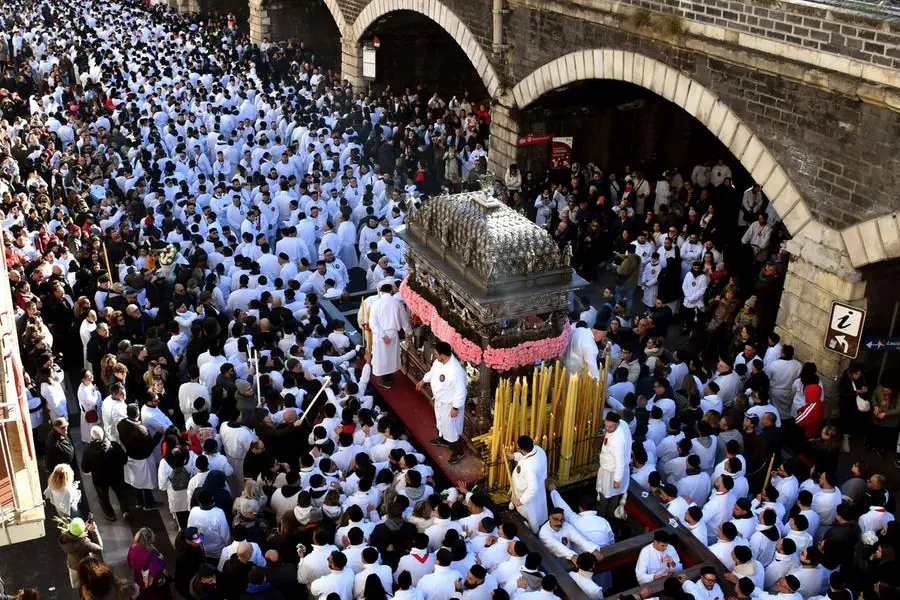
A moment of the procession in honor of Sant’Agata in Catania
(HANDLE)
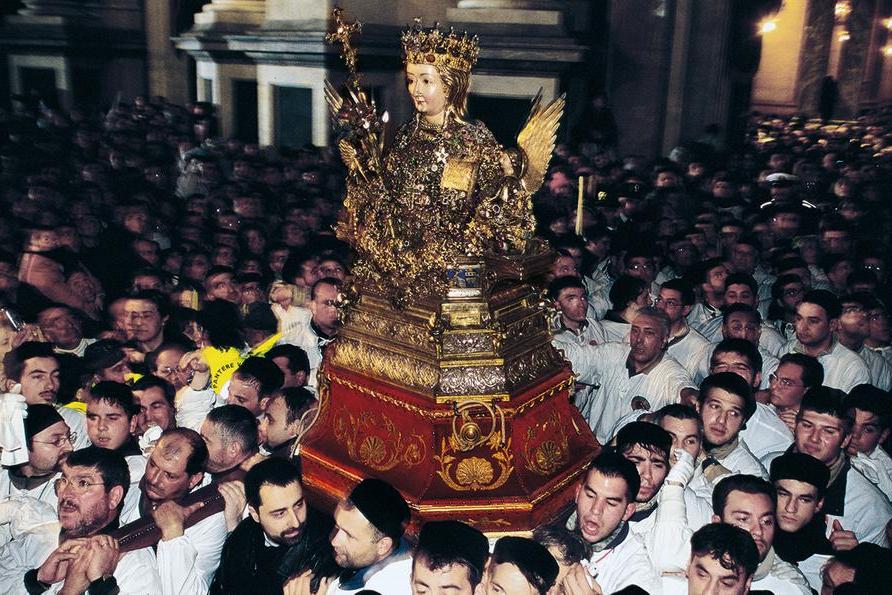
The February 4after leaving his “camaredda” – the chapel which houses the reliquary bust in the cathedral chapel – the Mass of the dawn is celebrated and the external tour begins on the silver fercolo decorated with flowers. The procession follows the ancient walls and touches the places of martyrdom; there the archbishop addresses his message to the city and the baptismal promises are renewed. The route continues until late, reaching the ancient external areas and returning to the cathedral in the early hours of February 5th.
The day of the liturgical feast opens with the solemn pontifical ceremony, presided over by a cardinal and concelebrated by the Sicilian bishops. In the afternoon, the internal tour along Via Etnea comes to life among baroque buildings and a waiting crowd. The festival ends on 6 February with the fireworks in Piazza Borgo, the “climb of San Giuliano”, the singing of the cloistered Benedictine nuns and the return to the cathedral with the prayer of thanks. «United by a single faith and encouraged by the testimony of Saint Agatha», concludes Bishop Renna, also referring to the Synodal Path, «we are invited to think about ourselves as an “us”, the people of God who are in Catania, who give signs of a visible and real communion».