



Lino Stoppani, president of FIPE-Confcommercio, over a thousand municipalities are without food shops. What impact does this void have on the safety and social stability of small towns?
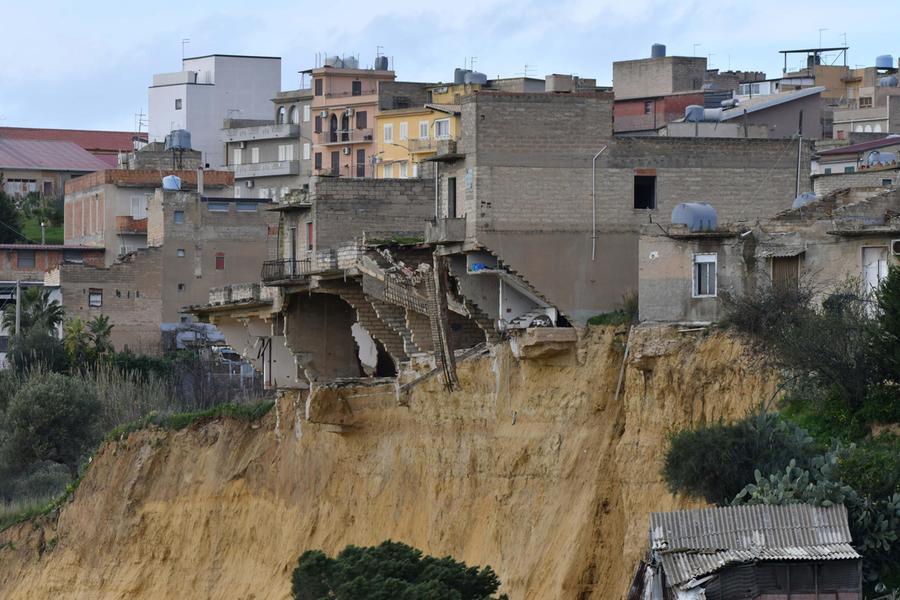
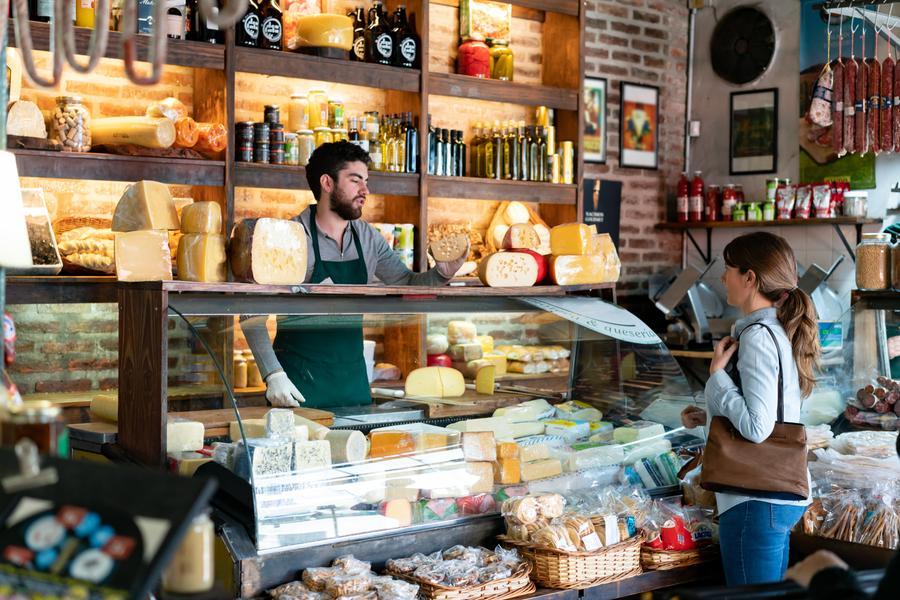
«The disappearance of the specialized food shop in small municipalities is not just an economic fact: it is an indicator of social fragility. In over 1,100 Italian municipalities, the absence of a commercial presence means fewer daily relationships, less informal social control and greater isolation, especially for the elderly and people with reduced mobility.
The local shop is often a meeting place, a point of reference, sometimes the only non-institutional social space. When it closes, the town loses livability and attractiveness, dependence on the car increases and the area’s ability to “hold together” its community is reduced. Even in terms of safety, the presence of open and illuminated activities contributes to combating degradation and abandonment: commercial desertification, therefore, accelerates dynamics of depopulation and marginalization”.
We have lost 72,000 shops in fifteen years. Is this an inevitable evolution or are we sacrificing an irreplaceable service model?
«The loss of over 72,000 micro-shops under 50 square meters in fifteen years cannot be read only as an inevitable efficiency process. It is true that lifestyles and purchasing habits have changed and that large-scale retail trade has introduced economies of scale that are difficult to replicate, but in this process we are sacrificing a service model that has no equivalent. Specialized micro-shops guarantee competence, customisation, urban coverage and valorisation of the territory: elements that large-scale retail trade, by its nature, struggles to offer in a structural way. It is therefore not a question of nostalgia, but of a choice of social model. If we lose these businesses, we also lose commercial diversity, quality of service and the ability of urban centers and villages to remain alive. The real challenge is not to pit small against large, but to recognize that without active policies for the protection and innovation of commercial proximity we are giving up a strategic asset for social and territorial cohesion, which represents one of the main characteristics of the Italian model of distributive pluralism”.
Why is the range between 150 and 1,500 m2 winning over the traditional shop? What more does it offer the modern consumer?
«The medium format, between 150 and 1,500 square metres, is emerging in this historical phase as one of the most effective because it intercepts the needs of the contemporary consumer well: sufficient assortment, competitive prices, speed of purchase and accessibility. Compared to the traditional small shop, it offers greater capacity for product rotation, integration with digital services and longer opening hours. However, this diffusion does not derive only from an alleged superiority of the model, but also from a regulatory and urban context that has favored its expansion. The risk is that this evolution of the offer comes at the expense of proximity, specialization and personal relationships, which remain real needs, especially in less dense and more fragile contexts.”

In Sardinia and Basilicata both shops and surfaces are decreasing. How do we prevent entire areas from remaining without minimum services?
«In territories such as Sardinia and Basilicata, where both the number of businesses and the overall surface area are decreasing, we are faced with a double setback: economic and territorial. To prevent these areas from becoming irreversible commercial deserts, it is necessary to treat local trade as an essential service, like transport or local healthcare.
We need targeted policies aimed primarily at the peripheral areas of our country: selective incentives for opening and maintaining businesses in marginal municipalities, support for commercial rents, locally advantageous taxation, but also integration between trade, public services and welfare. Likewise, territorial repopulation policies are also needed since the presence of a settled community constitutes the essential economic prerequisite for any entrepreneurial initiative. Without structural intervention, the market alone is unable to guarantee minimum protection.”
The 2012 liberalization favored large-scale retail trade and online. Years later, have we underestimated the impact on the face of our cities?
«Measures of progressive deregulation have certainly expanded competition and promoted the efficiency of the distribution system, but after years it is legitimate to say that the effects on urban morphology and the stability of historic centers have been underestimated. The indiscriminate opening of large surfaces and liberalization without compensatory tools have accelerated the polarization of consumption towards large-scale retail trade and online, weakening local trade. Today it clearly emerges that market freedom, if not accompanied by a territorial vision, produces imbalances which then impact on communities and local authorities.”
With the explosion of e-commerce, on what ground can the physical store still be competitive and attractive?
«The physical store can compete with e-commerce only if it stops chasing it in terms of price and quantity and enhances what online cannot offer: relationships, trust, competence, immediacy and rooting in the territory. Furthermore, the point of sale can become a hybrid node: place of service, collection, consultancy, experience. The competition is no longer between physical and digital, but between models capable or not of hybridizing in an omnichannel ecosystem that puts all the needs of the citizen-consumer at the center.”
Many closures depend on the lack of successors. How do you make investing in a neighborhood shop exciting again for a young person?
«The lack of generational turnover is one of the most critical issues for our sectors. To make this investment attractive for a young person, three conditions are needed: sustainable profitability, risk reduction and social recognition of the role. This means not only generic credit, but financial instruments tailor-made for the generational transition, capable of overcoming current banking rigidities. It means managerial support, bureaucratic simplification and policies that favor takeover. But there is also a cultural battle to be won. We must stop describing the shop as a residual activity. Today the neighborhood shop is, and must be, a modern and innovative enterprise: a hub of services, a place of irreplaceable relationships. If we give this profession the social and economic recognition it deserves, young people will return to seeing it for what it is: an extraordinary entrepreneurial opportunity.”
Without a reversal of direction, how do you imagine Italian cities in ten years’ time? Will they become just dormitories and logistics hubs?
«If the trend is not corrected, in ten years we risk more anonymous, less lively and less safe cities: emptied historic centres, dormitory neighborhoods without services and commercial structures on the edge of the town which concentrate the functions of consumption and leisure and which have little to offer in terms of culture, beauty and architectural quality. This impoverishment would also have a very high cost in terms of tourist and economic attractiveness. The world seeks the uniqueness of the Italian lifestyle, not homologation: if we turn off the lights of our activities, we lose a formidable competitive asset, devaluing the entire country system. It is not an inevitable scenario, but it could be the natural outcome of a trajectory left without government. Urban quality certainly does not depend exclusively on the pleasantness of the public space, but rather on the presence of activities that keep the territories alive on a daily basis and make them attractive. Without local businesses, cities lose identity, meaning and value.”
How can this initiative transform shops into “social infrastructure” to save municipalities from isolation?
«The Cities project by Confcommercio was born precisely from this awareness: local businesses are not just economic activities, but are a real urban social infrastructure, particularly in small municipalities and in internal areas. When the last shop closes in a municipality, not only is a service lost, the light goes out on that community. For this reason, Cities – aware of the complexity of the causes that have led to this crisis situation – works in all territories, from the small municipality to the metropolitan city, on a series of intervention strategies: from the use of big data for monitoring pedestrian flows and for strategic planning to the activation of policies and alliances for the management and reuse of vacant spaces; from the redevelopment and care of public space to the protection and regeneration of historic centers and historic shops; from the revitalization of residential areas, encouraging new proximity services and temporary formats to the innovation of urban logistics, from a sustainable perspective. In small municipalities this approach is particularly strategic: the shop can once again become a place of relationship, orientation and support, helping to reduce social isolation and guarantee a daily presence that strengthens communities. In this sense, Cities proposes a paradigm shift: not emergency measures to “save” the shops, but a structural model in which the neighborhood economy is recognized as an integral part of cohesion policies, urban regeneration and the fight against depopulation. Because saving a shop means, literally, saving the community and that town from decline.”