






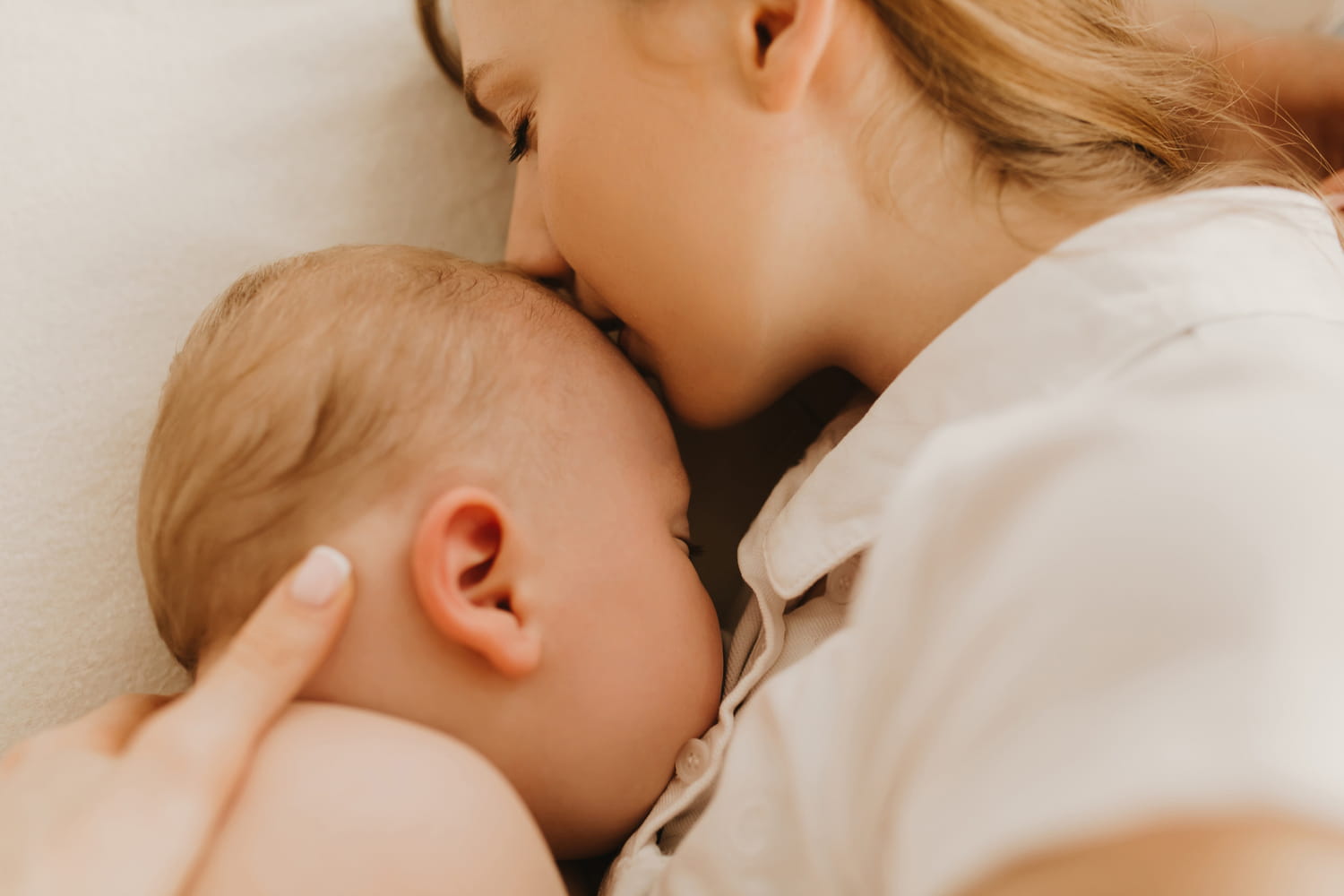
In the collective imagination, women have a true “maternal instinct” which would make them closer to their children, and above all more capable of taking care of them. But scientific studies undermine this conception.
It’s a debate that will never end, where everyone has their own opinion… based on biological evidence or just societal convictions. Are women really predisposed to caring for children, simply because they are the ones who give birth to them? On the one hand, scientific studies attest that there is indeed a maternal instinct. And on the other, those which demonstrate that pregnancy or breastfeeding are not necessarily linked to the ability to care for an infant. In reality, the two are not incompatible.
Obviously, fathers are just as capable as mothers of managing their children’s education… whenever they want. No need to bring out the figures, any heterosexual mother will say: she does more for her toddlers than their dad. The fault is a patriarchal conception of society, which wants all of this to be “a woman’s affair”. But what about when we talk about biology? Truth be told, men and women aren’t that different when it comes to parental instincts.
The Arte documentary “Paternity, a deciphered metamorphosis” shows it well. A scientific experiment, carried out by researcher Siloé Corvin at the Saint-Etienne University Hospital, proves this in a very concrete way. Newborn cries were broadcast to young parents to see if women would be better able to recognize them than men. As a result, 90% of fathers and mothers succeeded in identifying their baby without distinction. The only condition being to have already heard his cries three or four times.
And, even in terms of hormonal secretions and visible effects on the brain, the reaction of a mother and a father to the presence of their baby is the same. Another study published in the National Library of Medicine shows that the sex of the parent has no impact on the production of oxytocin, the hormone of pleasure and attachment. In reality, attachment to the child is created mainly based on the time we spend with him. As parental tasks are still carried out at 70% by women according to INSEE, we imagine that the bond between them and their offspring is stronger. And above all, they know how to take care of it better than dads. But nothing scientifically proves it: mothers can actually develop expertise and a more pronounced sentimental relationship, not because their bodies are made that way, but rather out of habit.
You will have understood, fathers no longer have any excuse for not waking up at 4 a.m. because they “didn’t hear anything”. Because science has proven it, the maternal instinct is a social construction: from now on, we will rather speak of a parental instinct, shared equally with these gentlemen.