




The eternal in flesh and blood
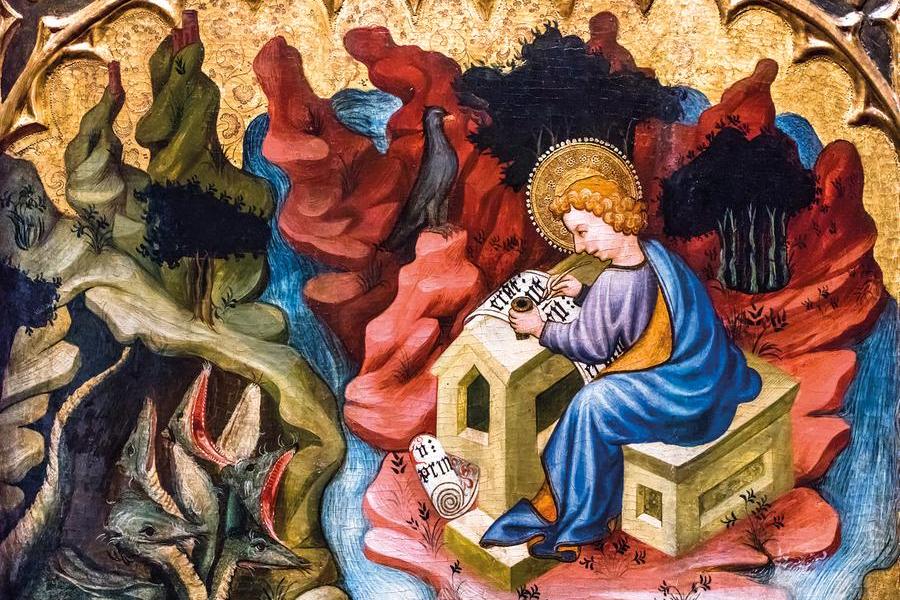
On the second Sunday after Christmas the liturgy offers us texts of great theological depth, almost as if to invite us to perform a further step: after the simplicity and immediacy of the Christmas language, we are called to delve deeper into the mystery that has been revealed to us. It’s not about abandoning the amazementbut to live it in a more mature way. John, in the Prologue, does not tell what happened in Bethlehem, but tells us what entered the world and what reality finally became visible in history. His gaze does not stop at the event. It reveals its ultimate meaning.
«In the beginning it was the Logos». The evangelist opens the Gospel with that solemn tone which deliberately recalls the first words of Genesis. This is not a chronological beginning, but the very foundation of being. At the root of reality there is neither silence nor chaos, but a living Word; not an isolated God, but a God who is communication, relationship, communion. The Logos is addressed to God and is God: what manifests itself in time is not something foreign to God, but the expression of what God has always been. Christmas thus appears as the historical revelation of an eternal truth.
This Word, continues John, is also light. The light shines in the darkness: it does not ignore them, it does not erase them, it does not deny them, but passes through them without being suffocated by them. It is a light that does not dazzle and it doesn’t forcebut which remains true to itself even when it encounters resistance. In this statement, both discreet and powerful, the evangelist entrusts an essential certainty to faith: the light of God does not fail.
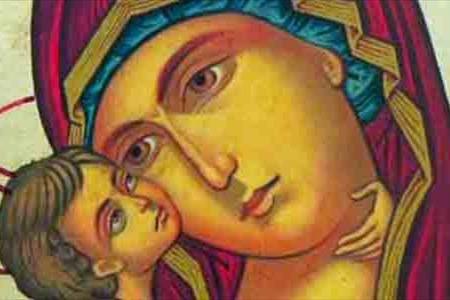
The luminous heart of the Prologue is the decisive statement: «The Logos became flesh.” All Christian innovation is concentrated here. The eternal Word does not remain above history, but enters time; it does not limit itself to illuminating from the outside, but takes on the human condition in its concreteness. The “flesh” does not simply indicate the humanity of Jesus, but his exposure to the limit, to fragility, to finiteness. It is precisely the flesh, such as it is, the place that God chooses to make himself present.
To describe this presence, John uses an image of great biblical beauty: the Word “pitched his tent” among us. The reference is to the tent of meeting in the desert, a sign of God’s closeness to his people during their journey. Now, though, that tent it is no longer a sacred space separate, but a human life. God no longer lives in a delimited place: he lives in history, he shares the time of men. Revelation thus takes on a surprisingly sober form: not the grandeur of a temple, but the discretion of a fragile home.
The Prologue does not hide the paradox that accompanies this choice. The Word comes into the world He created and yet is not recognized. Revelation does not produce automatic consent. Yet John does not stop in the face of rejection: alongside it he holds a decisive promise. Whoever welcomes the Word is given the power to become a child of God: a new life that is born not from natural bonds or human initiatives, but from a gift that comes from God.
The hymn ends with a statement that summarizes and illuminates the entire journey: no one has ever seen God; the only begotten Son revealed it. God remains invisible, but not inaccessible. He lets himself be known through a life lived in communion with the Father. In Jesus, grace and truth – gift and revelation – fully coincide.