





Among the questions most often asked to Google in 2025 in Italy is: “What does career separation mean?”is the second most bottled request for meaning thrown at the waves of the Internet during the year. The data makes it difficult for citizens to understand the coordinates of the reform of the judicial system. An objectively difficult topic, which touches on notions not of common heritage: the judicial system, precisely, the way in which the professional path of the ordinary judiciary is organised. Technical, but also political issues, mixed with the theme of the balance between state powers, and therefore with the pillars of democracy.
They are looking for this theme, we also understand it from the movements of our site, every time on TV they often hear about it with dynamics of quarrelsome opposition rather than step-by-step explanation: more urged to take sides than to understand the repercussions of the reform on everyone’s future. It will be a reason destined to return in the first months of the year, because in the spring, between March and April, citizens will be called to approve or reject a constitutional law, which, if they are not responsible for theivories, probably, perceive as abstruse: they will have to say yes or no to a reform that has entered the parliamentary halls in the format of a Bill, therefore through the door of the Government, which touches the Constitution, but which ordinary laws will subsequently define in terms of methods and details.
Yes they will separate the careers of judges and prosecutorsbut we don’t know how (why the reform does not say how the competitions change, how changes the high school of magistracy); we know that will change the disciplinary procedure for magistrates removed from the Superior Council of the Judiciary and moved to a High Court the composition of which is briefly known but not known how the procedure will change (because the reform doesn’t say it); we know that the Superior Council of the Judiciary (CSM) will double in sizeThat the magistrates will enter by pure draw and the “laymen” nominated by parliament by tempered draw but we don’t know how, (why the reform does not say how large the list of chosen laypeople will be to be drawn from. If it were large, even for the seconds it would be a real draw, but if it were small it would be a choice disguised as a draw). We know that of a single body, the CSM, with different tasks, three will be created to divide those tasks. Citizens probably sense, even if they don’t talk about it much, that costs will increase but it is not known by how much (because the reform does not say so).
In the referendum, without a quorum, citizens will have to say yes or no to this overall plan, which still has many blank boxes. If the referendum says yes, it will be up to ordinary laws to be written and filled only after the vote. An (insurmountable) difficulty that adds to the intrinsic difficulty (which can be overcome with difficulty) of the subject.
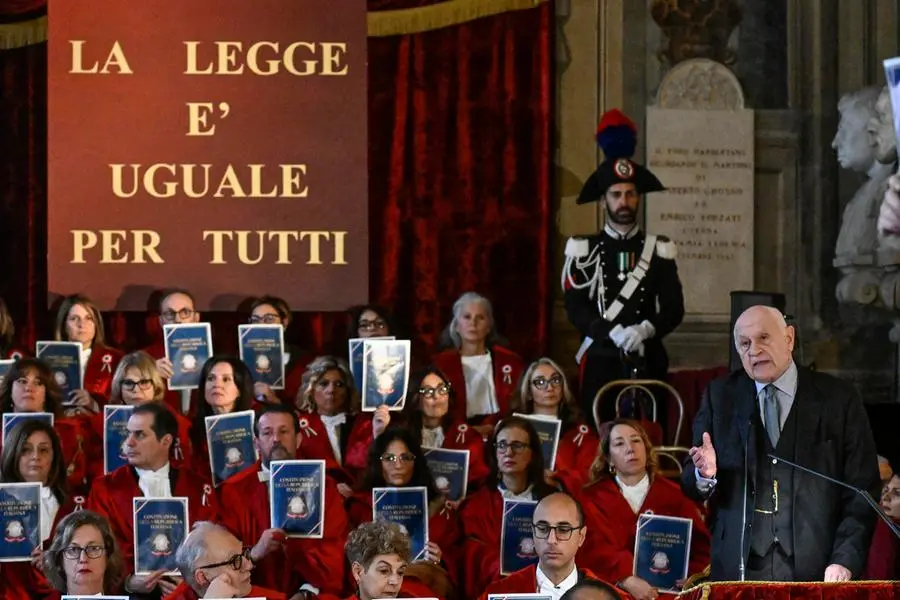
Naples, inauguration ceremony of the judicial year, speech by Minister Carlo Nordio, January 2025
(HANDLE)
The need to understand, which can also be interpreted as a bit of confusion, is understandable, also because ordinary citizens are entrusted with the fate of a reform which, born in the Government, passed “armored” through Parliament without, in the place that would have been natural, a single correction to the text having been accepted, not even among those proposed by the parties who were in favor of the reform. All because priority was given to the speed of approval on the search for a text that is as shared as possible: a completely different modality compared to that of the spirit of the Constituent Assembly, in which Christian Democrat, Communist, Socialist, Liberal and Shareholder forces dialogued for a long time with effort and commitment, overcoming mutual hostility, respecting differences, mediating for the common good of the Republic.
Now the buck passes to the citizens than to a summer magazine survey The judiciary revealed that they were not even clear what the acronyms and technical terms of the reform were, starting with what the CSM is that they will have to decide whether or not to split into three.
The density of searches on the Internet at least speaks of the good will to try to understand, of the effort to inform oneself so as not to decide supinely or following the propaganda of those who agitate the outcomes of individual judicial cases that have nothing to do with the reform: a good sign of citizenship, of attention to the common home, all the more precious when faced with a difficult subject that makes one feel small, because it touches the pillars that support the institutional building in which we all live.