




For decades Legos have represented one of the last large in-person gaming spaces: hands that move, bodies close together, objects to share, worlds that take shape in the same place and at the same time. The announcement of their progressive transposition into a three-dimensional virtual environment today questions educators, parents and pedagogists. What do you gain and what do you risk when construction games also become mediated by the screen?
From an educational point of view, the change is profound. “It changes a lot,” he observes Francesca Antonaccigame educator at the University of Milan Bicocca. «There are, however, elements that resist even in digital mediation, and they must be recognized».
The first concerns the symbolic dimension: the ability to imagine, to create scenarios, to design possible worlds. «It is a skill that supports innovation in adulthood. Philosophy, science, technique are also born from this faculty, which is cultivated as children through play.”
It is no coincidence that there are experiences born directly into the digital world, such as Minecraft, based on shared construction and online collaboration. «It makes no sense to demonize virtual gaming», specifies Antonacci. «It can offer opportunities for planning and relationships». The issue, however, is not to establish whether digital is legitimate, but to understand what is transformed when the physical dimension disappears.
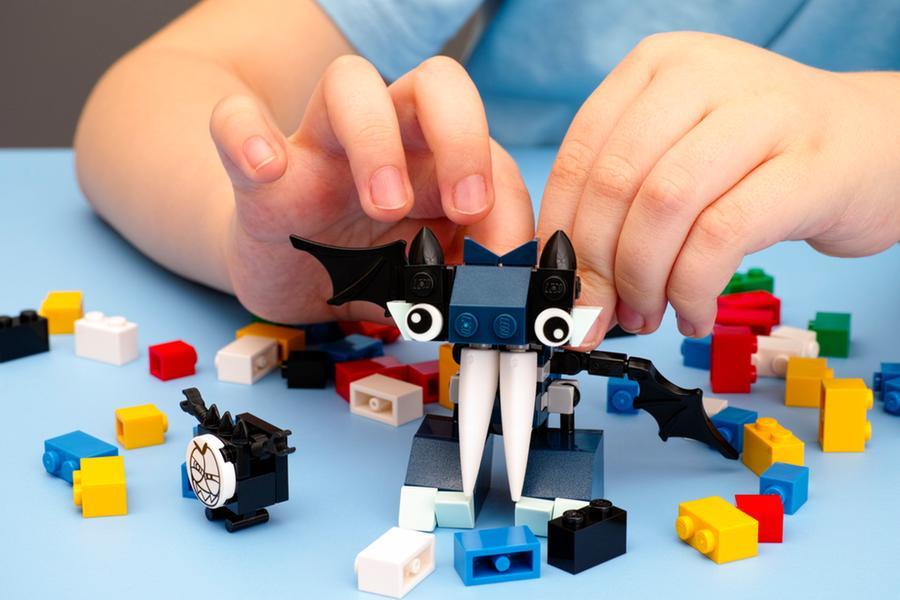
In playing with physical bricks, the body is not accessory. “Children need a continuous relationship between their eyes, hands and brain,” he explains. «Manipulating, dismantling and perceiving the consistency of objects is a cognitive experience, not just a motor one». Knowledge comes through contact with matter, through the resistance of things, through error, through correction.
Added to this is a transformation already underway in the world of construction. “Over time, Legos have become increasingly tied to a pre-established design,” observes Antonacci. «From the box of parts open to every possibility we have moved on to kits that allow you to create a single object». In this way the child’s symbolic space is narrowed. «Free construction fuels the idea that the world can be transformed. If I can only build what has already been decided, the game loses its generative power.”
Playing in person also has a relational dimension that is difficult to replace. «With real bricks we build together: we pass the pieces, we discuss, we share the space» says Antonacci. «Forms of sociality exist in the digital world, but the concrete negotiation of times and places is lacking». In presence you also learn to tolerate frustration, to accept rejection, to wait. Essential experiences for emotional growth.
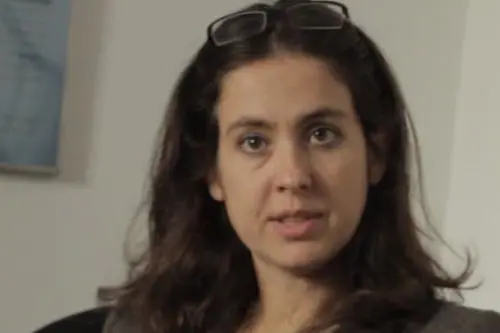
Digital can have, in some cases, an inclusive function. «For children with disabilities or with less access to real play spaces it can represent an opportunity», recognizes the pedagogist. «But the problem arises when the shift towards the virtual becomes generalized». A mass passage warns, modifies skills: it reduces slow time, the confrontation with materiality, the learning of coexistence.
For many adults, Legos were a barrier to digital isolation. Educating about shared play today remains possible, but requires intentional choices. «It’s easier to leave a child in front of a screen than to take him to the park», observes Antonacci. «But what is saved in childhood is paid for later. In the real game you fall, you get up, you look for a solution. That’s where social intelligence is built.”
The reflection recalls the thoughts of the psychoanalyst Donald Winnicott, for whom play is the original space of human experience: the place where the child encounters the world and others without being overwhelmed by them. Not a performance, but a relationship. «The game», concludes Antonacci, «is not just about becoming more competent. It helps us live together with others, deal with reality, build bonds. It is a fundamental condition for a balanced social life». In a time that tends to dematerialize experience, play thus remains a decisive educational threshold: the place where the child learns not only to build objects, but to build himself in the world.