

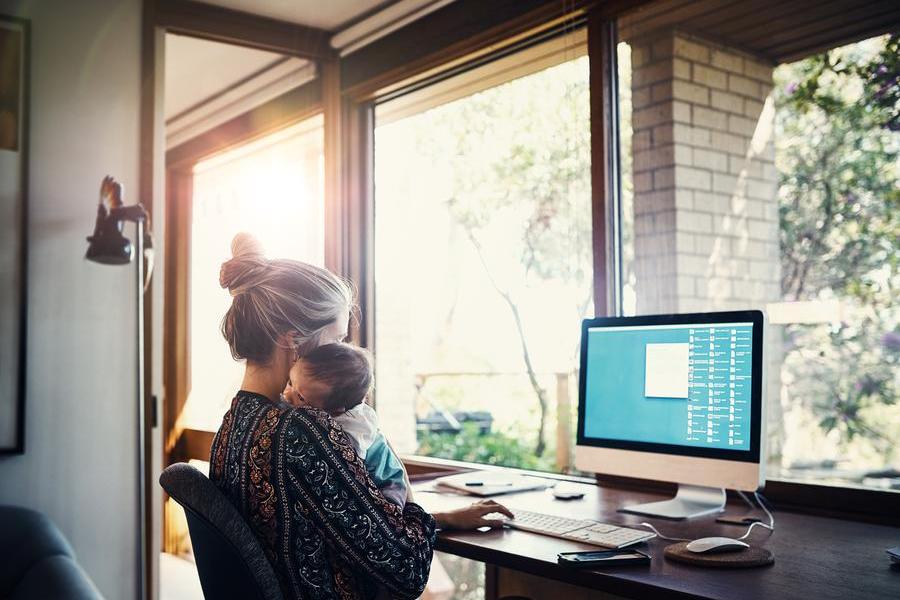


A study by researchers from Stanford University, King’s College London and the German Ifo showed that working from home can influence fertility in a statistically significant way. In couples in which both potential parents have the possibility of working remotely, there is an average of 0.32 more children per woman than in couples who do not have this flexibility. The research estimates that if our country expanded the diffusion of smart working to the level of the nations at the top of the ranking, 12,800 more children would be born in a year. We talk about it with Adriano Bordignonpresident of the Forum of Family Associations.
Bordignon, is it really like this? Is smart working more effective than many bonuses?
«I would say that it affects a fundamental variable: time. The evidence emerging from international studies shows that the possibility of working even just one or two days from home seems to be correlated with the increase in couples’ fertility. It’s not just an immediate economic advantage: it allows you to better reconcile work and family, to manage children and the elderly, to reduce daily stress.”
So why are companies and public administrations bringing their employees back to the office five years after the introduction of smart working?
«Many companies fear a loss of control or fear that productivity will decline, despite scientific evidence to the contrary. Public administration, in particular, suffers from organizational rigidity and a lack of innovation in working models. It is a cultural resistance rather than a technical one; the concept of “physical presence as a measure of work” remains rooted: it seems difficult to affirm a culture of work by objectives rather than by volume of hours used. In reality, smart working, which includes work from home but also integrates much more, in addition to increasing productivity, concretely contributes to work-life balance.”
In Italy there is still a low propensity for flexible working. Is it a cultural problem?
«Yes, it is. In other European countries or in the USA, smart working has been part of the daily organization of work for years, becoming a normal tool for reconciling work and family life. In Italy, however, a mentality linked to presence in the workplace still weighs heavily. We need a profound cultural change: understanding that quality and results matter more than the hours spent on site. It should also be considered that invasive work, in terms of monthly hours committed, and the continuous erosion of synchronic rest – the so-called public holidays – make adhering to the proposals of civic life, associations, local communities and parishes increasingly complex. We lose participation.”
An incomprehensible resistance if we consider that working in person significantly reduces “family time” during the day…
«Exactly. Time is the most precious and rarest asset for the relational and educational life of families. It is a non-fungible and non-regenerable asset. Once it is lost, it stays lost. Today an Italian family dedicates less time to children and intimate and caring relationships than in the past. Always working in the “office” often forces long commutes and fragments the day, leaving little space for family life. It’s a paradox: we penalize the birth rate and the quality of life while we think we’re “increasing productivity”. Some studies speak of the end of the age of care since too many young families are forced to work double jobs to simply “make ends meet” and no longer have space in their days to dedicate themselves to primary or social relationships.”
In addition to increasing transport costs and environmental costs.
“Exact. Moving every day means spending time and money, not to mention the impact on the environment. Working from home reduces these critical issues, promotes sustainability and creates a concrete advantage for families and the country. Reducing daily travel can also alleviate city traffic, improving air quality and the liveability of cities.”
Without neglecting, finally, that those in their thirties are the generation of work-life balance.
«The generation of thirty-year-olds has a completely new approach to work: they are not just looking for a salary, but balance, flexibility and a sense of achievement. Those who don’t adapt risk losing valuable talent. Promoting work-life balance is no longer optional, it is strategic. Even the ‘on-site’ part of the work must be increasingly focused on safety, human development, the valorization of talents and relationships”.
Is it time to resume structured and work-oriented thinking?
«Absolutely yes. We need a coherent policy between welfare, work and family services, participation in the common good with one’s work. It is not enough to economically incentivize birth rates: we must create an ecosystem in which the choice to have children is compatible with professional life. Smart working can become one of the key tools for building this future.”