



Time, place of what passes and of God’s intervention
On the first day of the year the perception of time passing seems to prevail even over the liturgy of the Church. It is as if there was a “secular liturgy” of the time: the budget for the past year and the expectation of the future. Right here Christianity has a word to offer, because faith does not ignore this experience: the incarnation says that God wanted to experience human time from the inside. If Jesus were visibly among us, perhaps today he would speak about time with simplicity, starting from daily experience. What does time represent for us? How do we perceive it? We usually live divided between a past that doesn’t add up and a future that doesn’t yet exist. The present seems like ours, but he escapes the moment we experience it. From here arises a feeling of precariousness.
Ecclesiastes records this perception with realism: a time to plant and a time to uproot, to build and to demolish, to rejoice and to cry. In the end, everything appears “vanity” to himbecause he observes time as it is, in its pure succession. It is time measured by man, what tradition would call chronos: a flow that consumes. Faith introduces a new element here. Time alone does not save; but in the Incarnation the eternal enters time. “The Word became flesh” (John 1.14) is not just a formula: it means that the Son passes through the temporal condition. As the Fathers remembered, what Christ assumes, redeems. If he takes on time, he opens it to eternity. Here is the decisive passage: time is no longer alone chronos but also kairos: the time visited by God, in which history becomes the history of salvation. For this reason the Apocalypse presents Christ as Alpha and Omega: beginning and fulfillment of time. The ultimate meaning is not an anonymous destiny, but a face. Eternity does not cancel time, it brings it to its fulfillment.
In this light, Psalm 31 acquires a particular weight: “My time is in your hands”. “My time” indicates the totality of my existence in time: past, present and future. Saying it means recognizing that what I live is not lost, because it is handed over to God. Not in the hands of chance, but in the hands of the Father – the “Abba” – and of the Son who says: «No one will tear you out of my hand». Thus the year that ends is not only the consumption of days, but a stretch of journey which, despite its contradictions, can be read as time of grace. Have we done a lot or a little? Were we also wrong? The logic of faith does not coincide with the logic of efficiency: God does not measure success, but the gift; he doesn’t just look at results, but at the truth of the heart.
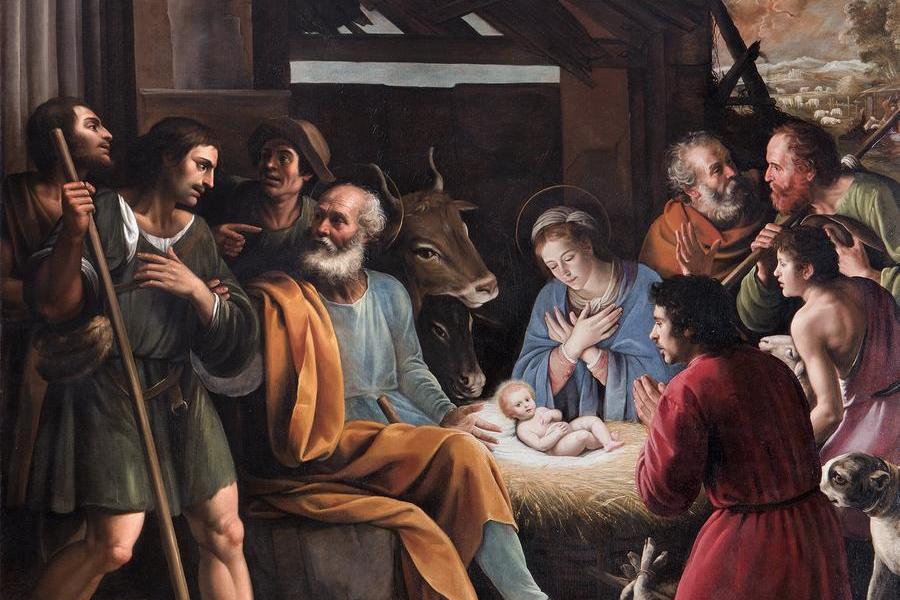
In the same way, the coming year can be entrusted to God not with vague hopes, but with a precise attitude. The Gospel indicates Mary: faced with the events linked to the birth of her Son, “she kept all these things, pondering them in her heart” (Luke 2:19). Don’t let time waste: he keeps it in his heartwhich in the Bible is the place of listening. Memory becomes discernment and discernment becomes availability for God’s future.
Here’s the thing: time is not just what passes, but where God works. The way to recognize it is a certain interior silence, to listen to reality and to read the days not only as a sequence, but as a possibility. For this reason, when one year ends and another begins, the truest prayer remains that of the psalm: “My time is in your hands”.