




Where do we look for the Light?
The Epiphany is not the story of an evocative journey nor a secondary scene of the nativity scene. It is the moment when the Gospel shows clearly where God chooses to be recognized and who, surprisingly, manages to notice it. Matthew builds his story on a great contrast that runs through the entire text. On one side there is the distant East, the sky with its stars, the breadth of the world and its questions; on the other there is Jerusalem, a religious centre, a place of the Scriptures, a city where everything should be clear and recognisable. In the middle, almost surprisingly, Bethlehem appears, a marginal villagedevoid of prestige and power, which promises nothing. And it is precisely there that everything converges, because God chooses to manifest himself not where man concentrates his certainties, but where he least expects it.
The protagonists of the story are foreigners. They do not belong to the people of the alliance, they are not experts in the Scriptures, they do not fit into the usual religious categories. Yet they are the ones who set out. They don’t have answers, but a question that worries them and pushes them to leave. They see a star and decide to take it seriously, letting themselves be guided by it. The star does not eliminate the fatigue of the journey or make the path easier, but it offers a direction, and this is enough to not stay still. In Jerusalem, however, the climate is the opposite. Here you know the Scriptures, you know how to quote the prophets, you are able to indicate precisely the place where the Messiah should be born. But this knowledge it does not become movement. Everything remains still.
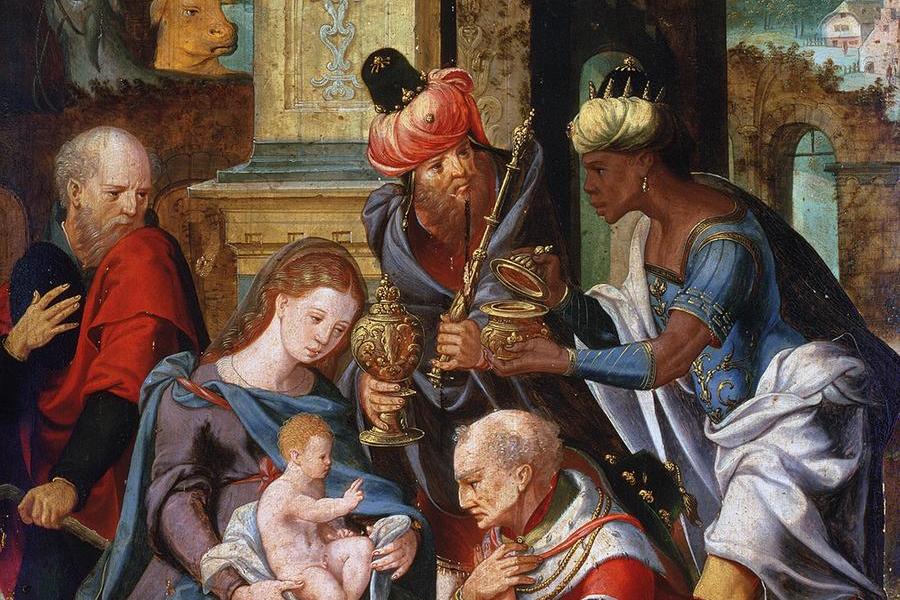
The evangelical story is surprisingly severe: one can know a lot about God, frequent places of religion, handle sacred words, and yet not recognizing the moment when God really passes. When the Magi arrive in Bethlehem, what they find may seem to contradict their expectations. There is nothing grandiose: just a child, a mother, an ordinary house. And that is precisely where the Epiphany takes place. The Magi stop, lower themselves, adore. They understand that God does not impose himself by force, but asks to be recognized in fragility; that the light they were looking for does not dazzle, but invites a gaze capable of welcoming. The gesture of adoration reveals that true knowledge is neither possession nor control, but relationship. Seeing is not enough to understand: it is necessary get involvedaccepting to change position, to come down from one’s point of view. The Magi don’t understand everything, but they trust, and this trust transforms them. This can be understood from the end of the story, when they return to their town by another route: not because they have found a more comfortable route, but because the meeting with that child has changed their way of walking.
Epiphany thus continues to question us even today. He asks us where we look for the light and if we are really willing to move when it takes us out of our usual places. It reminds us that God often allows himself to be encountered on the marginsthat those who are far away can recognize what really matters before those close to them, and that faith does not grow by accumulating certainties, but by accepting to be guided by sufficient light for the next step.
Perhaps this is the truest gift of the Epiphany: not an answer that closes the questions, but a light that accompanies them, making the journey possible.