


The Iranian crisis has rapidly spread, inflaming the entire Middle East, in a scenario that changes day by day with unpredictable developments. The complex conflict that affects the entire region and various fronts intertwines the political component with the religious one. To understand this, it is important to clarify, first of all, the distinction between Sunnis and Shiites within the Islamic world, a split that reflects on the governments and institutions of the area.
In fact, Islam is not a monolithic, unitary block, but a diversified world, branched into different currents which correspond to different historical-religious traditions. The main division within Islam is between Sunnism and Shiism, the two currents born from a split created regarding the succession to the prophet Muhammad after his death.
Sunnis and Shiites share the five pillars of Islam and the Koran as a sacred book, but the two currents differ on the basis of some theological elements and aspects of legal interpretation. In particular, the Sunnis base their religious practice on the sunna (the set of norms, actions and teachings of the prophet Muhammad), the Shiites recognize the figures of the imams as central, considered infallible and representatives of God on earth. In Shiism there is a clergy (while in Sunni Islam there is no clerical structure): the ayatollahs, part of the clergy, are both religious and political figures. Shiites also give great importance to the cult of martyrs.
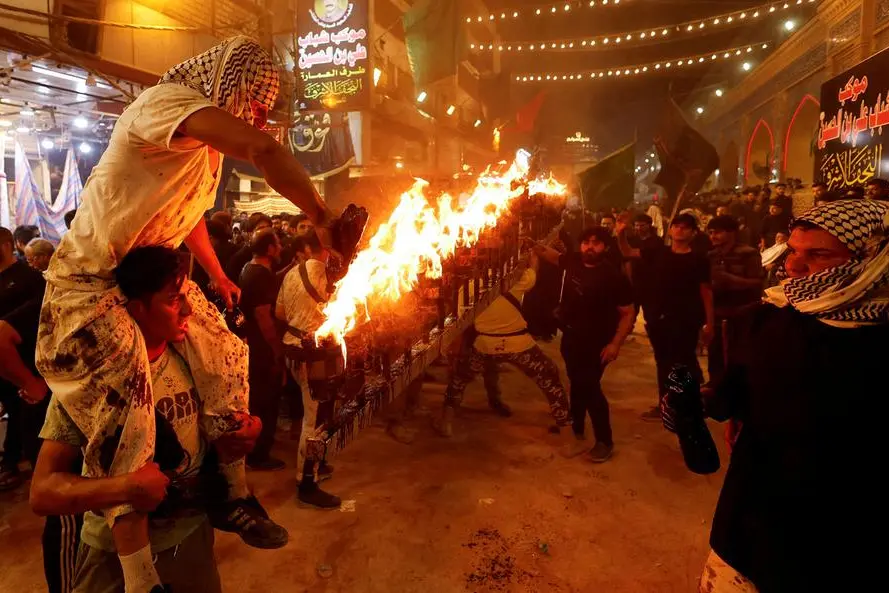
Iraqi Shiite Muslims gathered with torches in Najaf, the holy city of Shiites, to celebrate Ashura, the main holiday of Shiite Islam.
(REUTERS)
Sunnis represent the vast majority of Muslims, about 85 percent of believers worldwide. Shia Islam (about 15% of Muslims) is prevalent in Iran (more than 90% of Iranians are Shia), and it is a majority in other countries such as Iraq, Azerbaijan and Bahrain (the latter, however, is governed by a Sunni monarchy), while in Lebanon and Yemen it has a substantial presence, even if not a majority.
In Lebanon – a country in which the different souls of religious pluralism coexist in a delicate balance and are reflected in the institutional system representing the different confessions – the Shiites represent a third of the population and their stronghold is the Bekaa Valley, dominated by the city of Baalbek, important archaeological site, a UNESCO World Heritage Site.
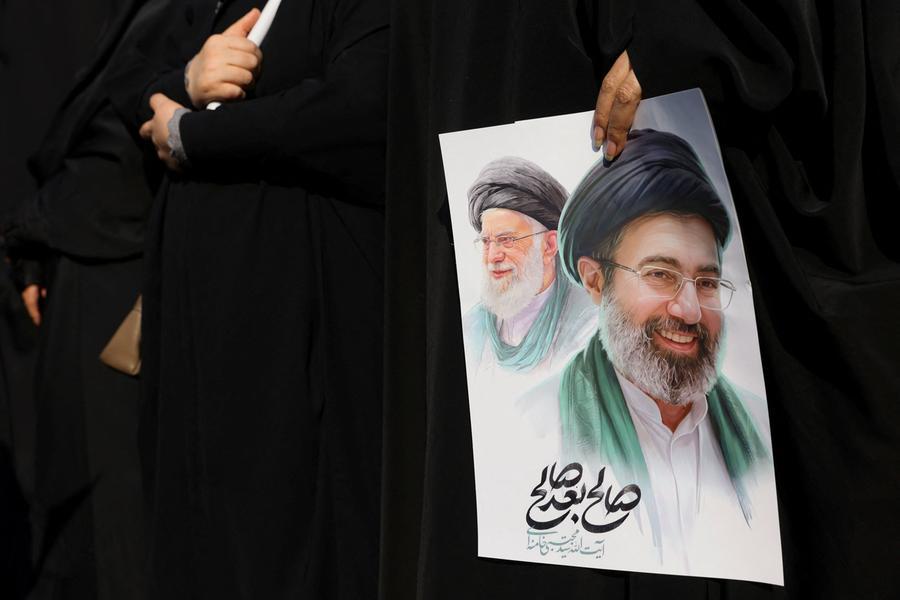
The religious divide between Sunnis and Shiites is also reflected in politics, where religion is intertwined with state institutions, as in the case of Iran, which since 1979 has been an Islamic Republic, dominated by the ayatollahs, the Shiite Islamic clergy, and by the Supreme Leader, highest religious and political authority in the country. Currently the Supreme Leader is Mojtaba Khamenei, who replaced his father Ali Khamenei, who died in the attack by the USA and Israel on 28 February.
Mojtaba Khamenei spread a very harsh message, but without being seen. A behavior that has raised many questions about his real conditions: many suspect that the new Supreme Leader did not show himself because he could be injured.
In Lebanon, political Shiism is expressed in the pro-Iranian movement Hezbollah (in Italian “party of God”), paramilitary organization born in 1982 with the Lebanese conflict – which broke out when the Israeli defense forces occupied southern Lebanon – and later became Islamist political party that opposes Israel. In the civil war in neighboring Syria, which broke out in March 2011, Hezbollah took the field in support of the regime of Bashar al-Assad, who is of the Alawite faith, a current within the Syrian Shiite minority (Sunnis make up over 70% of the population). Since 1997, Hezbollah has been on the list of terrorist organizations drawn up by the United States and Israel.
Israel’s operations to fight and eradicate Hezbollah continue in Lebanon: a militia commander was killed in the attacks on Beirut. “I warned the president of Lebanon, Joseph Aoun, that if their government does not know how to control the territory and prevent Hezbollah from opening fire on Israel, we will take the territory and do it ourselves,” said Israeli Defense Minister Israel Katz, adding that he and Prime Minister Benjamin Netanyahu gave instructions to the Israeli Defense Forces «to prepare for an expansion of activities in Lebanon and to restore security in the north».
Tensions have reignited on the border between Lebanon and Syria: Damascus – which with the new al-Sharaa government has taken a decidedly anti-Iranian position – accused Hezbollah of having opened fire, from Lebanese territory, against the Syrian forces. The risk is that a new war front will open in the Middle East: the one between the pro-Iranian Lebanese Shiite militiamen and the new Syrian army supported by Washington.