


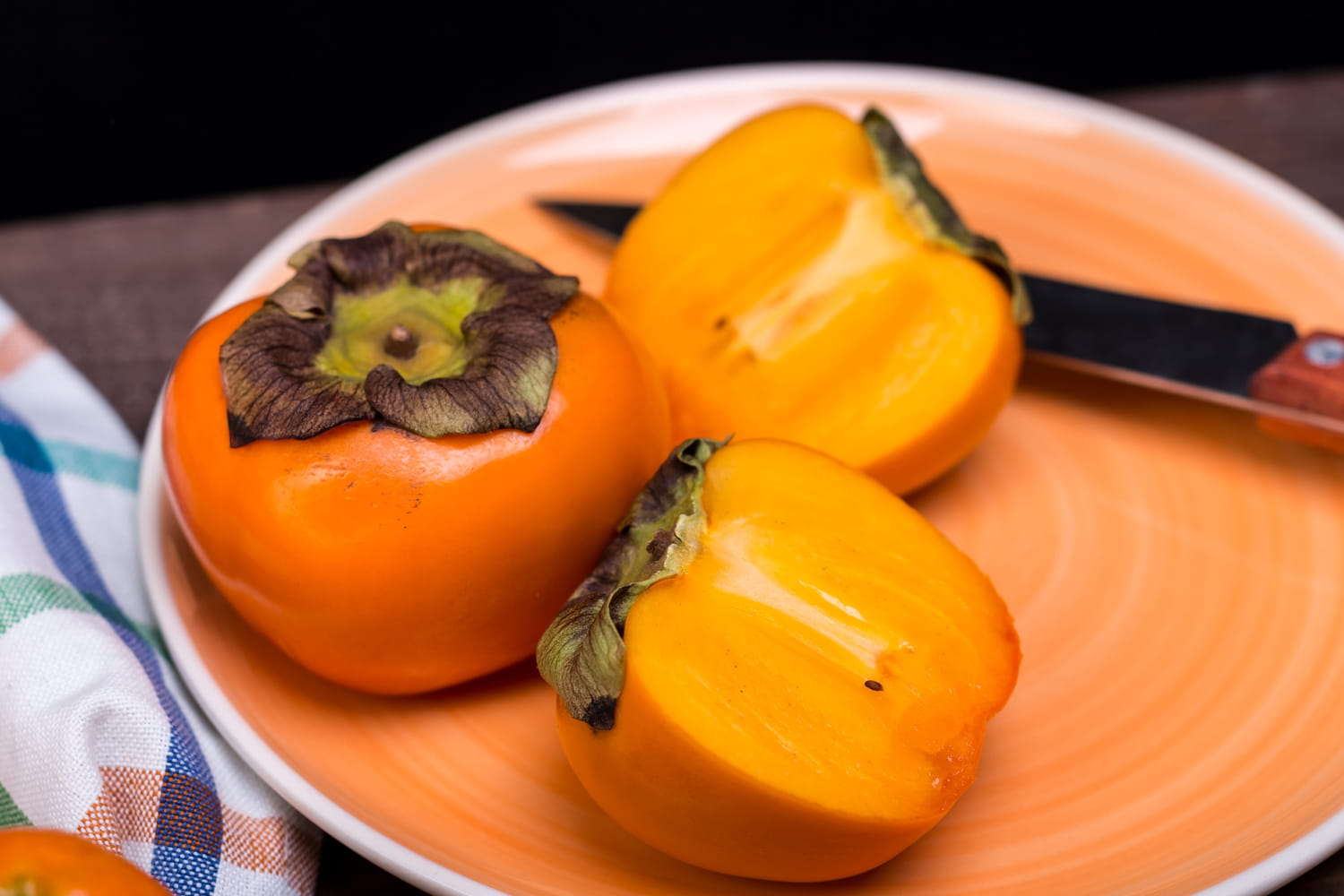



In addition to its sweet and vanilla taste, persimmon is full of health benefits, particularly for the skin, liver, digestion and heart.
We love it in fruit baskets in winter. In addition to its sweet and vanilla taste, persimmon is full of health benefits, particularly for the skin, liver, digestion and heart.
When is persimmon season?
In France, the peak persimmon season extends from October to January. This fruit, mainly grown in the South (particularly in Occitanie and Provence), provides a welcome dose of vitamins in the heart of winter. Unlike other fruit trees which become bare, the persimmon tree (the tree that produces persimmon) often retains its bright orange fruits on leafless branches, creating a magnificent spectacle in French gardens.
What does persimmon taste like?
The taste of persimmon varies depending on its variety. The apple persimmon (Fuyu variety) bites like an apple and has a sweet vanilla flavor. Conversely, the traditional persimmon is eaten very ripe, even overripe; its flesh then becomes melting, almost syrupy, with notes of honey. On the scale side, it is a precious ally: count around 70 to 80 calories per 100 grams. It is in the high average of fruits (close to cherries or grapes), but its strong satiating power thanks to fiber makes it an excellent natural appetite suppressant.
What are the health benefits of persimmon?
Persimmon is a true “superfood”. It is exceptionally rich in vitamin C, provitamin A (carotene) and antioxidants, which help fight cellular aging. A study published in the Journal of Agricultural and Food Chemistry notably demonstrated that the dietary fibers, minerals and phenolic compounds contained in persimmon are more effective than those in apples in fighting atherosclerosis (blockage of the arteries), making it a leading cardiovascular protector. This same study showed that persimmon helps limit the accumulation of fats in the liver. Its active compounds (such as gallic acid) reduce hepatic inflammation and oxidative stress caused by a diet that is too rich.
The way to eat it depends on the variety chosen:
- Persimmon apple: Wash it and bite into it with the skin, or cut it into quarters in a fruit salad.
- The overripe persimmon: Wait until it is very soft to the touch. Cut it in half and eat the flesh with a teaspoon, like a dessert.
Due to its sugar and fiber content, the ideal recommendation is to consume one persimmon per day. This is the perfect portion to stock up on energy without overloading your daily glycemic intake. Be careful, however, not to consume unripe (astringent) persimmons, as they can leave a very unpleasant “dry mouth” feeling.