






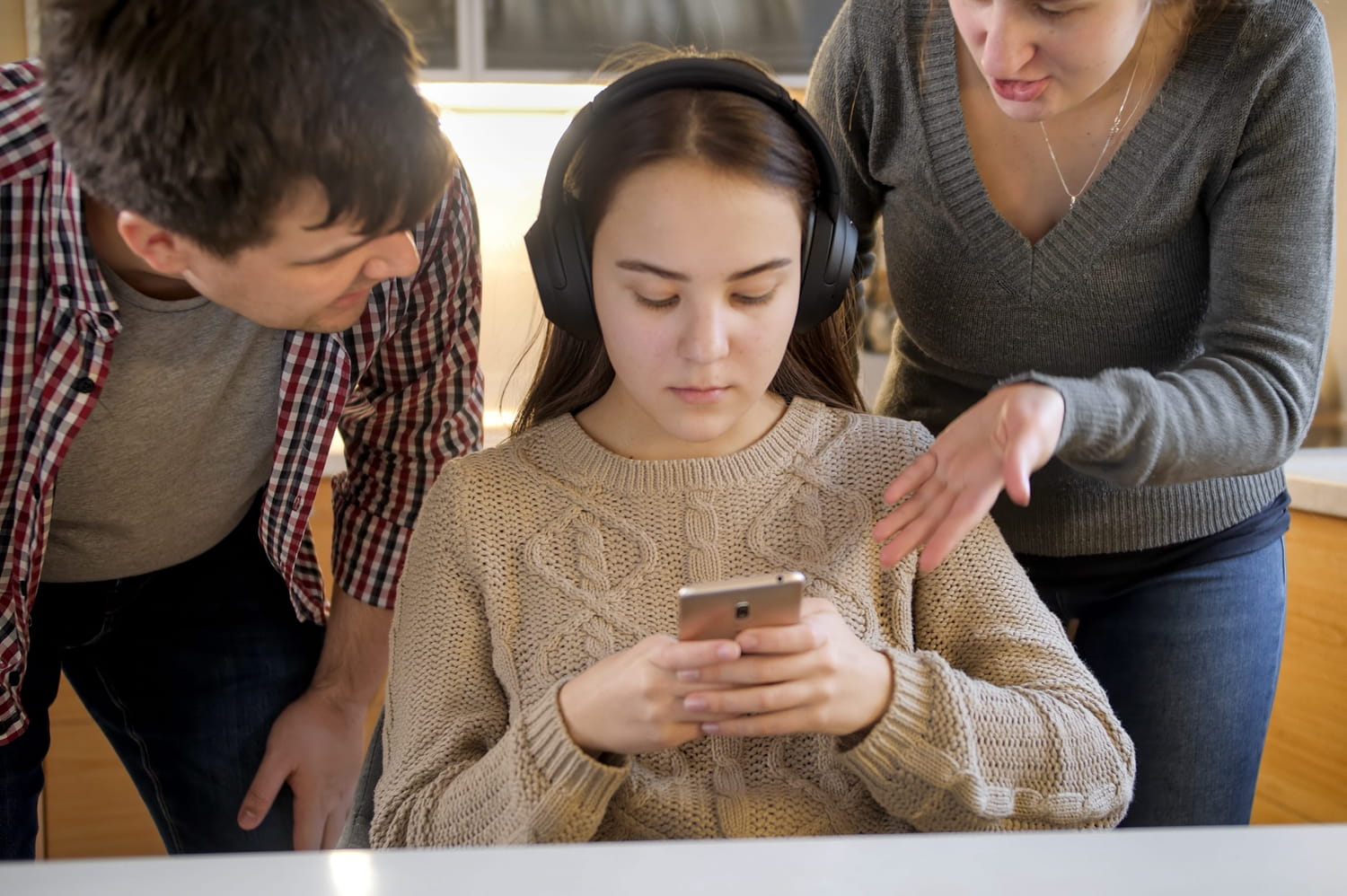
You think you’re doing the right thing by monitoring your teenager’s screen usage, but a simple sentence, uttered by the majority of parents, could have the opposite effect. Far from protecting them, this innocuous remark pushes adolescents into hiding and breaks the bond of trust.
This is the fear of all parents since the advent of social networks. Generation Z teenagers, or the new generation Alpha, have one thing in common: almost all of them are addicted to their cell phones and applications like Instagram or TikTok. Trying to limit their use as much as possible ultimately doesn’t do much… Through friends or even in secret, they will always manage to find a way to scroll. As parents, the key is not to prohibit them completely, but rather to ensure that what they watch remains appropriate. And for that, you still need to establish trust so that they don’t hide everything they do online from you.
This is precisely what explains Tiana, an expert in digital parenting who shares her advice on the Instagram account @decode_le_net. Because teenagers can turn away very quickly and refuse to talk about what they do or see on social networks, particularly because of a particular remark. Many parents do it without realizing that it can cause their child to close off and hide things from them.
What parent has never said “it will make you stupid”, “it will stupid you” or even “It’s stupid what you’re looking at”seeing his teenager lingering on content that is not at all intellectual? “The intention is good at the moment”as the specialist points out, because the goal is only to “wake” the teenager in question and to encourage them to make better use of their time, to learn or cultivate themselves. But in reality, the message we send is not at all the same: “As a teenager, criticizing content that he likes is often experienced as criticism of himself. Result: he shuts down. Not out of provocation, but out of protection.” Indeed, with this remark which is nevertheless intended to be kind, the child understands above all that what he likes is of no interest, that the parent does not understand it, and that it is therefore better not to show him this content rather than risk a guilty criticism. “What this leads to over time: he no longer shows you what he is looking at, he minimizes or hides his uses. The risk? That he also hides what he experiences off screen”alerts Tiana.
The digital parenting expert advises, on the contrary, to “change the dynamic”. It is therefore a question of being interested, rather than judging or spying. If your child follows a content creator who seems totally sassy to you, here are questions she suggests asking them: “How do you think he managed to have so many subscribers?”, “What’s different about him?”or even “What business is behind his videos, how does he make money?”. Through this approach, the adolescent can develop critical and analytical thinking, and will feel more confident in sharing what they watch.
Moreover, to open dialogue more easily, the important thing is also to share your own experience: by saying “I saw a really funny reel this morning, can I show you?” Or “I spent 10 minutes exploring TikTok, this app is crazy!”we show the teenager that we can approach the subject of social networks without judgment or pressure, or without the threat of punishment.