






Many breakfast cereals do not meet nutritionally recommended needs. Faced with the hundreds of boxes offered in supermarkets, here is how to choose very easily and quickly the best ones for your health.
Chocolatey, with honey, filled, soufflés… There is something for everyone. When choosing cereals from the supermarket shelves, the packaging competes with health promises to last all day. Children, like adults, are easily tempted. But behind the bright colors and smiling mascots, it’s hard to know what we’re really putting in the bowl. Too sweet? Too fat? Really nutritious? “The best cereals are first and foremost those that you like. You should favor delicious but healthy cereals” recalls Dr Laurence Plumey, nutritionist. To do this, she gives very simple advice.
Because looking at the packaging can lead to an error. A study carried out by dietitians and published in the journal Nutrients showed that, of more than 500 cereal references available on French, Belgian and Luxembourg shelves, 80% are ultra-processed. Products that are too sweet, too fatty and which, when consumed regularly, cause blood sugar spikes and ultimately increase the risk of diabetes and obesity. Among cereals specifically intended for children, nearly 94% of those featuring cartoons, games or licenses are ultra-processed. These products contain on average 25% sugar compared to 15% for adult cereals, according to the authors. And “only a quarter meets WHO nutritional criteria”. But all is not lost, reassures the nutritionist.
There are many healthy cereals that you can enjoy for breakfast. To easily spot them in stores, Dr. Plumey recommends looking at two lines in the nutritional table on the package: the fiber level and the sugar level. “The ideal is to select cereals that are rich in fiber and relatively low in sugar. she explains in a video.
Concerning fibers, “what is interesting in terms of intake is when there is more than 5 g per portion”she specifies. One serving corresponds to approximately 35 g of cereal for a child and 40 g for a teenager or adult. It is recommended to eat 30 g of fiber per day “so if you see there’s 10g, that’s great”. For sugars, “it should not exceed 15 g (per serving)” advises Laurence Plumey who recalls that “it’s definitely added sugar”. 15 grams corresponds to three cubes of sugar, in a single breakfast.
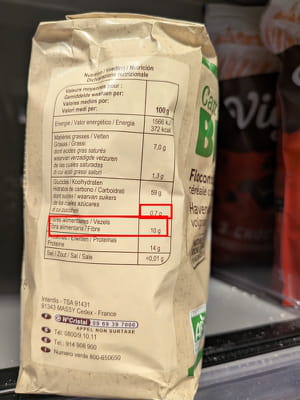
If you are in a hurry and want to know the best cereals, whatever your tastes, the nutritionist recommends whole grain oatmeal “exceptional” with “low glycemic index, no sugar and high in fiber”and muesli, more caloric but which contains “good fat” thanks to almonds, walnuts and hazelnuts. She advises to “choose dark cocoa mueslis rather than milk chocolate, which will be a little sweeter”.
Latest information: the ideal breakfast, according to current nutritional recommendations, consists of a slice of wholemeal or cereal bread, a dairy product and pieces of fresh fruit or a compote without added sugar.