



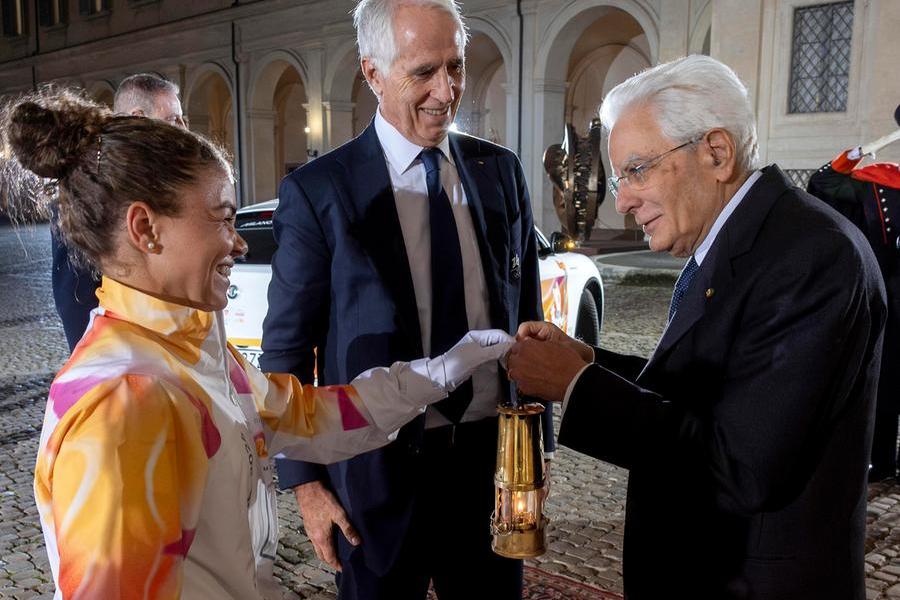
If Baron Pierre De Coubertin turned up his nose and gave a twitch to his mustache, seeing a radiant representative of a super-professional sport like tennis, he who wanted neither professionalism nor women, deliver the lantern with the Olympic flame of Milan Cortina 2026 to the President of the Republic Sergio Mattarellawe will never know. Because times have changed for the better.
We will be left with the magnificent smile, somewhere between excited and intimidated, that the President of the Republic Sergio Mattarella and Jasmine Paolini, the first Olympic gold medalist in Paris 2024 paired with Sara Errani in the history of Italian tennis, exchanged at the moment of delivery of the lantern containing the fire of Olympia received by Jasmine in Greece and deposited in the hands of the President on the evening of December 4th. On the Quirinale square, which was the guardian of the flame for the night, on 5 December in the presence of the president of the International Olympic Committee Kirsty Coventry the first institutional passage of Milano Cortina 2026 takes place: the ceremony of lighting the brazier from which the flame is drawn which, through the torches in the hands of the torchbearers, begins its journey on 6 December which will end on 6 February at the San Siro Stadium where the President of the Republic will be called to declare the Milano Cortina 2026 Games open.
The Baron who invented the modern Games didn’t want women and professionals, but by now, 130 years after the first edition, he will have come to terms with it. History, moreover, took it upon itself to prove to him that he was wrong on both fronts: women are now half of the Olympic team and progressively accepting professionalism was in the long run the only way to save the level of the Games and not exclude those who were not in a position to live on an income, ultimately a factor of equality.
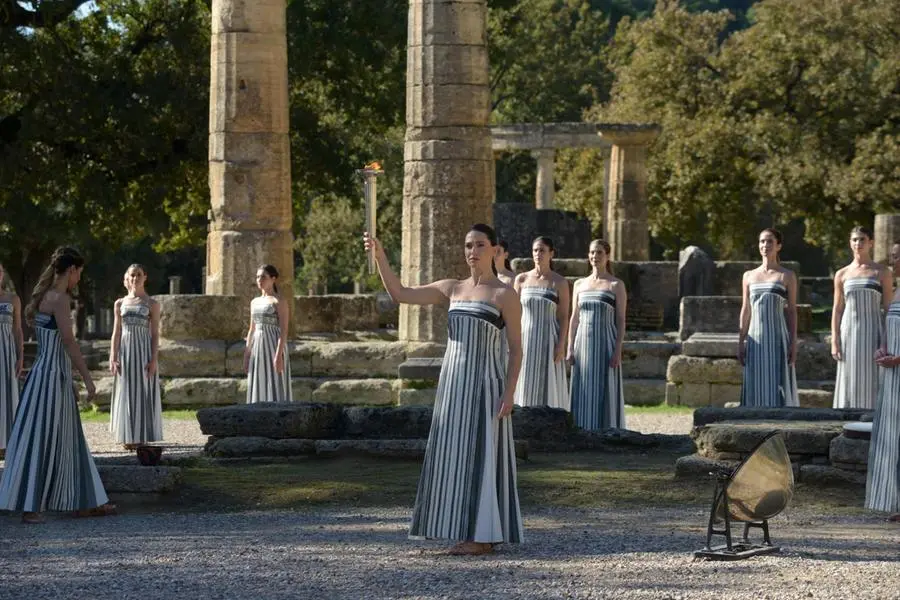
The flame of Milan Cortina was officially lit in the Park of the Archaeological Museum of Olympia on 26 November using, as per ancient tradition, a concave parabolic mirror to concentrate the sun’s rays, even if the delivery to the first torchbearer had to take place indoors inside the Museum, due to the rain.
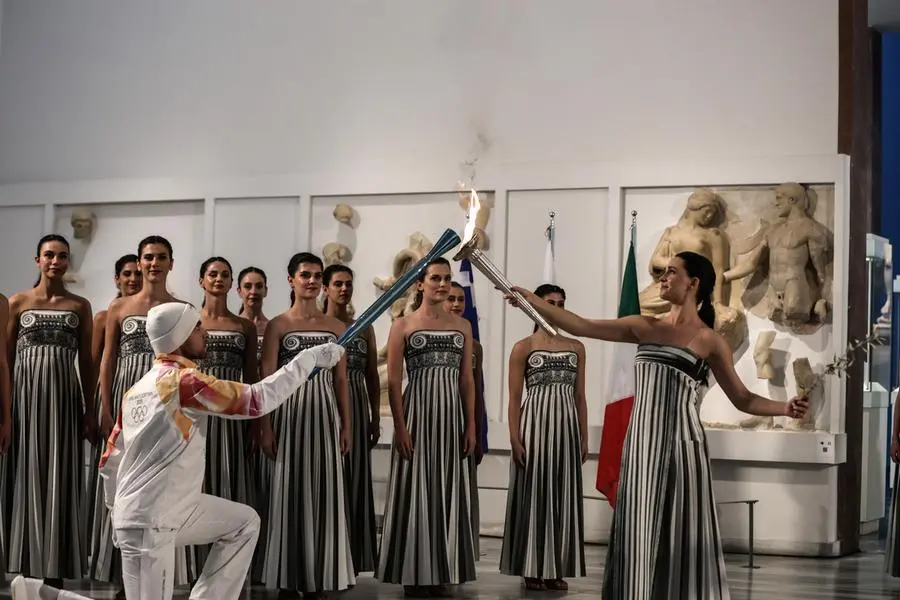
It is the lighting of the Olympic fire, the only act that truly refers to the classical world and the fire sacred to Hera, the moment in which one definitively enters the atmosphere of the Games: from then on even the skeptics allow themselves to be influenced at least a little, the flame warms the hearts and extinguishes or perhaps just puts in the shadows the groans and problemswhich are always there and will be there. From there until the moment, always melancholic, of the brazier going out, it is the Olympic spirit that prevails in the air, with its rites and its myths.
The journey of the flame of Milan Cortina 2026, which began in Greece, begins in Rome on 6 December from the Stadio dei Marmi del Foro Italico, from there thehe Olympic flame that must never go out will travel from torch to torch throughout Italy through a 12,000 kilometer long relay, on the legs of 10,001 torchbearers: ordinary people and symbols of the history of Italian sport – and not only – who will carry it passing through 300 municipalities and 101 provinces, stopping in 60 cities and illuminating UNESCO sites.
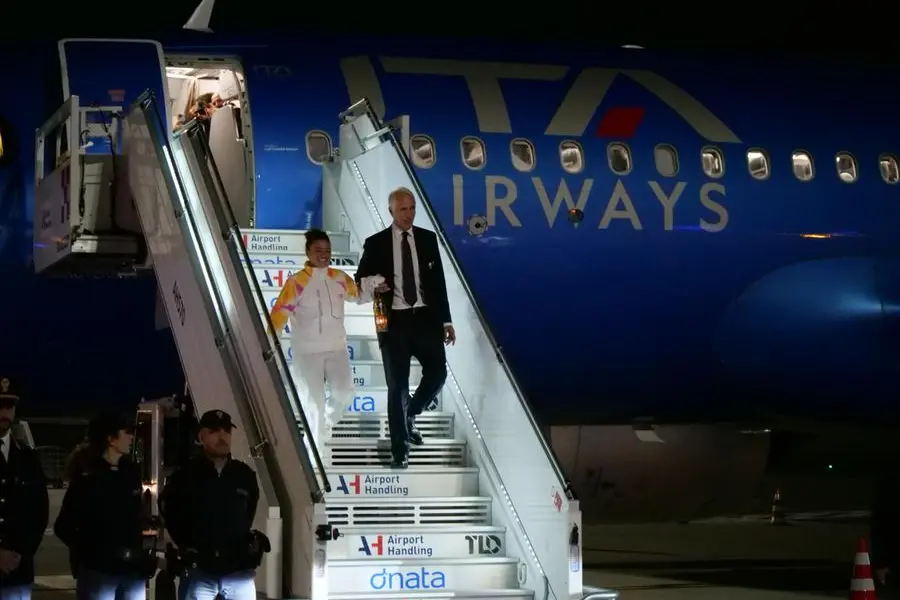
A journey at a rate of around four kilometers per hour (this too they have calculated, because it is not possible to arrive late for the decisive appointment) which will stop in Cortina on 26 January, the day of the 70th anniversary of the Opening of Cortina 1956, to arrive in Milan in time to light the tripod on the day of the Ceremony, just four days before the twentieth anniversary of the beginning of Turin 2006: tradition has it that it is the most evocative moment among the rites Olympic Games, the one in which a competition with history is triggered to see who manages to choose the last most representative torchbearer, taking care to hide his name until the very last one, and to invent the most imaginative way to illuminate the Games, which will have to find a way to make all their participants feel, even if for the first time spread over an area of 22 thousand square kilometres, united around the fire of Olympia as if it were a hearth.
It is the difficult challenge that makes Milan – Cortina 2026 unique before it begins. Also because for the first time in history there will be two tripods in which the Olympic fire burns, lit for the entire period of the Games: one in Milan and one in Cortina.