





Minimalist people know it and already apply it carefully at home. What is this trick that allows you to never let yourself be invaded by disorder again? Let’s move from dream to reality.
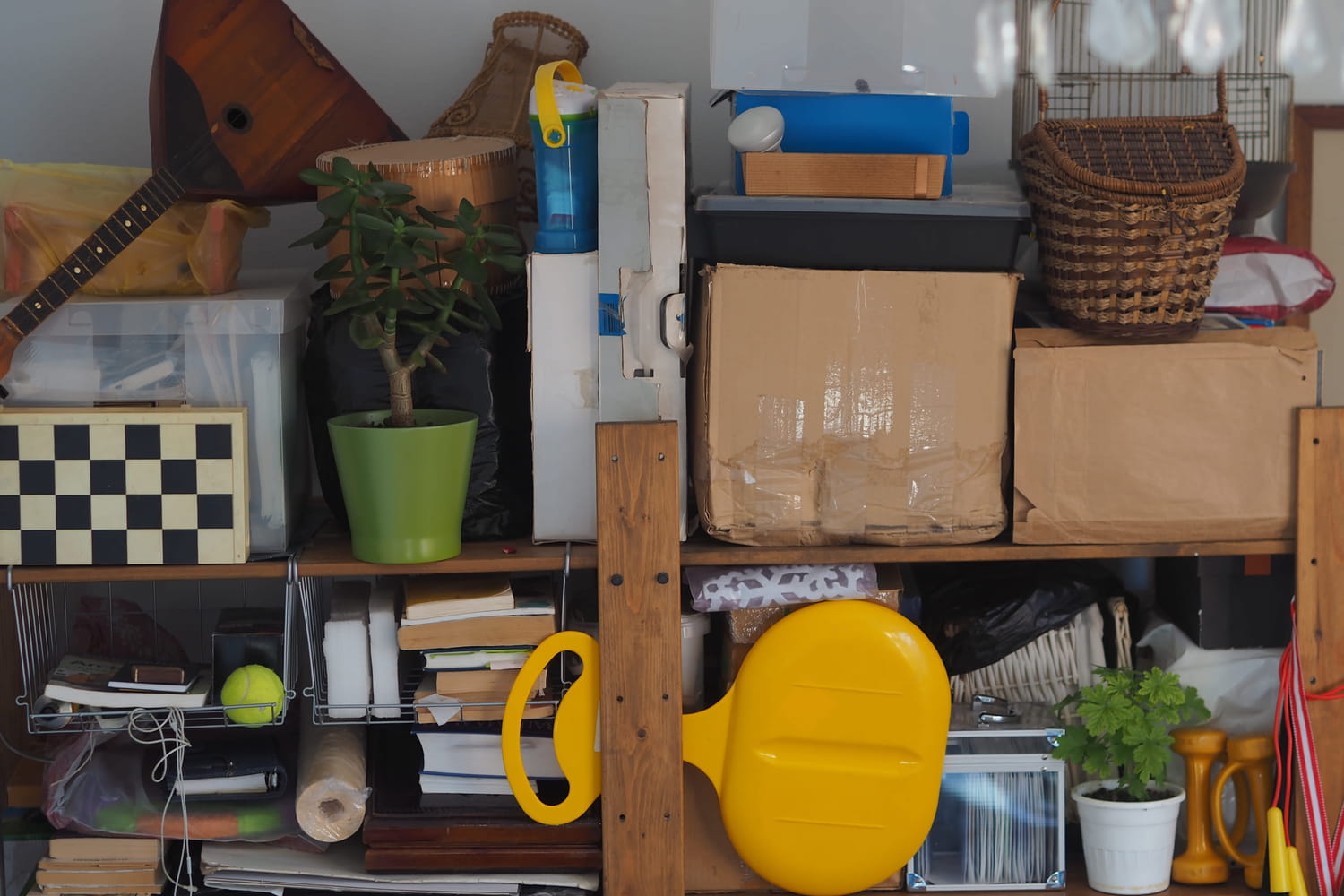
It’s a scenario that we all know: we return to our apartment after a good shopping session or a little trip to the flea market, with a light heart and full arms. We unbox that new vase, that wooden stool or that umpteenth essential kitchen utensil. In the moment, the pleasure is there. But a few days later, the harsh reality catches up with us: the shelves are crumbling under disorder and accumulation reigns throughout the house.
Clutter isn’t just a housekeeping issue, it’s an insidious mental burden. Each object that enters our interior without having an assigned place ends up eating away at our serenity. We pile up, we put away in the back of a cupboard for later, and we end up living in a space that no longer breathes. Despite the big spring sorting sessions, nature always comes back at a gallop. For what ? Because we treat the symptoms rather than the source of the problem: our consumption flow.
To break this cycle, it’s not enough to empty your cupboards once a year. We must establish a discipline, an automatism which acts as a filter at the entrance to our home. Imagine the house as an ecosystem in balance: for energy to circulate, the volume of objects must remain constant. A radical logic, anchored in the rules of interior architecture, makes it possible to break this cycle without requiring complex effort.
The solution can be summed up in one sentence: the “one in, one out” rule. The concept is simple: each new object that crosses the threshold of your door must lead to the immediate departure of another object of the same category. Are you buying a new lamp? An old one should be donated or recycled. A new book joins your library? Another must leave her. This golden rule mechanically prevents accumulation and forces me to ask the essential question before each purchase: is this object really worth parting with another?
By adopting this good habit, you transform your interior by making a lively and chosen selection, rather than undergoing passive stacking.
Your space remains effortlessly organized, and your mind, finally freed from the superfluous, can concentrate on the essentials: enjoying your home.