




Jerusalem, Sunday morning. The hours are the beginning of the day, when the ancient city still moves softly and the light slides on the pale stones of the walls. It is Palm Sunday, the opening of Holy Week. But this year, in the Old City, everything is different: no crowds, no processions, no olive branches waving in the alleys. The restrictions imposed for security reasons, linked to the war and the threat of Iranian missiles, have emptied even the most symbolic places. Almost a permanent curfew.
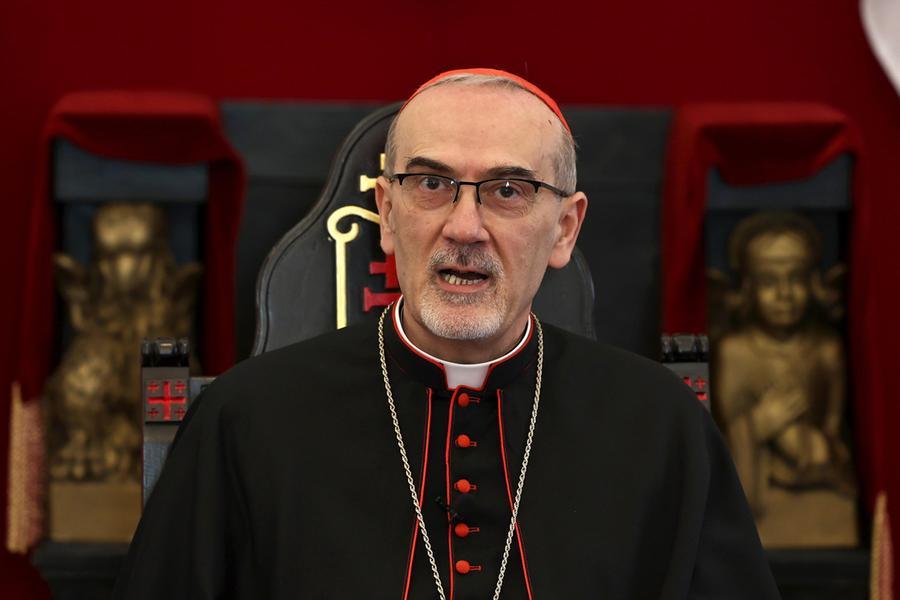
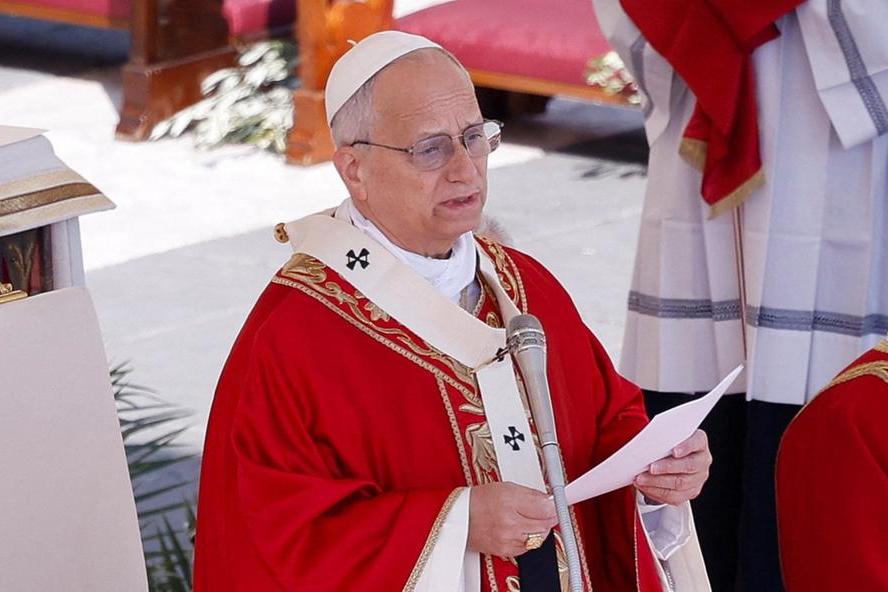
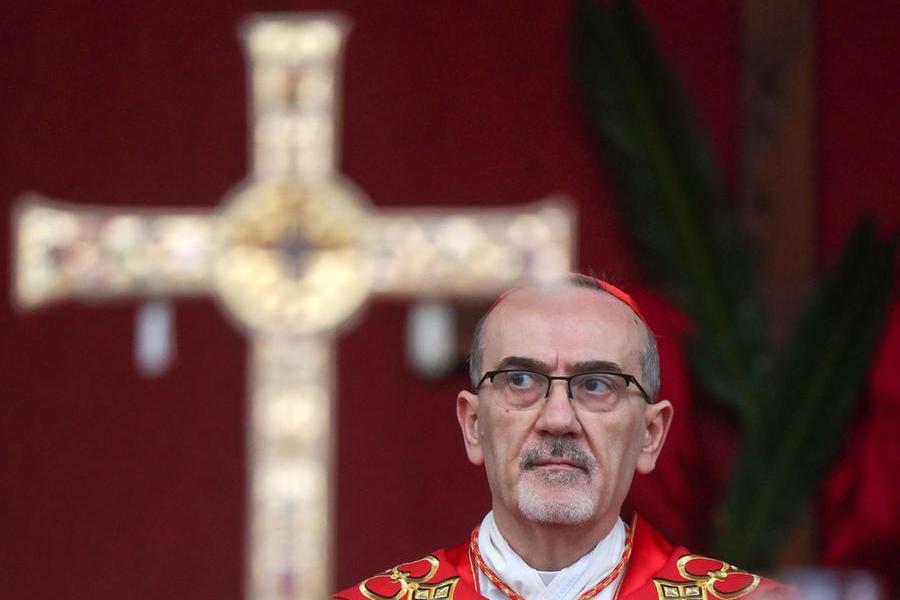
In this scenario reduced to the essentials, Cardinal Pierbattista Pizzaballa, Latin Patriarch of Jerusalem, leaves the residence of the Patriarchate. With him is Father Francesco Ielpo, head of the Custody of the Holy Land, who since 1217 has taken care of and administered the places that represent the cradle of Christianity. No procession accompanies them. There is no procession. No outward sign of ceremony. They move, as specified by the Patriarchate, “privately and without any characteristic of procession or ceremonial act”. From the headquarters of the Patriarchate, near the Jaffa Gate, to the Basilica of the Holy Sepulchre, through the alleys of the Christian quarter of the old city, there are just over 500 meters, which can be covered in six to seven minutes.
Their destination is the Church of the Holy Sepulchre, the heart of Christianity, built on the site that tradition indicates as the tomb of Christ. There, in the early hours of the morning, Palm Sunday Mass should have been celebrated. A celebration already profoundly downsized: without faithful, with the sole presence of the Franciscan friars who guard the place day and night and guarantee the continuity of the liturgy.
The decision had been made in the previous days. The Israeli authorities, through the Home Front Command, had imposed severe restrictions: no large gatherings, a limit of around fifty people even in places of worship, and in general a drastic reduction in every public event. The Holy Sepulchre, as happens in times of crisis, had been closed to the public since February 28, the day after the start of the Israeli-American offensive against Iran. The risk, the authorities explain, is concrete: missiles, debris, and above all the impossibility of having emergency services intervene quickly in a dense and intricate area like the Old City.
Yet, despite the restrictive framework, a solution had been identified. “We had informed everyone that the Patriarch would celebrate Mass there,” explains Farid Jubran, head of communications for the Patriarchate. The police, he adds, had coordinated and authorized the celebrations for the tiny community residing in the Holy Sepulchre. A small group – five or six people – would therefore have joined the Patriarch for the Palm Sunday Mass, respecting the “status quo”, the delicate historical system that regulates rights and access between the different Christian confessions in the Holy Places.
It is in this context that the episode takes place.
As Cardinal Pizzaballa and Father Ielpo approach the basilica, they encounter Israeli police along the way. The officers, wearing grey-blue uniforms and bulletproof vests, come forward, intervene and stop them. This is not a temporary check. The order is clear: they cannot continue.
According to what official sources from the Israeli Police declared, the Patriarch’s request to go and pray in the church had previously been examined and rejected for security reasons. The agents, therefore, would have applied a decision already made. The two religious men are ordered to go back. And so it happens: the Latin Patriarch of Jerusalem and the Custodian of the Holy Land are forced to reverse course and return.
The result is without recent precedent. For the first time in centuries, the leaders of the Catholic Church in the Holy Land are prevented from celebrating Palm Sunday Mass in the Holy Sepulchre.
The Latin Patriarchate of Jerusalem openly speaks of a “serious precedent”. In an official note he underlines that what happened “ignores the sensitivity of billions of people around the world who, in these very days, are looking at Jerusalem”. And he insists on one point: the Church, since the beginning of the war, has complied “with a full sense of responsibility” with all the restrictions. Public celebrations were cancelled, the participation of the faithful prohibited, liturgies broadcast online for hundreds of millions of believers.
Hence the clear judgement: preventing the entry of the Patriarch and the Custos is defined as “a manifestly unreasonable and seriously disproportionate measure”. The next step is even harsher: “a hasty and deeply flawed decision, influenced by improper considerations”, which represents “an extreme deviation from the fundamental principles of reasonableness, freedom of worship and respect for the status quo”.
On the other side, the Israeli authorities are not backing down. All the measures adopted in the Old City – they explain – are “a direct consequence of Iranian missile launches”. The area – according to the Police command – was hit several times, even in the vicinity of the main holy places – the Holy Sepulcher, the al-Aqsa Mosque, the Western Wall. In such a compact area, a possible event with numerous victims would represent a very difficult scenario to manage, precisely due to the logistical complexity and limited access to emergency vehicles. Hence the choice: ban gatherings and drastically limit access, even at the cost of exceptional decisions. It’s a shame that at the Holy Sepulchre, there would have been two people celebrating Mass, as has happened for centuries on Palm Sunday, in addition to the five friars who preside over that temple of Christianity. The “protective” intent of the police appears laughable and specious, given that the Patriarchate, where theoretically a bomb could fall at any moment, is just a few meters from the basilica. Furthermore, the representatives of the Custody of the Holy Land are free to travel around Jerusalem, as well as reach Tel Aviv airport, as has recently happened for some religious people, given that many flights have not been cancelled. And it is highly unlikely that Iran will target the holy sites, which have nothing to do with the Tel Aviv government.
The episode therefore has more of a flavor of intimidation and also has immediate repercussions on a political and diplomatic level. Condemnations also follow one another on an international level. French President Emmanuel Macron expresses “full support” for the Patriarch and the Christians of the Holy Land. The Italian Prime Minister Giorgia Meloni speaks of “offense to believers”. The Israeli representative in Rome, Jonathan Peled, is summoned to the Italian Ministry of Foreign Affairs for clarifications. Several embassies are asking for official explanations.
Meanwhile, in Jerusalem, Holy Week continues in a reduced, almost silent form. The celebrations are broadcast online, reaching millions of faithful around the world. But the symbolic heart of Christianity, that morning, remained closed and inaccessible even to its highest representatives.
And the fact – naked, without interpretation – remains this: along a street in the Old City, while on their way to celebrate a liturgy already reduced to a minimum, the Latin Patriarch of Jerusalem and the Custos of the Holy Land were stopped by the Israeli police and forced to turn back.