



No to the proposal for a “specifically theological” dialogue put forward by the Holy See, because it would not call into question either the texts of the Second Vatican Council or the legitimacy of the liturgical reform. Yes, however, to the consecrations of new bishops scheduled for next July 1st.
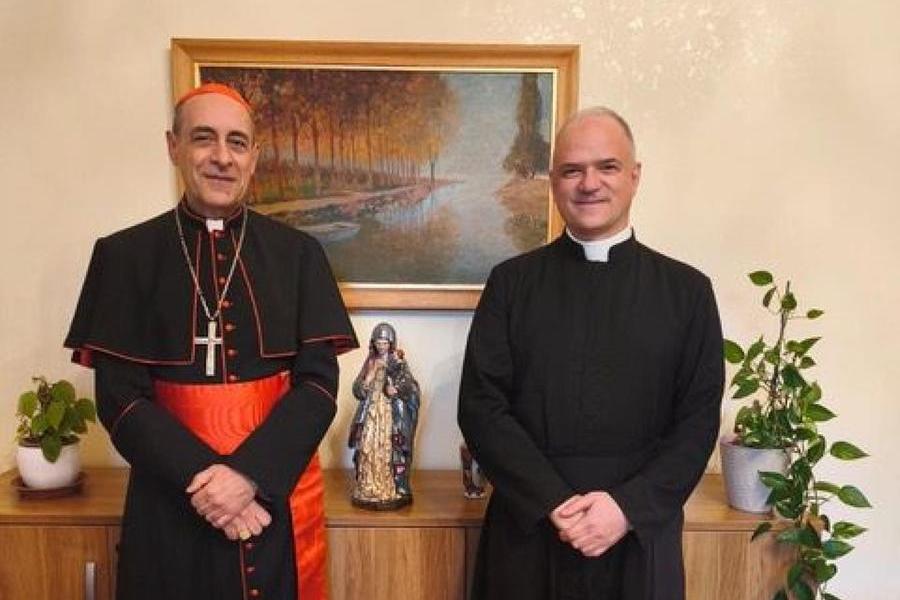
It is the position expressed by Priestly Fraternity of Saint Pius (SSPX), the so-called Lefebvrians – from the name of the archbishop Marcel Lefebvrefounder of the Fraternity in the Seventies in opposition to some outcomes of the Council – in a letter sent to the Cardinal on 18 February Víctor Manuel Fernándezprefect of the Dicastery for the Doctrine of the Faith, and signed by the five members of the General Council.
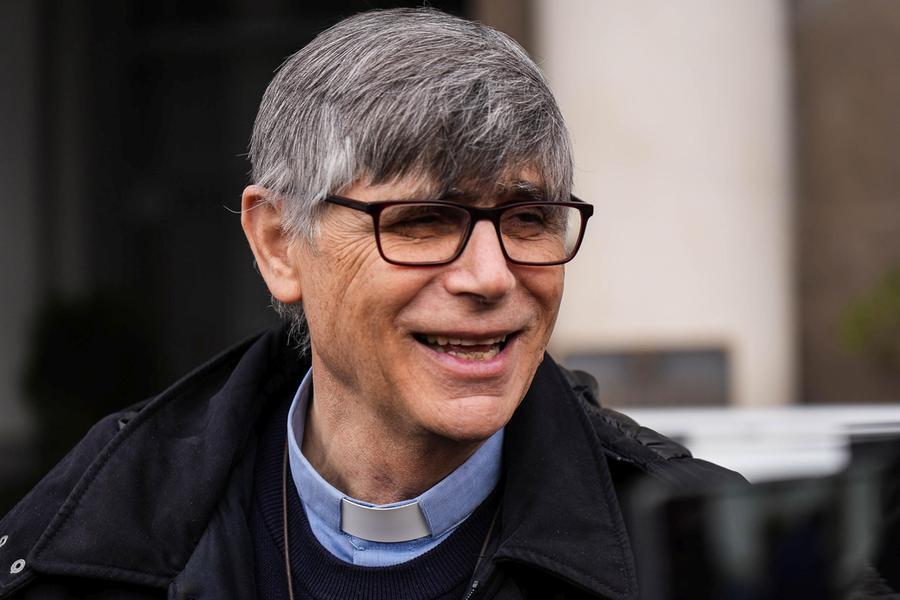
The response bears the signature of the superior general, Don Davide Pagliaranifollowing the meeting that took place on February 12th in the Vatican. A conversation that the Argentine cardinal himself had defined as “cordial” and “sincere”, making it known that he had proposed to the members of the Fraternity the start of “a specifically theological dialogue”, with “a very precise methodology”, on topics which – in his opinion – had not yet received “sufficient clarification”.
The proposal was accompanied by the request to suspend the episcopal ordinations announced last February 2, since the possible consecration of bishops without pontifical mandate – the prefect had recalled citing the Code of Canon Law and the magisterium – «it would imply a decisive break in ecclesial communion (schism) with serious consequences for the Fraternity as a whole».
The dialogue proposal
In the letter, Pagliarani first of all expresses appreciation for what he defines as a “new openness to dialogue”, seeing in it a “positive response” to the suggestion of a doctrinal “discussion” already made in January 2019, in a “serene and peaceful” climate, without the pressure or threat of possible excommunication.
However, the superior of the Lefebvrians rejects the proposal. In his opinion, a dialogue set up in the terms indicated by the Holy See could not “get to determine together what would constitute the minimum necessary for full communion with the Catholic Church”, since «the texts of the Council cannot be corrected, nor the legitimacy of the liturgical Reform questioned». According to Pagliarani, the Second Vatican Council “does not constitute a set of freely interpretable texts”, but was received and developed by successive Popes over the last sixty years, according to precise doctrinal and pastoral orientations. An official reading which, he writes, is expressed in important documents such as encyclicals Redemptor hominis And Ut unum sintas well as in the apostolic exhortations Evangelii gaudium And Amoris laetitiaup to recent interventions on liturgical matters such as the motu proprio Custodian traditions. All these texts, claims the superior of the Fraternity, would show that “the doctrinal and pastoral framework in which the Holy See intends to place every discussion is already determined”.
Orders confirmed
«For these reasons – adds Pagliarani – in the shared awareness that we cannot find an agreement on doctrine, it seems to me that the only point on which we can meet is that of charity towards souls and towards the Church».
In fact, the Fraternity reiterates that not being able to accept “the perspective and purposes” with which the Dicastery proposes the resumption of dialogue “in the present situation”, nor the request to postpone the consecrations scheduled for 1 July. The ordinations of new bishops are therefore confirmed as a response to a “concrete short-term need for the survival of Tradition”.
A passage that reopens a wound that has never completely healed in the recent history of the Church, marked in 1988 by the episcopal consecrations without pontifical mandate carried out by Lefebvre and by the consequent declaration of excommunication, later remitted in 2009 but without achieving full canonical regularization of the Fraternity.
The knot of ecclesial communion
In the statement released after the meeting on 12 February, Cardinal Fernández had forcefully recalled the principle according to which the ordination of a bishop without the mandate of the Pope – which, by virtue of canon 331 of the Code of Canon Law and the dogmatic constitution Pastor aeternusholds supreme, full, universal, immediate and direct ordinary power – it would lead to a breakdown in ecclesial communion.
The choice of the Society of Saint Pius If on the one hand there is a formal willingness to dialogue, on the other the underlying issue remains unresolved: the interpretation of the Second Vatican Council and the acceptance of the subsequent magisterium as a binding criterion for full communion in the Catholic Church.
A passage which, once again, calls into question not only disciplinary issues, but the very meaning of ecclesial unity and obedience to the Successor of Peter.