




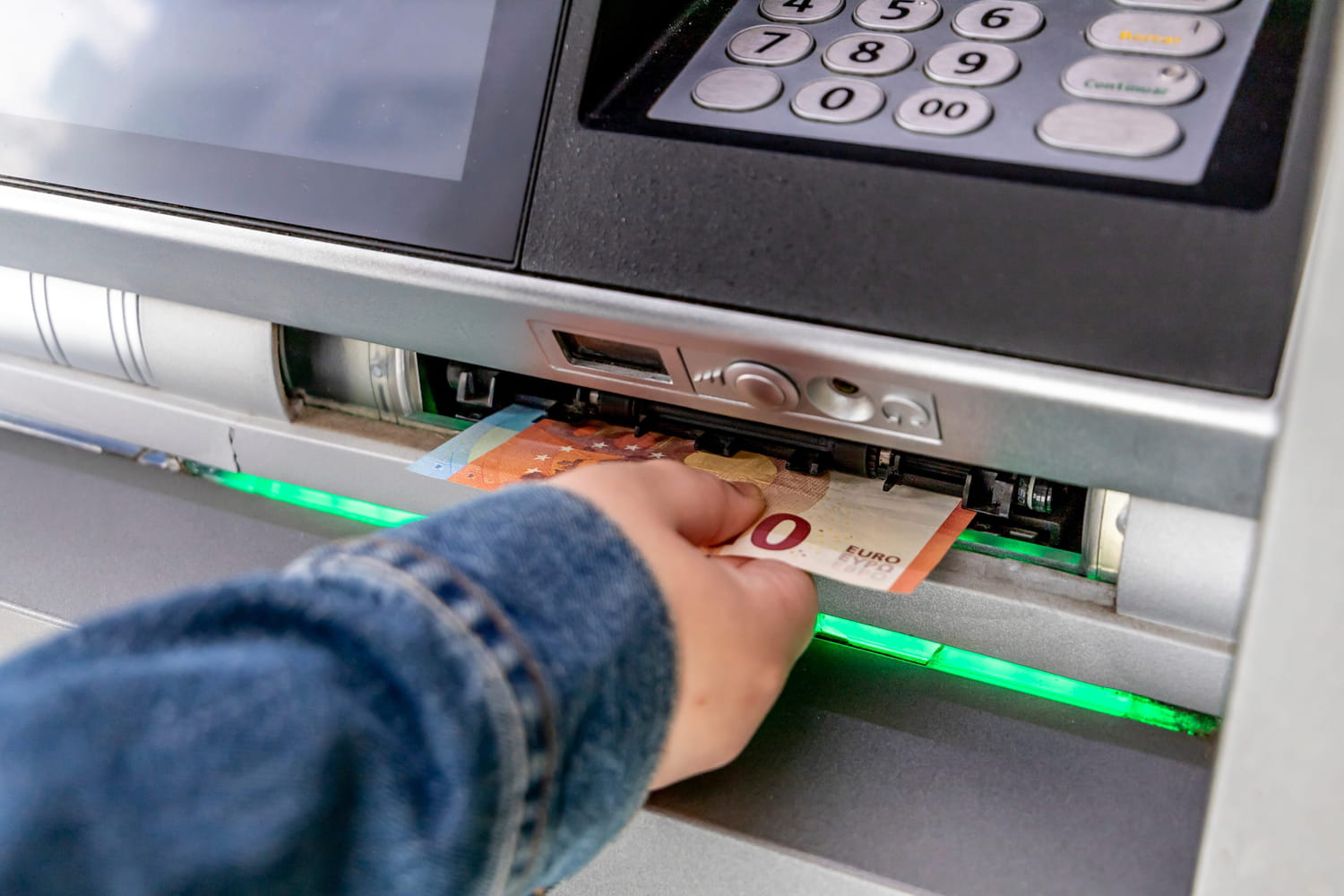
With the return of markets, festivals and garage sales, there is renewed interest in cash withdrawal. Many French people regularly go to the distributor and make a mistake which can be costly.
At the ATM, you insert your card, withdraw money and mechanically slip the notes into your wallet. These gestures become almost automatic. It is precisely this way of doing things that benefits scammers today, and many still continue to be fooled. In fact, for several months, banks have been warning about the increase in false calls and fraudulent SMS messages. Everyone has already experienced this scene: a person presents themselves as an advisor, claims that a suspicious transaction has been detected and asks the customer to confirm certain information or validate an urgent operation on their phone. The most disturbing thing is that these fraudsters sometimes have very precise details.
Cybersecurity specialists also speak of “social engineering”. The principle: rather than directly hacking a bank account, scammers manipulate the victim into making the mistake themselves. To make their speech credible, they accumulate information collected from everywhere. Some come from old data leaks, others from fake websites, online advertisements or illegally resold telephone numbers. But there are also much simpler methods, sometimes directly in the street, in front of a vending machine.
Very concretely, when you print a receipt following a bank withdrawal and automatically throw it in the trash, it is a godsend for scammers. This ticket contains valuable information, such as the exact time of withdrawal, the amount, the ATM used, the last digits of the bank card and occasionally the balance remaining on the account. Individually, this data allows a fraudster to construct a very credible message during a fake bank call. And, inevitably, when someone on the phone knows your morning almost better than you, the distrust goes down a notch.
The good reflex is therefore not to print a receipt when it is not necessary. If a receipt is useful for an expense report or tracking expenses, it is better to keep it carefully and then destroy it, rather than leaving it in a trash can near the distributor. Today, banking applications already make it possible to find all transactions in a few seconds, without leaving behind information that others could recover.