





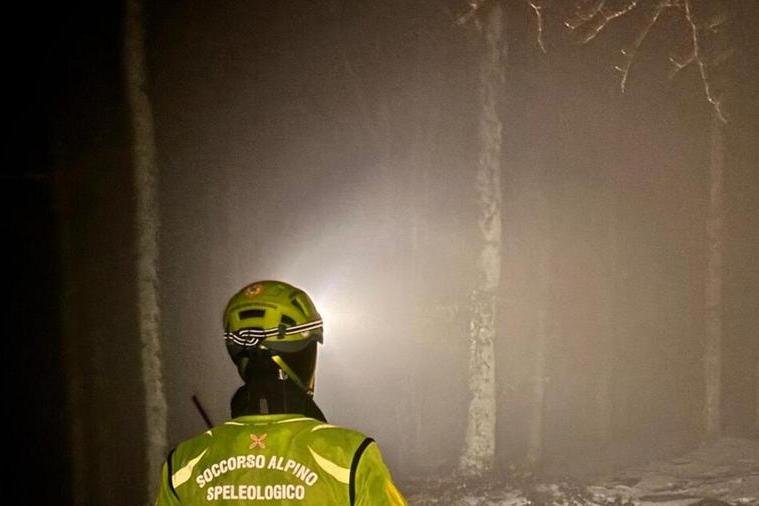
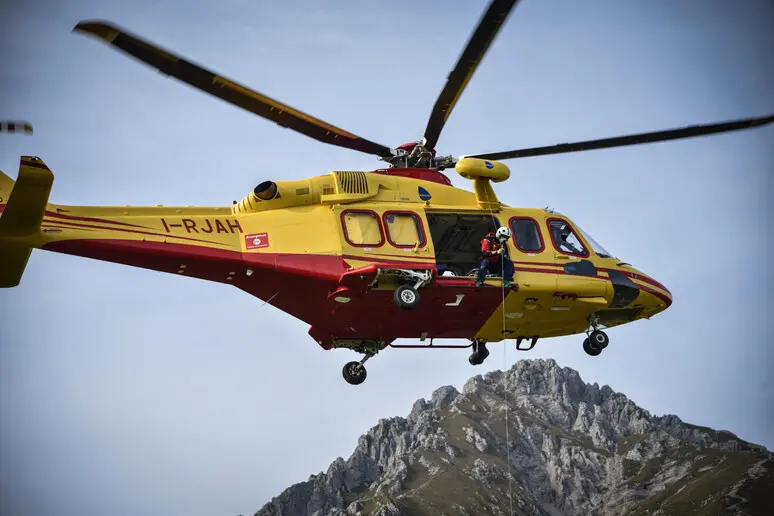
528 people will die in mountain accidents in 2025, 13% more than the previous year. A significant fact, which tells of a trend and which forces us to ask ourselves what is really changing in our relationship with the highlands. In the face of over 13 thousand Alpine Rescue interventions, never so many, an evident paradox emerges: the mountains have never been so frequented, yet never so little understood.
The news reports an increasingly dense mosaic, interventions for missing hikers, falls on paths considered easy, sudden underestimated changes in weather, people stranded without adequate equipment. And then emblematic cases such as the recent one at Lake Braieswhich has become a symbol of out-of-scale tourism, where even those who intervene to help find themselves exposed to risk conditions amplified by human pressure. Scenes that tell of a mountain transformed into a stage, where the experience is often replaced by its representation.
Andrea Greci, editorial director of the Italian Alpine Club and of the CAI magazineidentifies the point with clarity, «you don’t need to be a mountaineer to end up in difficulty, all it takes is an unknown path, a cloud that closes the ridge, a wrong shoe, or even a wrong idea, that the mountain is just a postcard backdrop». It is here that the deepest gap occurs, that between a lived mountain and a worn mountain. «It’s not a playground, it’s a cultural landscapean environment that must be explored with respect, not just photographed.”
Greci’s reflection extends to an educational dimension that the CAI has been carrying out for over a century and a half, «the essential backpack is not only made of objects, but of what we carry inside, knowledge, awareness, curiosity». Three words that define an approach, almost a method. Without these coordinates, even the most accessible mountain can turn into hostile terrain. «We see people chasing images seen online, attracted by a powerful but superficial aesthetic, devoid of depth, without really questioning what they are doing».
The point is not to close the mountain, nor to build barriers, but to accompany. After the pandemic, the need for nature exploded, bringing a new audience to altitude, often without experience. «It’s a good thing that more people are getting closer, the mountains remain an extraordinary space to rediscover oneself, but gradualness, humility and a desire to understand are needed». A learning that resembles that of any other complex practice, theory, experience, awareness of limits. “You don’t enter the track in Monza on the first day, and the same principle should apply in the mountains.”
But the issue does not only concern individual behaviors. The context in which we move is changing rapidly, and often invisibly. Piero Carlesi, president of the Central Scientific Committee of the CAIdraws attention to a structural element, the growing instability of the mountain environment. “Mountains are always destined to collapse, but on very long time scales, today we are witnessing an impressive acceleration.”
The monitoring work conducted by the CAI together with universities and research centers provides a clear picture, micro-shifts of the rocks, melting of the permafrost, sudden landslides, changes that modify the safety of even the most well-known routes. These are not exceptional events, but a new normality. «The problem is that many continue to frequent the mountains as if nothing has changed», observes Carlesi.
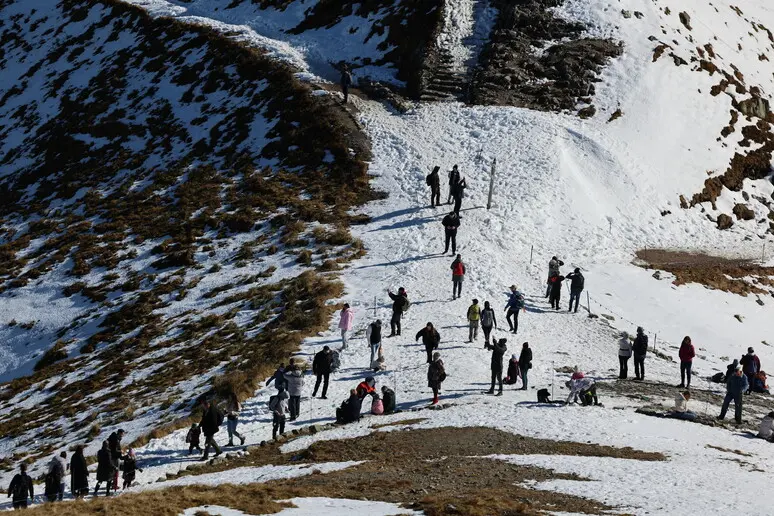
The pressure of overtourism is superimposed on this scenario. After the lockdown, the mountains were perceived as a space of total, accessible and immediate freedom. But this drive has often translated into extreme concentration on a few iconic places. «There were days when the paths looked like walkways», says Carlesi, «continuous queues, people stopping to take photos, unmanageable flows». A phenomenon amplified by social media, which transform some peaks into obligatory destinations, endlessly replicating the same images.
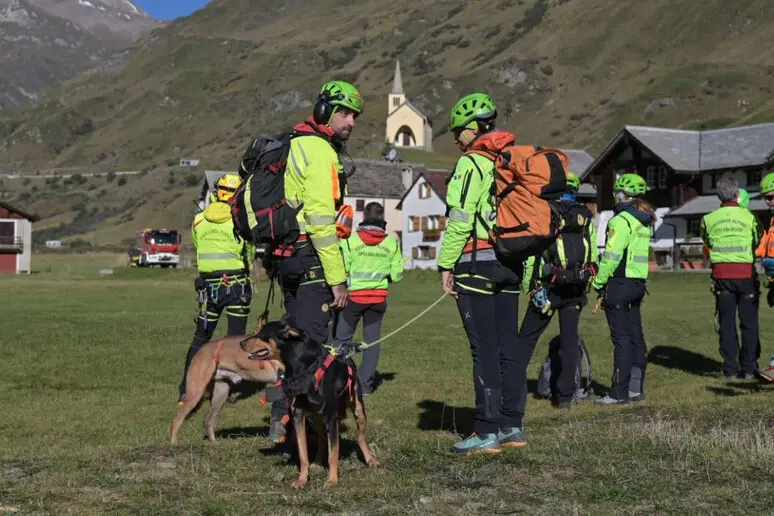
The result is a critical mix, more presences, less average experience, a more fragile environment. And therefore more accidents. Not only on the great mountaineering routes, but also on apparently simple itineraries, where underestimation becomes the first risk factor. «I happened to meet guys in flip flops on the trails», adds Carlesi, «if things go well they stop, if things go badly they put themselves and those who have to intervene at risk».
Within this framework, security cannot be reduced to a technical issue. It is a cultural fact, which concerns the way in which we imagine the mountain before even climbing it. «What remains of an experience built only for a photograph», asks Greci, «if we don’t even know the name of the peak in front of us». The answer is not to give up, but to change perspective, to move from superficial amazement to a deeper question, why am I here, what am I going through, how can I do it right.
Even fatigue, in this sense, becomes part of the answer. «The mountain teaches that beauty requires time and commitment, preparation and knowledge of one’s limits», observes Greci, «you can’t get to the top in a minute, and this also applies to building a culture». A slow process, which passes through direct experience, mistakes and learning.
The CAI has insisted for years on this educational dimension, courses, accompanied excursions, publications, a widespread presence throughout the national territory. Over 500 sections, a network that crosses the Alps and Apennines, from the great peaks to the lesser-known areas. It is precisely here that a possible way out opens up, redistributing flows, valorising less traveled territories, rediscovering a quieter, more authentic mountain. «There are not only the Dolomites or fashionable locations», recalls Carlesi, «there are extraordinary valleys that are often empty, rich in history and biodiversity». The challenge, then, is twofold, reducing risk and restoring meaning. To do this, a broader alliance is needed, involving the media, schools, institutions and local communities. «The mountains are good for you”, concludes Carlesi, “but they must be experienced with head and heart». A simple phrase, which summarizes a shared responsibility.
Because behind the numbers, behind the statistics, there are stories, lives, avoidable errors. And a question that remains open, whether we are still capable of inhabiting the mountains, or whether we limit ourselves to consuming it.
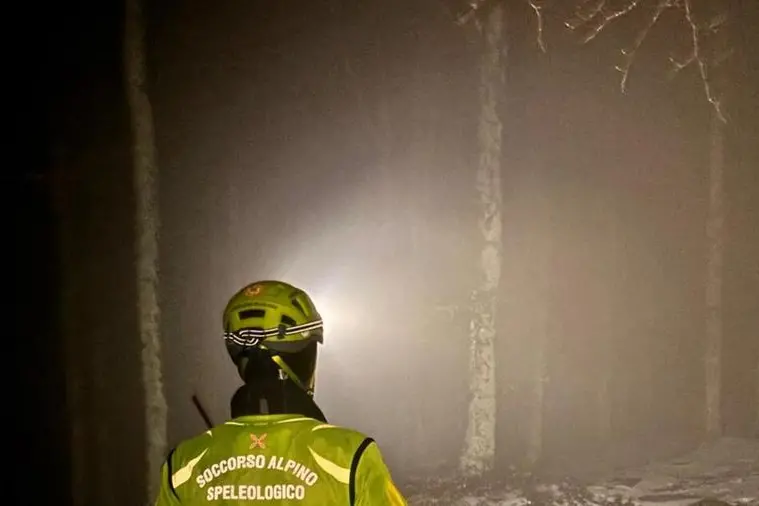
The “Safe in the mountains” campaign, the basic rules
The CAI advises you to always check the weather reportseven on the day of the excursion, check the practicability of the paths via CAI, local shelters or APTsavoid gullies and stream beds after recent rains or storms, leave early in the morning to reduce exposure to heat and bad weather, bring adequate equipment such as maps, GPS, technical clothingsticks, Don’t overestimate your abilitiesbecause many accidents arise precisely from imprudence