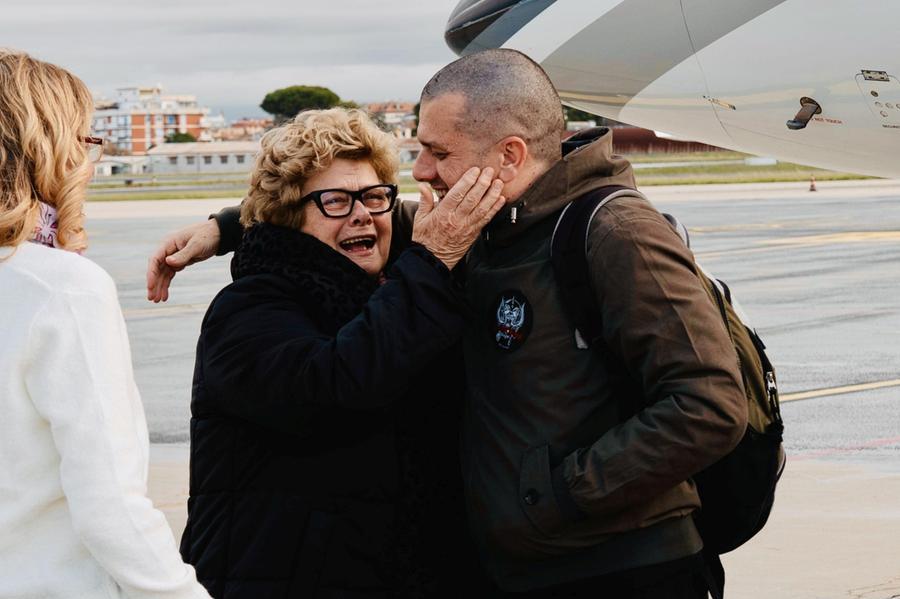




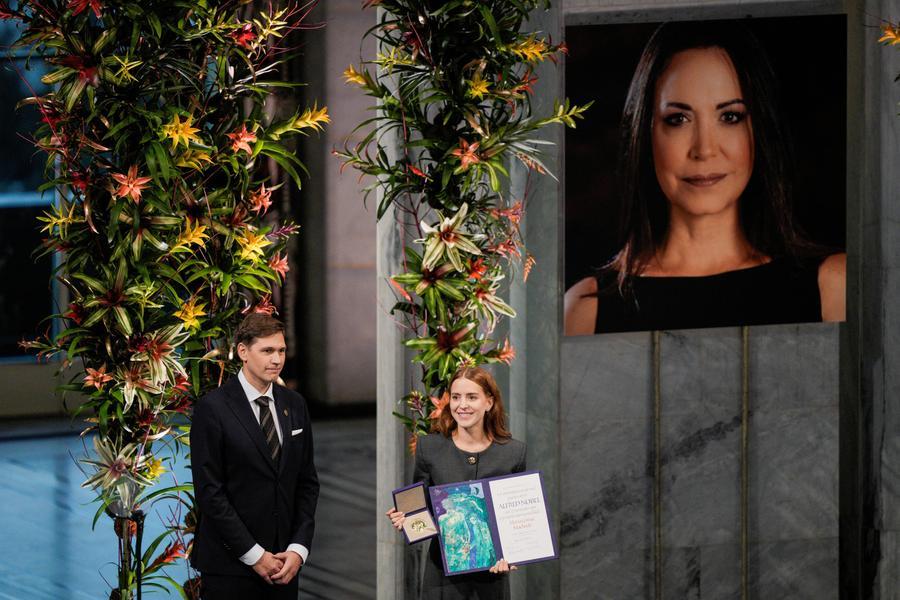
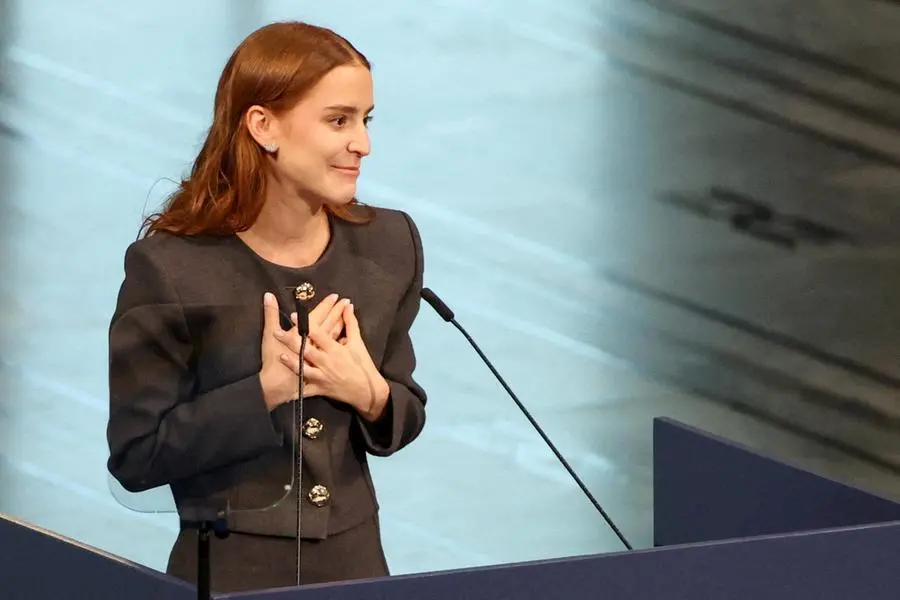
Nicolás Maduro was probably hoping to see her on that stage: smiling, celebrated by the West and, above all, far from Venezuela. Instead, María Corina Machado transformed her absence at the Nobel Peace Prize award ceremony into a political act against the president. Thus, while the applause resounded in Oslo for the recognition, the winner remains hidden in Venezuela. The gold medal and diploma were collected by her daughter Ana Corina Sosa, who was very moved when she went on stage.
In reality, the story was tinged with yellow because the iron lady of the Venezuelan opposition, although absent in Oslo, announced that she had taken a flight to Norway. “I’m on my way: I literally have to get on the plane,” Machado said in an audio published on the portal nobelpeaceprize.org, where he says he overcame several obstacles before leaving with “many people who risked their lives so that I could get to Oslo.” The organizers then confirmed that Machado “is safe and will be with us in Oslo”, despite his absence at the ceremony. If confirmed, Machado’s exit, which challenges the surveillance of the Venezuelan borders, strengthened in this phase of escalation with the USA, opens up the possibility of exile, given the impossibility of returning. Unless there are confidential agreements
between Caracas and Washington.
If Machado remained in Venezuela, he did it to escape the “exile trap”a tactic already used by Maduro against other dissidents to neutralize them: push them outside the borders to take away their influence on the square. By remaining in hiding in his homeland, Machado sent the strongest possible message: the Nobel is welcome, but resistance is done by staying, not by leaving.
The most touching moment of the ceremony was the speech read by his daughter. With his voice sometimes broken by emotion, he recalled the sacrifice of millions of Venezuelans. “While I wait for the moment to hug my mother again, I think of all the children who cannot see their parents,” he said, “this award is not for just one person, but for a people who have decided to be free.”
The award recognizes Machado’s crucial role in the July 2024 elections. Despite being banned from holding public office, the “Iron Lady” (as she is called for her intransigence) led the opposition to a moral and numerical victory, unmasking government fraud through a widespread network of witnesses who collected physical evidence of the vote.
Machado’s absence places his name in a historic and painful club: that of winners unable to celebrate. His case closely resembles that of Lech Wałęsa in 1983: the Polish leader of Solidarność also sent his wife to collect the prize for fear that the communist regime would block his way back. But the memory also runs to the tragically empty chair of Liu Xiaobo in 2010, or ad Aung San Suu Kyi, prisoner in her own home. The Norwegian Committee, in awarding the prize to Machado, knew that it would illuminate a gray area: he chose to reward not a peace achieved, but the courage of those still in the trenches.