





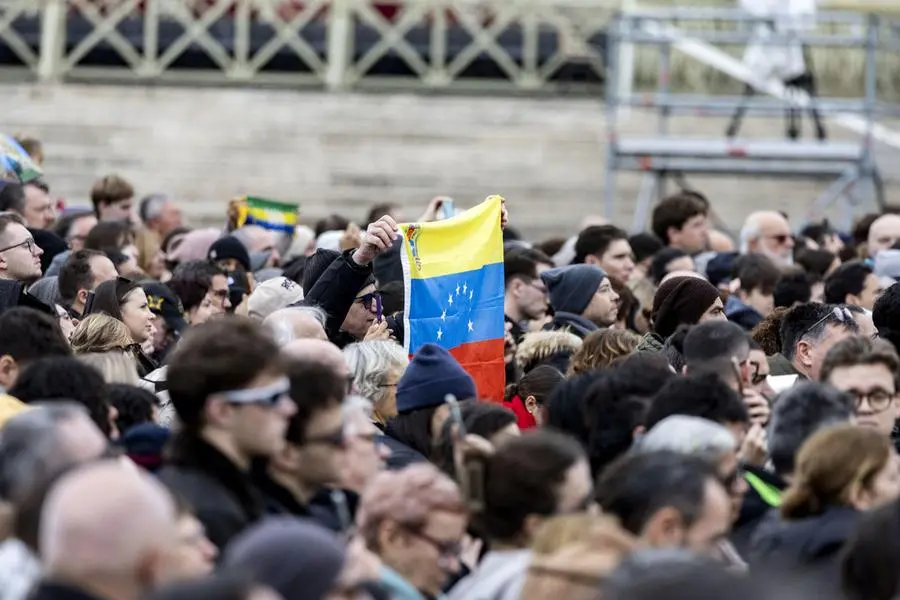
There is all the relevance of this dramatic glimpse at the beginning of the year in the words of Pope Leo XIV at the Angelus of this first Sunday of 2026 in St. Peter’s Square, gray and wet from the rain, but packed with faithful.
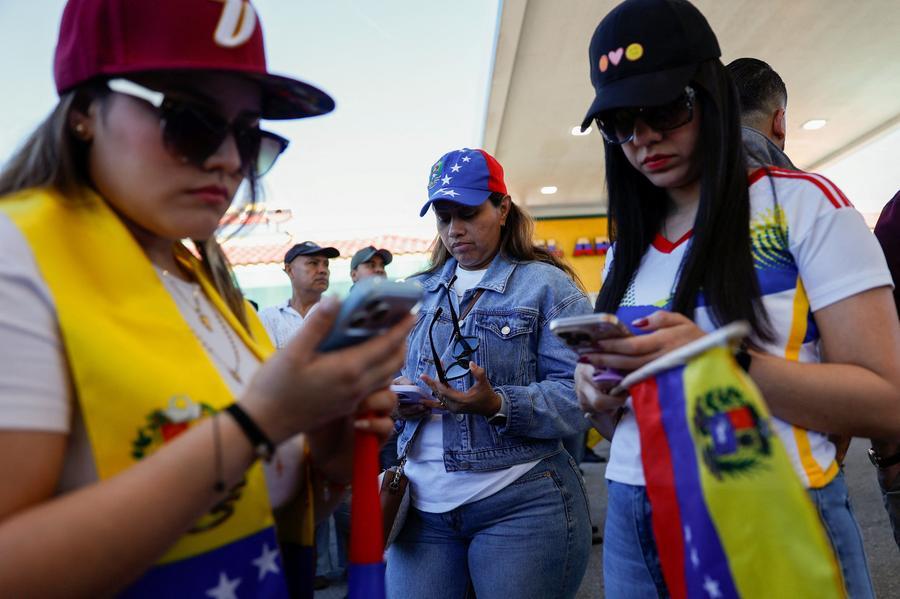
«With a heart full of concern I am following the developments of the situation Venezuela», is the appeal he made at the end of the Marian prayer recited from the study of the Apostolic Palace. The Pontiff forcefully recalled the necessity that “the good of the beloved Venezuelan people must prevail above all other considerations”inviting all parties to «overcoming violence and embarking on paths of justice and peace, guaranteeing the sovereignty of the country, ensuring the rule of law written in the Constitution”.
The Pope’s words come at a time of dramatic uncertainty for the South American country. In the night between Friday and Saturday, around 2 am local time, Caracas was shaken by a series of explosions heard in several neighborhoods of the capital. The president of the United States, Donald Trump, declared that «the United States of America has successfully conducted a large-scale attack against Venezuela» and that the president Nicolás Maduro “He was captured together with his wife and transferred out of the country.”
Faced with a scenario full of tension and fear, Leo XIV reiterated the centrality of the human person and his rights, asking for respect for «human and civil rights of each and everyone» and the commitment to work “to build together a peaceful future of collaboration, stability and harmony”. The Pontiff’s concern focused in particular on the poorest, who “For over ten years they have been suffering due to the difficult economic situation.”
The intercession of Our Lady of Coromoto and the Venezuelan saints
At the end of the appeal, the Pope invited the faithful to entrust Venezuela to the prayers and intercession of its patrons. «I invite you to pray, entrusting our prayer to the intercession of Our Lady of Coromoto and Saints José Gregorio Hernández and Sister Carmen Rendiles», the first two saints of the country, canonized together on 19 October by Leo himself.
After greeting the pilgrims present in St. Peter’s Square, the Pope renewed the invitation to incessant prayer for peace and concrete solidarity towards the populations affected by conflicts. «Dear ones, let us continue to have faith in the God of peace: pwe stand and stand in solidarity with the populations who suffer due to wars».
The Pope’s sorrow for the fire in Crans-Montana
In the Pontiff’s words, there was also a thought for the victims of the fire that occurred in the New Year’s Eve in Crans-Montanain Switzerland. «I would like to express once again my closeness to those who are in pain due to the tragedy that occurred in Crans Montana in Switzerland. I assure you of prayers for the young deceased, for the injured and for their families”, he said at the end of the Angelus.
The fire, which broke out in the “Le Constellation” bar during the New Year’s Eve celebrations, it caused at least 40 deaths and 119 injuries, many of them in very serious conditions. The authorities are still investigating the causes of the fire, which according to initial reports may have been triggered by flares or sparkling candles placed too close to the ceiling of the room.
Already last Friday, in a telegram signed by Cardinal Secretary of State Pietro Parolin, Pope Leo XIV had expressed his closeness to the families of the victims and the injured. During the Mass celebrated today in Crans-Montana, the bishop of Sion, Jean-Marie Lovey, read the Pontiff’s message, underlining how the Pope “joins our pain and wishes to express his compassion and concern for the families of the victims and support the courage of those who suffer”.
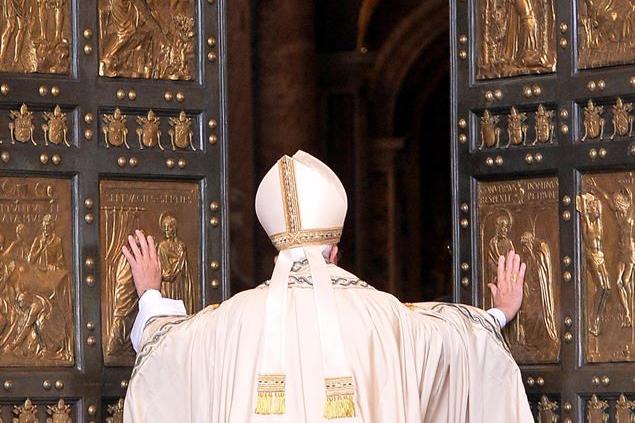
Two days before the conclusion of the Jubilee of Hope, which will end with rite of closing the Holy Door of the Vatican Basilicabefore the Angelus Pope Leo XIV recalled the heart of the Christian faith, indicating in the incarnation the authentic “foundation” of hope.
The hope of believers, the Pope explained, is not born “from optimistic forecasts or human calculations”, but from God’s choice “to share the path of men”, to ensure that they are “never alone in the journey of life”. In Jesus, God became one of us, chose to be with us and became God-with-us forever: “a presence that consoles and, at the same time, empowers”.
Towards God and towards man
Precisely starting from Jesus, God made man, Leo XIV indicated a true program of Christian life, marked by a double movement: towards God and towards man. Towards God, first of all, learning not to consider him distant or foreign, but to recognize him in people’s faces, in everyday events, in concrete history. This new gaze inevitably leads to a commitment to man. The Pope recalled the need to translate faith into concrete choices in favor of “fraternity”, “justice”, “peace” and “care for the most fragile”, so that the encounter with God incarnate becomes a real service to brothers.
An incarnate faith
“God has chosen our human frailty as his home”, recalled Leo XIV, inviting believers to rethink the very way of living and transmitting the faith. Not starting “from an abstract doctrine”, but “from the flesh of Jesus”, from his humanity shared to the core. From here arises the need for continuous verification of one’s spirituality and the forms with which faith is expressed, so that they are truly embodied. A faith capable of thinking, praying and announcing not a distant God, who lives in a perfect sky above our lives, but a close God, who walks on our fragile earth, makes himself present in the faces of our brothers and reveals himself in everyday situations.
Promote brotherhood and communion
If God has “become one of us”, then, the Pope underlined, “every human creature is his reflection”, “carries his image within itself, preserves a spark of his light”. From this awareness comes the Christian commitment to «recognize in every person their inviolable dignity” and to practice “mutual love towards one another”. The incarnation thus calls for concrete involvement in the promotion of brotherhood and communion: so that solidarity becomes the criterion of human relations, so that justice and peace grow, so that the most fragile are not forgotten and the weak are defended. “God became flesh”, recalled Leo XIV, and for this reason “there is no authentic worship of God without care for human flesh”.
In the Christmas season, the joy that arises from the mystery of the incarnation then becomes an encouragement to continue this «path». The Pope concluded by entrusting everyone to the Virgin Mary, invoked to make believers “ever more ready to serve God and others”.