





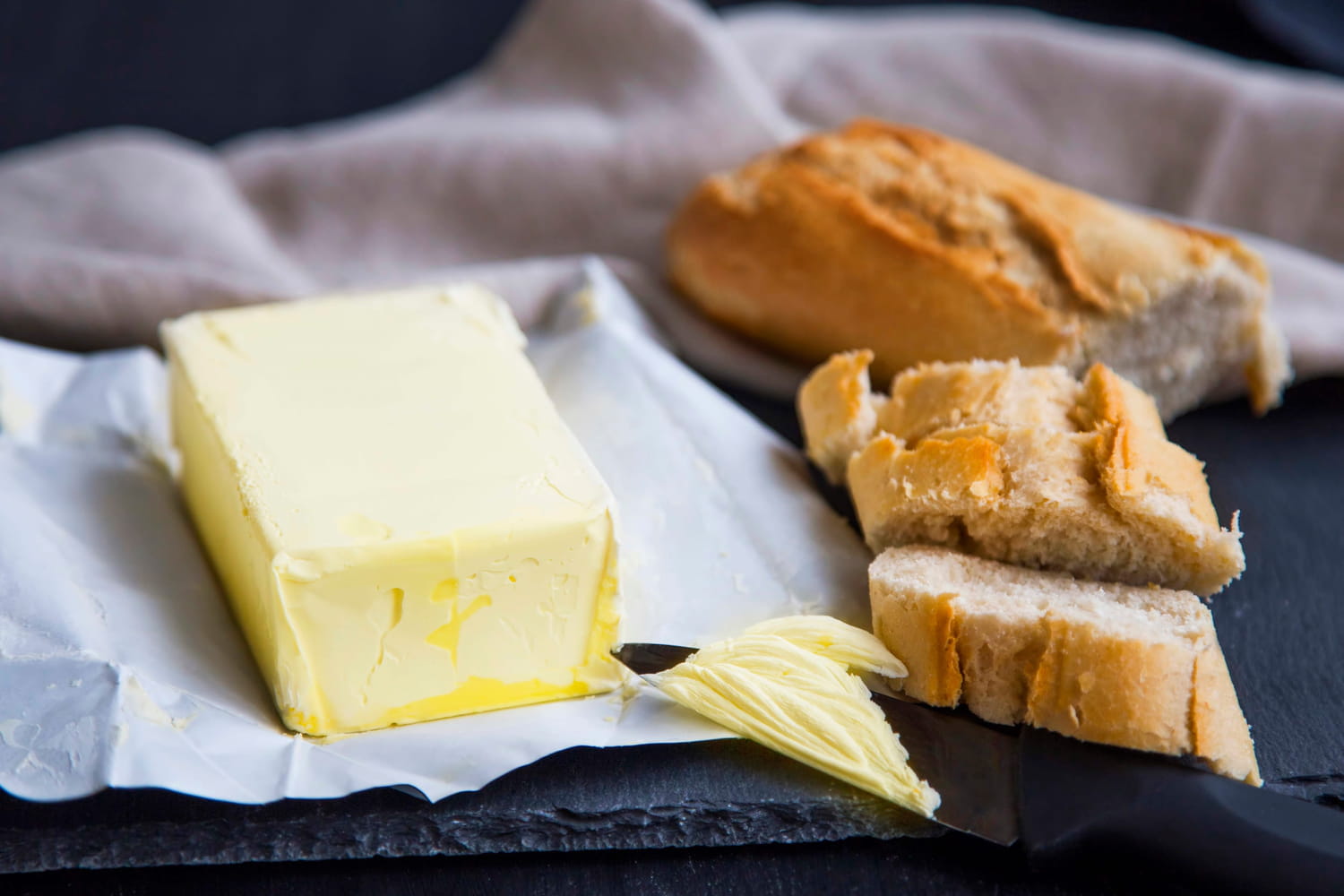
If butter is undoubtedly a fat, it turns out to be much less rich in cholesterol than we think. It would even contain less than an egg…
Butter is a French heritage food. In the collective mind, its fatty side and its creamy texture are immediately synonymous with a threat to our arteries and our cholesterol. But is this bad reputation scientifically justified when we look more closely at the figures? We asked Dr. Bernard Schmitt, nutritionist, the question.
Paradoxically, because it contains 16% water, butter turns out to be equal weight “less rich than oils which provide 100% fat (MG)“, immediately reestablishes the nutritionist. In addition, it contains lipids with a unique profile: the milk fat that makes up butter contains short-chain saturated fatty acids that are not found anywhere else, notably “butyric acid, which has an action specifically on the colon through its antiviral, antifungal, and antibacterial properties and which proves to be favorable to the intestinal microbiota“. Butter is also distinguished by its natural richness in fat-soluble vitamins (A, D and E), essential for boosting the immune system and fighting against cell aging.
Butter contains a little cholesterol, exactly 214 mg per 100 g. For comparison, it is almost half as much as an egg (which contains around 370 mg), a food that is commonly consumed without hesitation. This quantity should not frighten: “In moderate doses, butter has absolutely no impact on blood cholesterol levels and is not dangerous for the heart.“To enjoy it without feeling guilty, Dr Schmitt gives the right benchmark: around 15 to 20 g per day of raw butter, to which we can add around 15 g for cooking. As a reminder, butter from the Bleu-Blanc-Coeur (BBC) sector helps to further minimize the risk.”by the presence of a high level of omega-3“.
Faced with the fear of fat, many turn to alternatives considered healthier, such as margarines or ghee (clarified butter). However, it is a nutritional trap. “Margarines are ultra-processed foods and therefore have the disadvantages of all ultra-processed foods.“, specifies Dr Schmitt. Often too rich in omega-6, they provide no greater health benefits than butter.
What about ghee, this famous and very fashionable clarified butter? Here again, the doctor defuses the preconceived idea: it is a butter stripped of its aqueous phase, which makes it “richer in fat and saturated fatty acids than classic butter.