




Today, the same flight takes longer than 30 years ago… even though planes are faster. A flight attendant explains this paradox, behind which is actually a marketing strategy used by most airlines.
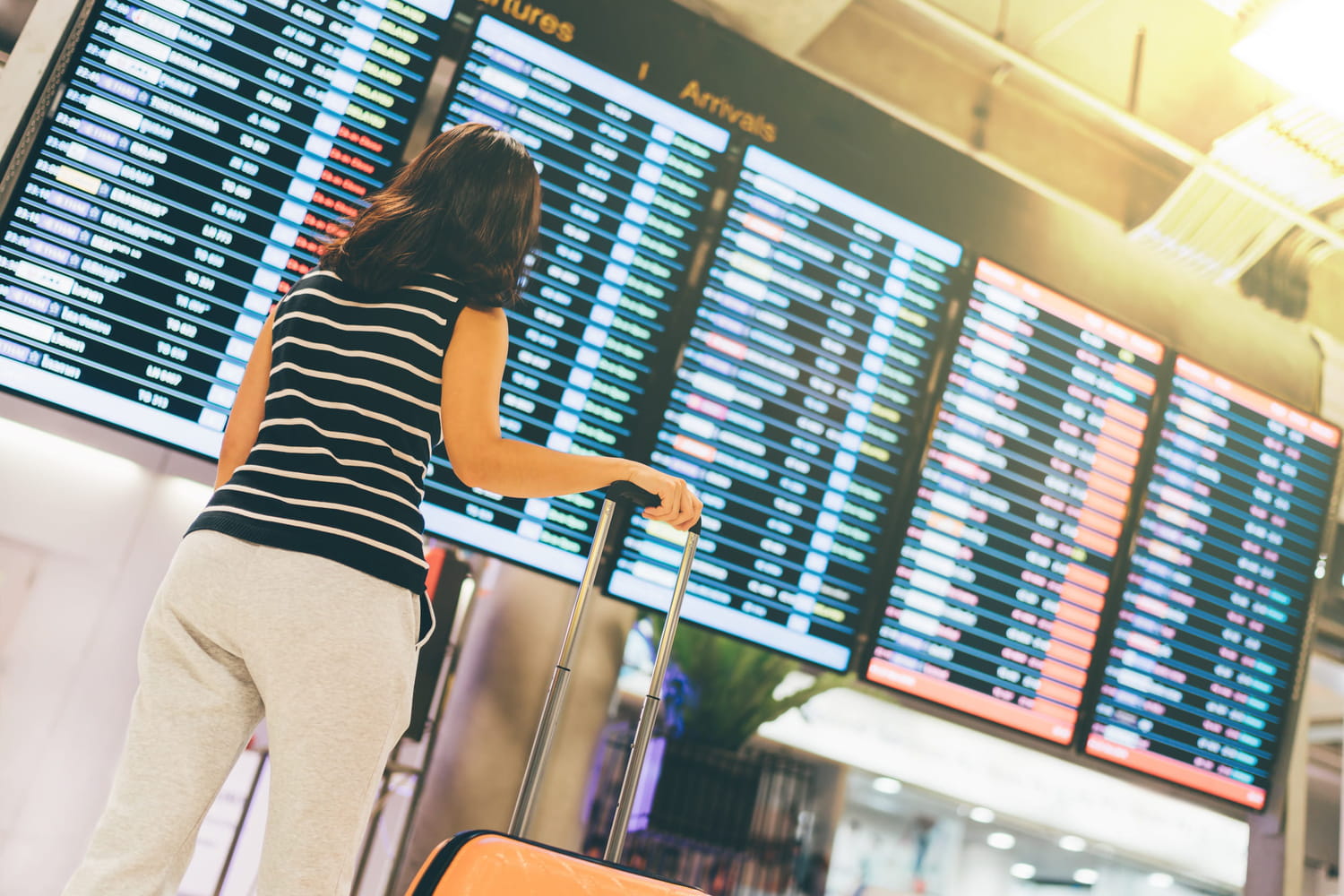
Who has this never happened to? When booking your ticket, and again when taking off, the journey time is announced at 1 hour 20 minutes. However, the plane landed after only an hour of flight! On the microphone, the pilot proudly announces that “we arrived 20 minutes early”and all the passengers rejoice. However, it’s not magic… and the device didn’t fly faster than expected.
From yield management to fuel dumping, including drip pricing and unbundling… Airlines are deploying a wealth of ingenuity to make each trip as profitable as possible. Abstract (and even often invisible) to the average passenger, these commercial strategies guide our choice of seats, inflate our bills, and push us to believe in certain advertising arguments… largely watered down. Some specialists in the airline sector are increasingly focusing on dismantling these concepts on social networks, as is the case in particular with flight attendant Karine de Falchi (known under the pseudonym @queenofcockpit on TikTok or @enairexxion on Instagram). She thus tells how, and above all why, airlines voluntarily inflate the duration of flights.
This is what we call “schedule padding”, which can be translated as “schedule padding” in French. Airlines, judged by their punctuality, artificially extend the scheduled flight time to appear on time. So, even if the plane took off 15 minutes late for example, it can “make up” for this lost time in flight, because the company had provided a margin. Passengers therefore have the impression of having arrived on time! On the same principle, if the plane leaves on time, travelers believe they have landed early. “And hey presto, airlines can display 98% punctuality on their advertisements!”underlines Karine de Falchi.
Concretely, a plane therefore (almost) never arrives on time… and even less early. Moreover, this ruse is used by a large majority of airlines, including some of the best known. “This little marketing lie has become a global strategy. Even giants like British Airways or Delta inflate their schedules. (…) Some short flights now have longer schedules than 30 years ago, while planes go faster: we fly faster, but we take longer!”points to the flight attendant.
Beyond the advertising argument to boast of their punctuality, schedule padding is also a way for airlines to avoid paying compensation for delays as much as possible: yes, by taking some margin in the announced schedules, the number and duration of delays is greatly reduced… and therefore reimbursements too. A margin which, well exploited, becomes a cost management tool as well as an image lever.