





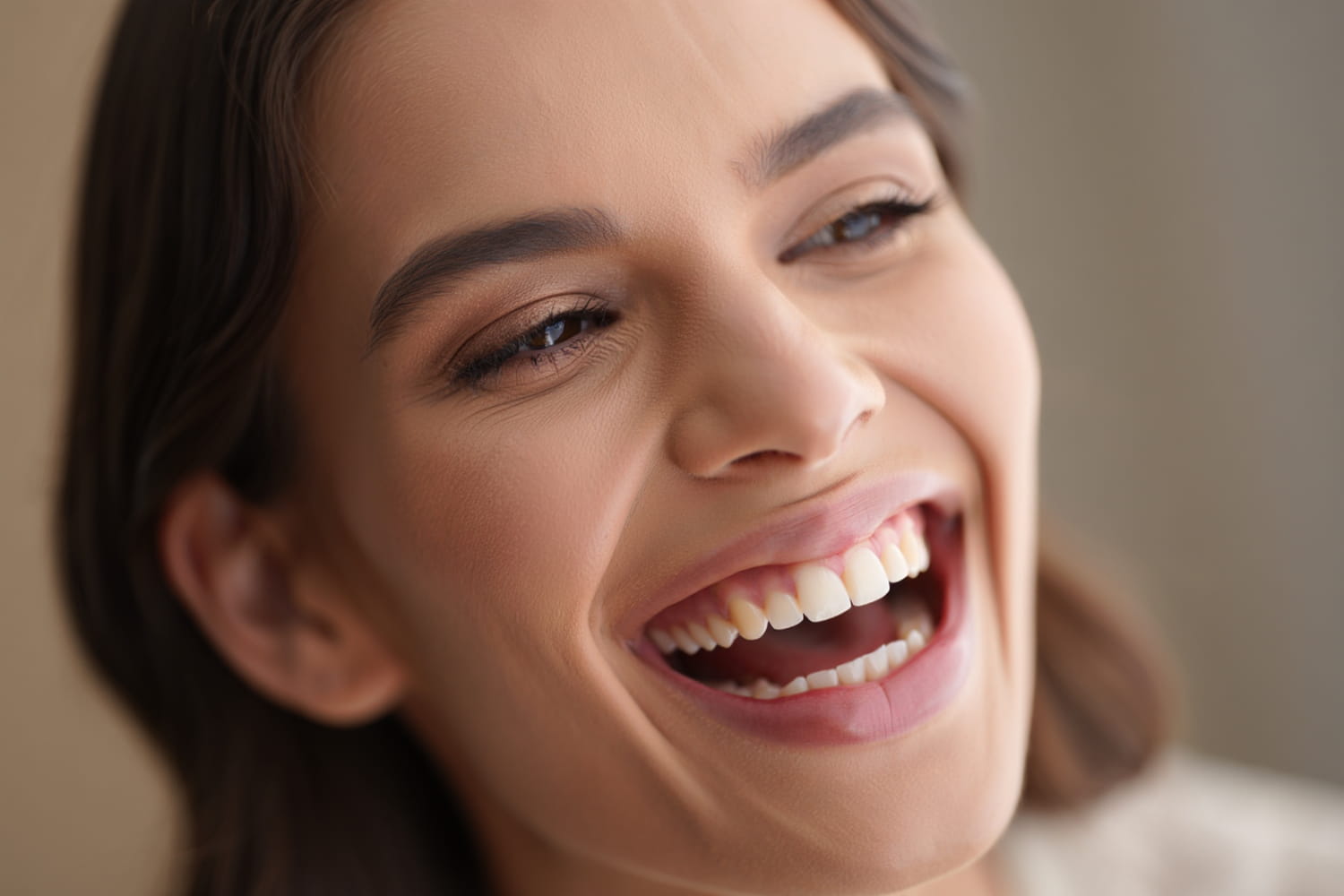
For a star smile, a small tool to keep in your bathroom promises more beautiful teeth day after day.
Forget the chore of fraying dental floss and the technical procedures that we often abandon after a few days. To display a “Hollywood Smile” in 2026, the key accessory is no longer hidden in the makeup bag, but is installed on the edge of the sink. Long reserved for dental practices, this device with hydro-pulse technology is gradually becoming an everyday ally. It combines the power of water with great precision to dislodge impurities, while stimulating the gums. Result: a clean and fresh mouth feeling, well beyond simple brushing.
This tool, created in 1962 by a dentist and an engineer, relies on water pressure between 1,100 and 1,900 pulsations per minute to pass between teeth and clean them. His name? The Waterpik brand water flosser. It has the same functions as dental floss, but with a jet of water that is passed into the mouth. A good alternative when we know that only 10% of the French population uses dental floss or brushes to reach spaces that brushing does not allow. On the other hand, the Waterpik is used before the toothbrush so as not to eliminate the protective fluoride left by the toothpaste.
Although it has been around for several years, the water flosser is only just starting to become popular. However, several studies support its effectiveness. One study, published in the Journal of Clinical Dentistry, shows that the Waterpik can remove up to 29% to 33% more plaque than floss. The reason? The water jet better reaches the “blind” areas (below the gum line and deep interdental spaces) where flossing requires a perfect technique that few people have mastered. But that’s not all: clinical trials have shown that it is up to twice as effective in reducing gingival bleeding. The pulsating action of the water massages the tissues and stimulates blood circulation, which helps heal inflamed gums. On the other hand, the studies are still recent and in limited number. So, some dentists recommend not giving up on flossing altogether. The latter allows a mechanical scraping action on the walls of the teeth that water cannot reproduce, and to remove resistant plaque.
The ideal? A compromise between the two tools: every other day, or two days one and one day the other… It’s up to you to find the rhythm that works for you. One thing is certain: it is regularity that will have its effect.