
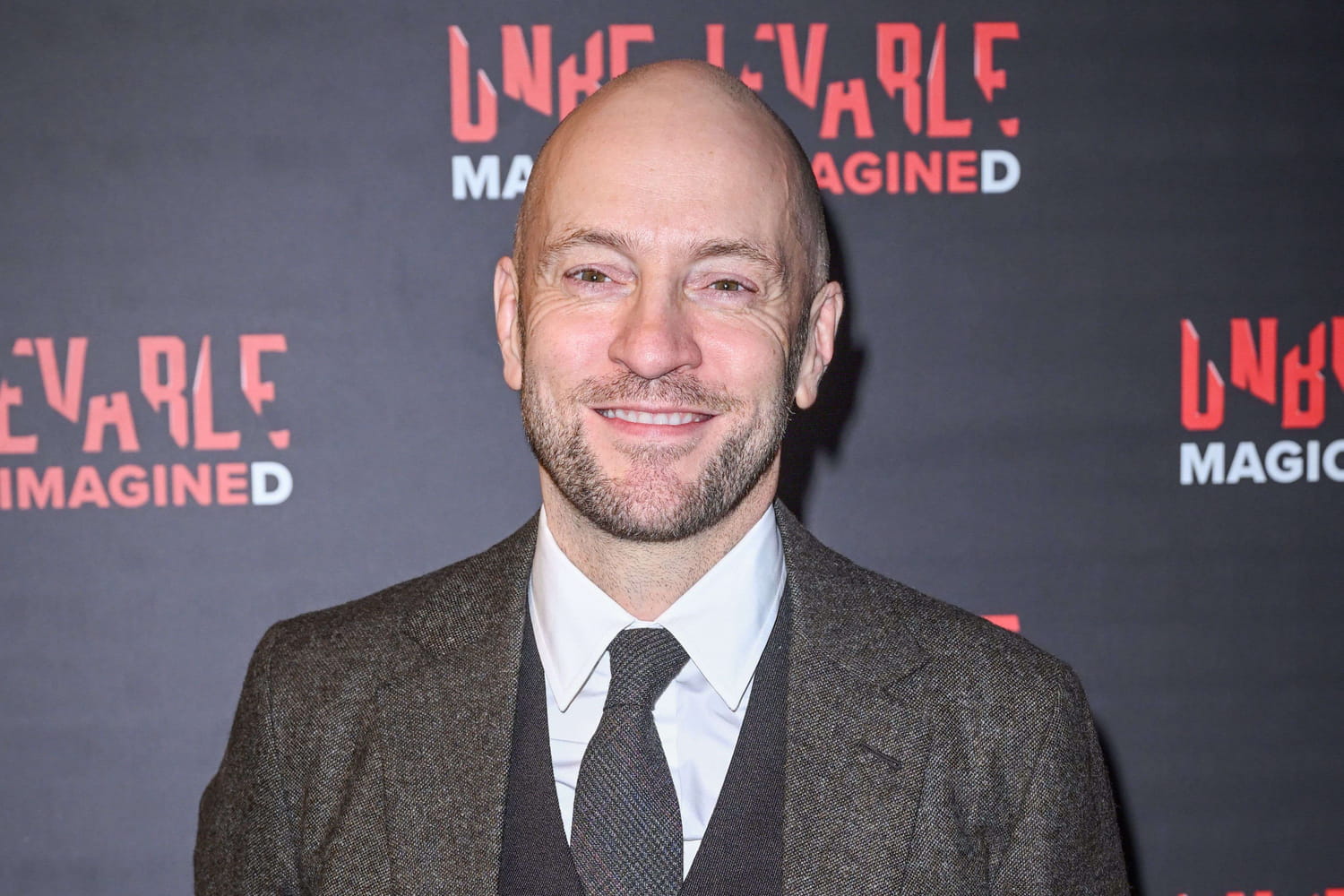





Where classical medicine offers medications, mentalist Derren Brown suggests mobilizing the brain in the most natural way possible and forcing it to unplug without it realizing it.
Difficulty falling asleep, waking up at 3 a.m…. A third of French people complain of insomnia, particularly those aged 40-60, according to the latest Public Health France Barometer. And the more they watch the clock tick by, the more the anxiety of not going back to sleep increases. Classic medicine has no shortage of medicinal solutions, but Derren Brown, the number 1 mentalist in Europe, offers another clever alternative: hacking the brain in the most natural way possible to force it to disconnect without it realizing it.
Normally, sleep is only possible when we let go. It is an automatic process, like digestion or breathing. But when we start to get annoyed at not falling asleep and worry about being tired the next day, we turn sleep into a goal to achieve.. Then comes a kind of pressure to sleep, with the production of adrenaline and cortisol (stress hormones), which is completely counterproductive for sleeping. “By transforming sleep into a “file to complete”, the brain ends up associating the bed with a place of work or combat. This is why many insomniacs fall asleep on their couch watching a movie (where there is no pressure to perform) but wake up as soon as they slip under the sheets.“, specifies the mentalist.
In his book “Happy”, Derren Brown reveals a simple tip to break the vicious circle of insomnia: stop wanting to sleep. Her advice is to lie in bed, turn off the lights and say to yourself: “Alright, I’m not going to sleep tonight, and that’s okay. I’m just going to stay here, calm, and enjoy this moment of forced rest for my muscles“It may seem far-fetched, but it works miracles because it removes the drama of the sleepless night and any form of pressure.”Sleep is like a cat: if you call it and run after it, it runs away. If you ignore him and do something else, he comes and sits on your lap. It’s the same for the brain which, by nature rebellious or simply tired, ends up letting go enough to fall asleep, sometimes in just 5 to 10 minutes.“. For this tip to work, it must be accompanied by an environment conducive to sleep: you ban screens at least an hour before bedtime, you plunge your room into darkness, you set the temperature of your room to a maximum of 18-19°C.
Derren Brown’s technique is similar to what neuroscientists (notably Andrew Huberman of Stanford) call “Deep Sleepless Rest.” Even if the mind doesn’t switch off right away, lying still without stress provides the body with nearly 70% of the restorative benefits of deep sleep. The simple act of “resting your muscles” as Brown suggests is already a physiological victory over fatigue. Sleep specialists point out that this approach is part of a broader trend of non-drug treatment for insomnia. In recent years, studies have shown that so-called cognitive deactivation techniques – which consist of voluntarily reducing mental hypervigilance at bedtime – are as effective as certain sleeping pills in the long term, without their side effects.
It is in particular on this principle that cognitive-behavioral therapy for insomnia (CBT), now recommended by all experts, is based. By ceasing to fight against wakefulness and accepting the absence of sleep as a transitory state, the brain gradually comes out of an alert mode that has become chronic. A strategy that could explain why simple changes in mental posture are sometimes enough to restore a more natural and stable sleep pattern over time.