






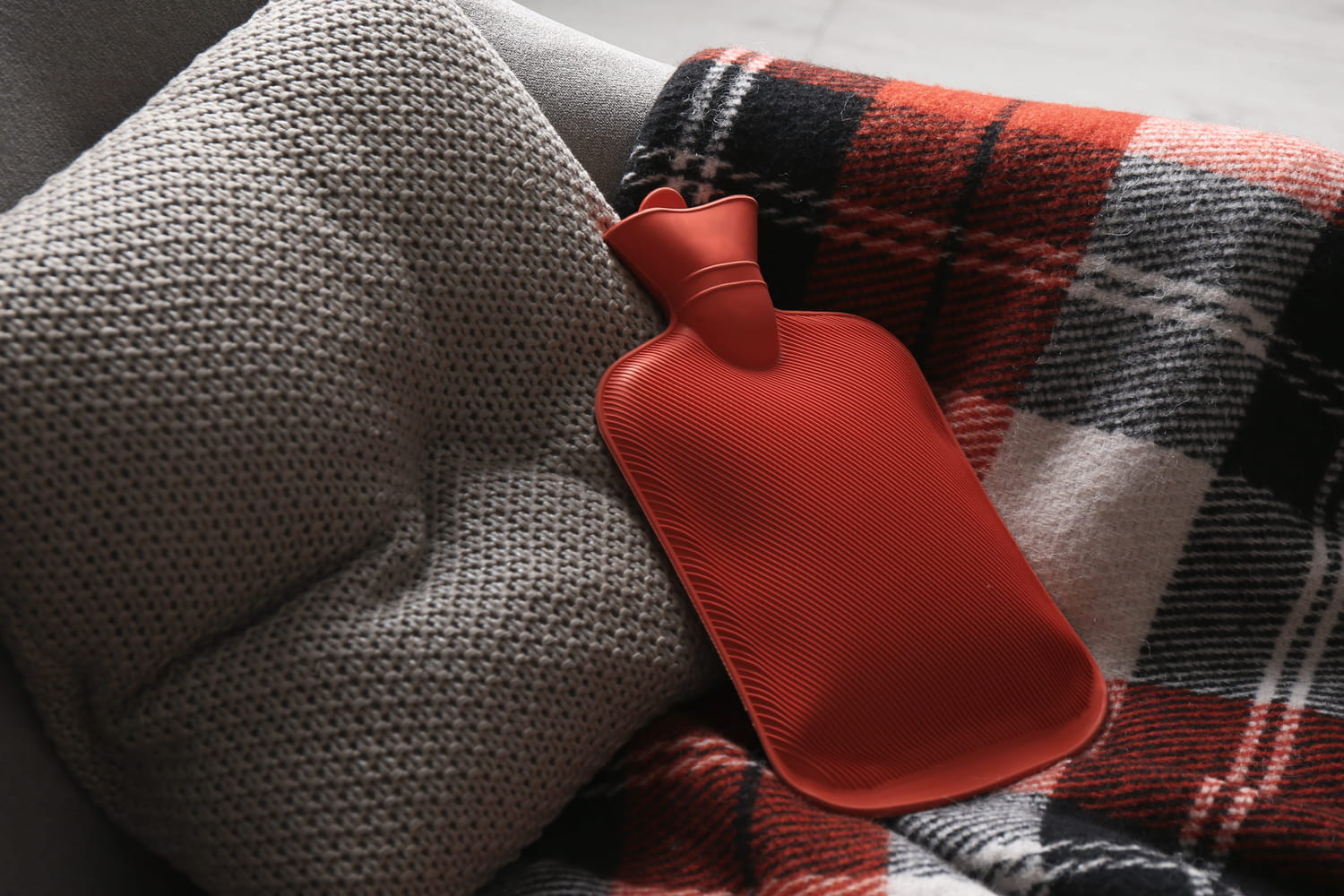
There’s nothing like a soft hot water bottle to warm your bed or soothe your feet while watching a series. But be careful, this key accessory of our cocooning evenings does not last forever. To keep your room safe and cozy, a little sorting is necessary.
As soon as temperatures drop, the reflex is universal: fill your hot water bottle to warm up a cold bed or relieve muscle pain. This accessory, symbol of cocooning, seems indestructible, sleeping in our cupboards from one year to the next. However, believing that we can keep this faithful companion indefinitely is a dangerous error.
Unlike textiles, the hot water bottle is made of rubber or thermoplastic, living materials which inevitably degrade. Continuing to use an old model out of habit is to invite an unnecessary risk into your home: the sudden rupture of a wall filled with hot water can cause severe burns.
To avoid accidents, a careful inspection is necessary before any first seasonal use. It is not enough to check the waterproofness; you have to observe the material like an expert. If the body of the hot water bottle has bleached areas, the texture becomes sticky, or fine cracks appear at the neck when you fold it, the trash is inevitable. Be aware that there is often a daisy-shaped marking molded into the rubber, indicating the precise date of manufacture, which allows you to judge its true age.
The golden rule recommended by manufacturers is systematic replacement every two to three years, even if the object appears intact. The elasticity of rubber is naturally lost through oxidation, even at the bottom of a drawer. The heat of the water then accelerates this aging, making the walls brittle. You should never hesitate to part with an old model, because safety takes precedence over economy.
Once you have purchased your new hot water bottle, a few good practices will extend its lifespan. The most common error is the use of boiling water: this is prohibited, because water at 100°C “cooks” the rubber and weakens the welds. Prefer hot tap water and never fill the tank to the brim to avoid excessive pressure. Always leave a third of the vacuum, expel the air before closing, and after use, hang it neck down, without a cap, so that it dries perfectly before storage.