






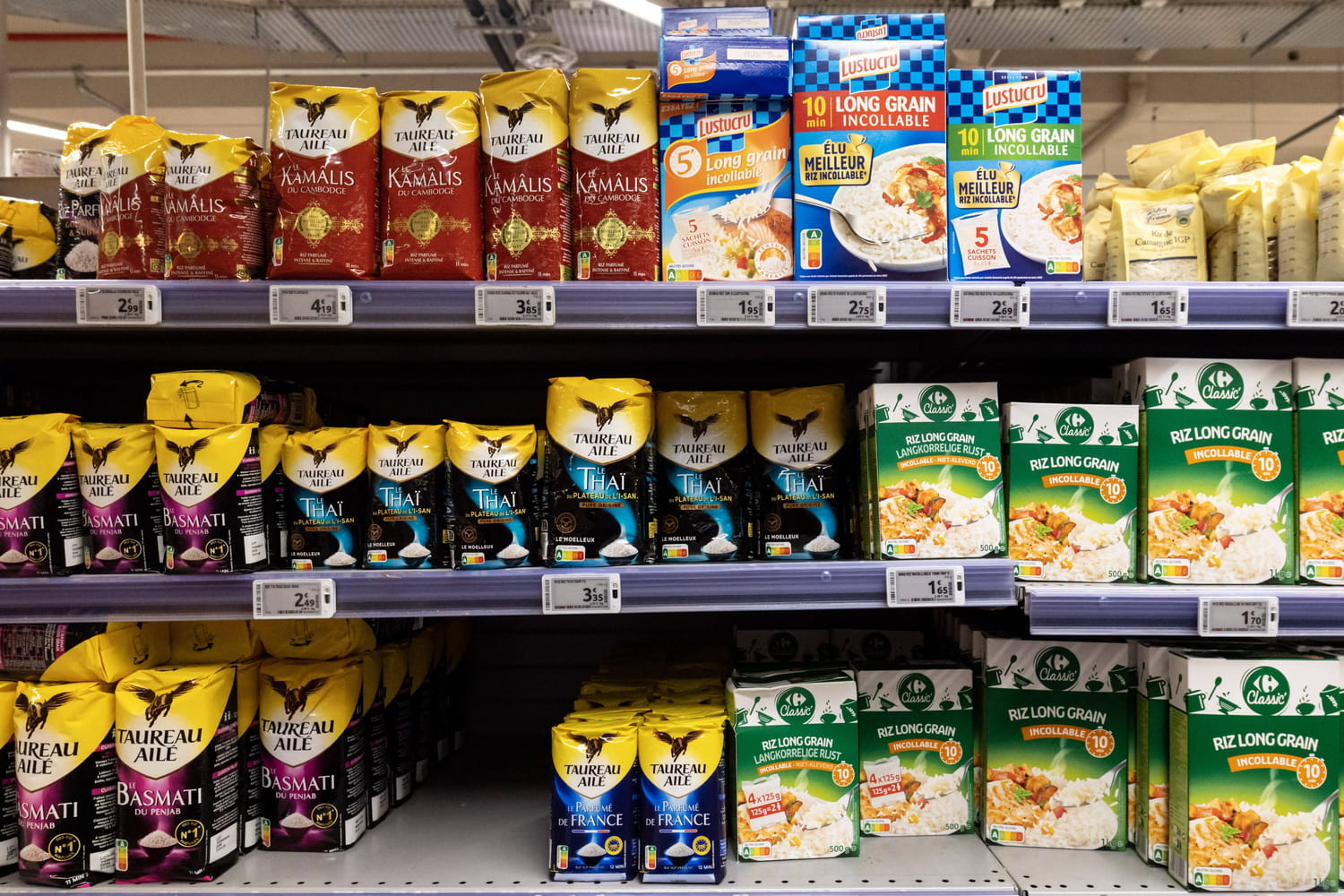
This product “has no place on supermarket shelves and even less on our plates” according to a survey by the Foodwatch association.
Tuna with mercury, chocolate with cadmium… Recently, several contaminants dangerous to health have been singled out. And now a new product joins the dock: rice and not just any rice… That of a famous brand. According to the Foodwatch organization, which recently published an investigation, this brand of rice hides a health-risk pesticide that is also banned in Europe. His message is clear: this food does not have “nothing to do on the supermarket shelves and even less on our plates”. What rice should you avoid?
The investigation covered 64 products sold in France, Germany, Austria and the Netherlands, including teas, rice and spices. Three food families “often contaminated by pesticides”explains Foodwatch. The objective? Track residues of substances banned in the European Union. And the observation is severe: “Out of 64 products tested, 49 contain pesticide residues including 27 not authorized at European level”. In France, twelve out of fifteen products analyzed are contaminated.
“It continues to be sold with impunity”
This is the case for “Le Thaï” rice from the Taureau Ailé brand (image below). Only one pesticide residue has been identified (anthraquinone) but it is a substance banned in Europe, and its concentration exceeds the maximum authorized limit. On Instagram, the association requests its withdrawal: “This product should be recalled, yet nothing is happening and it continues to be sold with impunity. This product is unsafe for consumption and should be removed from shelves immediately.” Several epidemiological surveys suggest a link between “exposure to certain pesticides and the risk of developing cancers and neurological diseases”. Some of these substances are also suspected of being endocrine disruptors, a very small quantity of which can be enough to disrupt the hormonal functioning of the body.
Added to this observation is the cocktail effect of pesticides present in several foods at the same time, which “is not taken into account in risk studies”. This is the case for example if you eat the famous Winged Bull rice with “ground sweet paprika” from Ducros, a true champion of pesticide contamination since it “accumulates 18 different residues – including 6 prohibited”. This spice should also be withdrawn from sale according to Foodwatch and France should implement a maximum residue limit of 0 for all pesticides not authorized in France.
“The contamination of the products tested is symptomatic of a situation denounced by Foodwatch and numerous NGOs for years, recalls the association on its site. Our food is contaminated by a cocktail of pesticide residues, even those banned in Europe because of their dangerousness. They are called “boomerang pesticides”: banned because they are dangerous, they continue to be exported only to end up as residues in our food. For foodwatch, it’s scandalous!” While waiting for new protective measures, a few simple reflexes can limit exposure: diversify your sources of supply and alternate brands, rinse the rice thoroughly before cooking, and favor, when possible, products from traced supply chains or organic farming.