




Mt 28,8-15 – Monday between the Octave of Easter
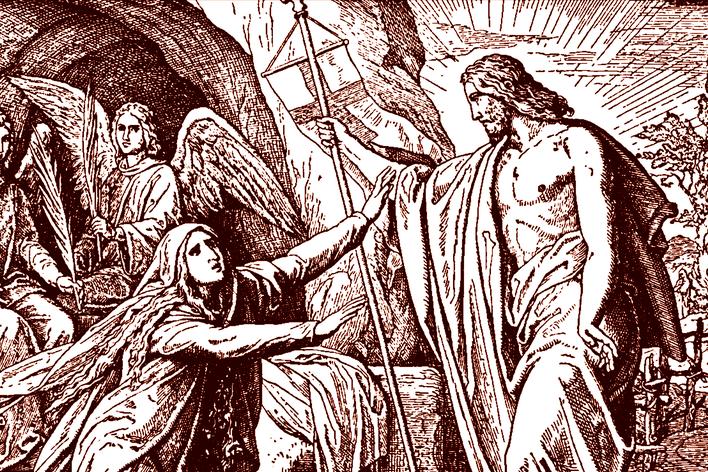
The protagonists of Easter are women. Jesus entrusts them with the task of announcing to others, to the Church, to the Apostles, that He has risen. It’s not a random choice. It is a precise choice, just as Mary’s was: God entrusts himself to those who know how to welcome and give. There is, in this choice, a profound logic: those who know how to welcome life are also capable of announcing it. But, as always happens in the Gospel, the privilege of being first is never a possession to be retained. It’s a responsibility. It is so that the announcement reaches further, not because it remains closed.
And then the question becomes inevitable: do we still proclaim the Gospel? Or do we risk keeping Easter within rites, traditions, habits, without it becoming a living word? We risk relegating it to a laid table, inside a celebration, or worse still inside a conscience that no longer has the courage to say out loud what it believes. The Gospel of Matthew itself warns us: news like the resurrection is too great to be welcomed without resistance.
The story says that people even pay to spread an alternative version, just to deny it. It’s a realistic fact: the world struggles to bear a truth that changes everything. The announcement of the resurrection is always exposed to the risk of being set aside, reduced, emptied. But perhaps the greatest danger is not external opposition. It is our indifference. Why what is not announced slowly fades away. And what is not witnessed loses strength.
Easter, however, asks for a voice. It asks for courage. He asks for life. It is not a memory to be cherished, but news to be shouted at the top of one’s throat. And each of us is called to become a witness to it.