





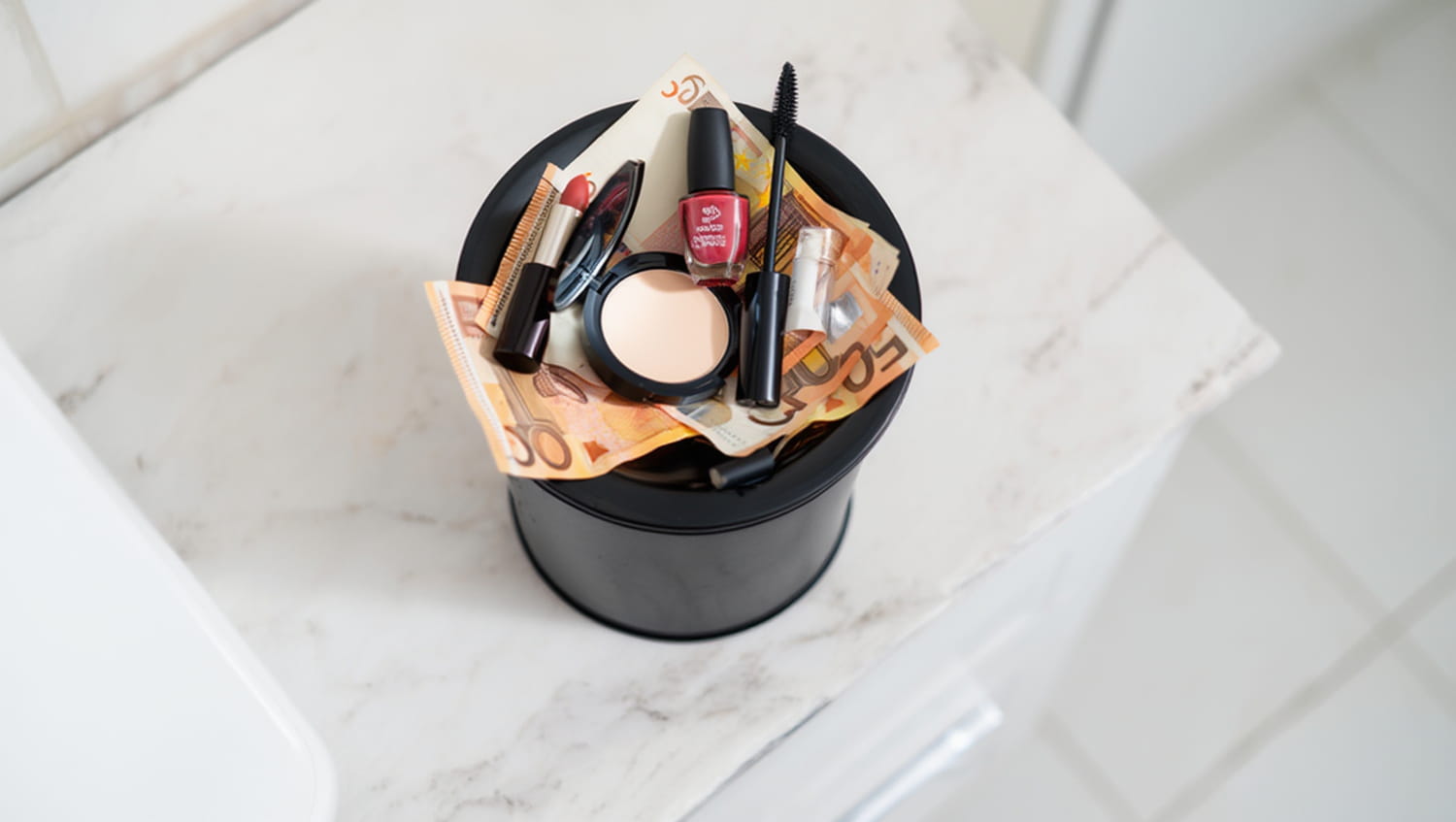
The energy recovery of your cosmetics, foundations and facial care depends on the precision of your sorting. Throwing this makeup packaging into unsorted streams disrupts the industrial processing of public utility services and exposes you to a fine. Support energy infrastructure and recycling.
In the bathroom, between nail polish remover, cotton wool and end-of-life makeup palettes, certain products automatically end up in the trash without us paying attention. After a homemade manicure, screw on the bottle, put it away… or throw it away. A harmless, almost automatic gesture. However, this very common reflex could cost you money today.
Because when it comes to waste, regulations are stricter than you think. Not all cosmetic products can be thrown away with regular household waste. Behind their elegant packaging and glossy colors sometimes hide chemical substances that require specific treatment. The rules governing waste management are set by the Environmental Code, available on Légifrance, which requires that certain hazardous waste follow an appropriate channel.
The product concerned? Nail polish. This small colorful bottle, essential for impeccable manicures, contains solvents and resins classified as special household waste when it is not completely empty. In other words, throwing a varnish that is still full – or even half used – into the traditional trash can may contravene the sorting instructions in force in many municipalities.
Why such vigilance? Because varnish is flammable and composed of chemical elements likely to pollute the soil or release toxic substances during incineration. The Environmental Code precisely regulates the management of this waste in order to avoid any risk for the environment and public health. In the event of non-compliance with local collection rules, the Penal Code provides for a fine of up to 150 euros, as recalled in the official texts accessible on Légifrance.
In certain cases, particularly in the event of non-payment or according to specific municipal decrees, local guides even mention amounts that can climb up to 450 euros. It is therefore better to avoid any unpleasant financial surprises. The solution is simple: never throw a bottle of varnish that is still full or partially filled into the household waste bin. It must be taken to a recycling center or to a collection point suitable for hazardous waste. As for bottles that are perfectly empty and dry, it is essential to check the sorting instructions specific to your municipality.
A discreet precaution, almost invisible in your beauty routine, but which allows you to maintain impeccable nails without seeing your budget go up in smoke.