




Among all the butters on the market, it’s difficult to make the best choice. Aude Gaillard, a passionate farmer, reveals her secret to finding quality butter that is good for your health: its color.
A French person consumes on average 32 sticks of butter each year, according to the Ministry of Agriculture and Food Sovereignty. Between soft, semi-salted, organic, churned, extra-fine or clarified (ghee) butters, it’s difficult to find your way around. However, not all butters are equal. If butter remains an essential part of French cuisine, its nutritional and taste quality varies almost completely depending on the method of production and the diet of the cows. So how do you spot “real” good butter at first glance?
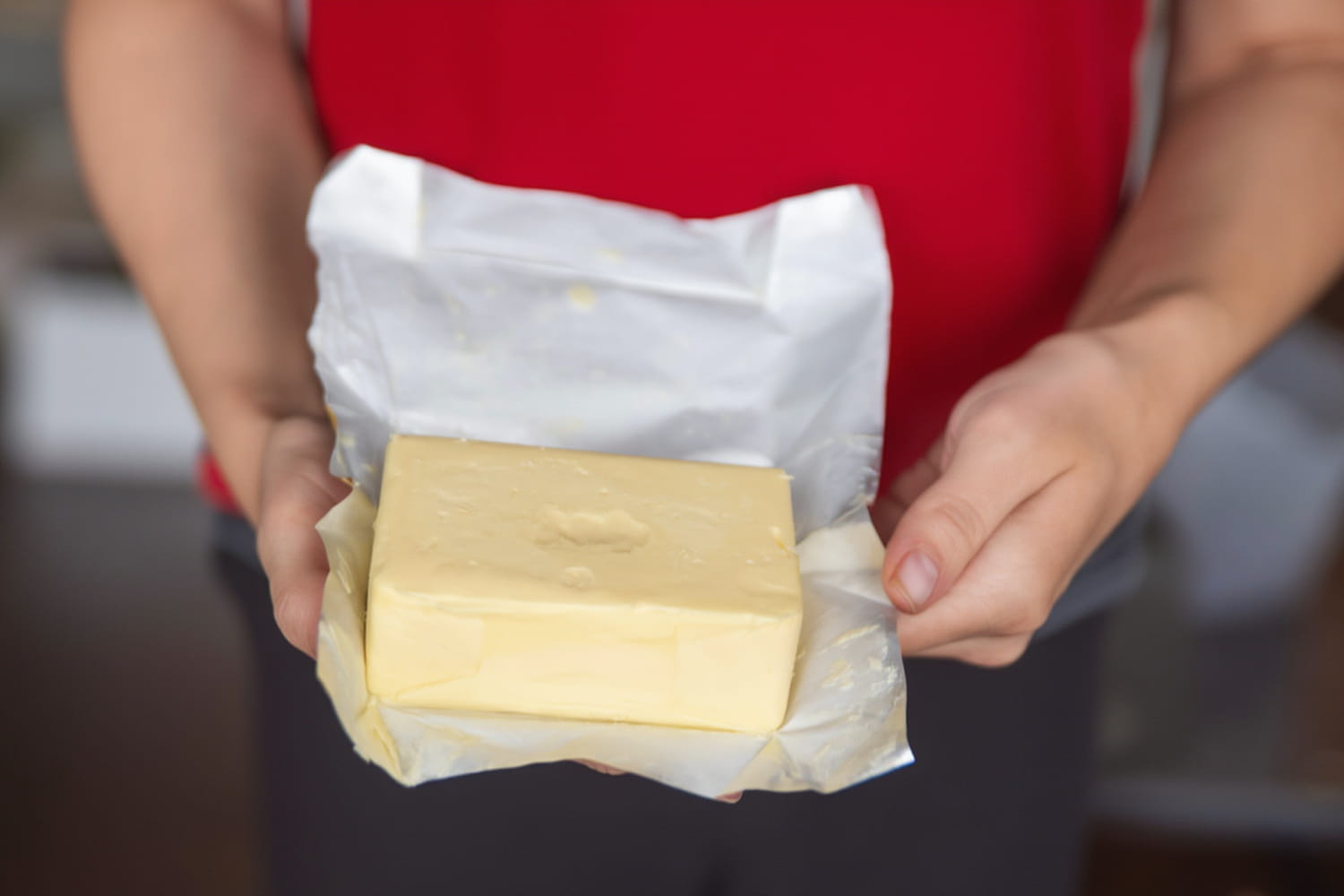
Some butters come out of the refrigerator as hard as a brick, while others spread smoothly. This is called the spreadability index. This index directly depends on the fatty acid composition of milk. High-quality butter naturally has better spreadability because it is richer in unsaturated fatty acids (especially omega-3). Contrary to popular belief, “concrete” butter is often a sign of industrial farming where the cows lack dietary diversity. A good butter must offer this creamy texture which melts delicately, proof of a noble and living fat.
To see more clearly, we interviewed Aude Gaillard, a passionate farmer. His verdict is clear: quality butter must be “golden yellow”. This golden color is not a dye, but the direct sign of a diet rich in fresh grass and wild flowers, naturally loaded with beta-carotene and vitamins. Conversely, butter that is too light, or even white, is often synonymous with poor quality. It generally indicates that the cows were fed exclusively dry hay or corn silage in buildings, without access to pasture. In summary: the yellower the butter, the more it has “seen” the grass, and the better it is for your health.
This choice of natural is all the more important since margarine, often perceived as an alternative, is in reality just an industrial blend of vegetable oils and additives, far from the authenticity of local butter.
To choose a quality butter, it is also advisable to rely on labels of excellence such as the AOP (Protected Designation of Origin), like Charentes-Poitou, Isigny or Bresse butter, or the Bleu-Blanc-Coeur label. These certifications guarantee terroir and traditional methods, such as slow churning. Also check the mention “churn butter”, which ensures a more authentic taste than rapid industrial processes. Finally, take a look at the list of ingredients: it should be as short as possible (cream, lactic ferments, and salt if necessary). A butter that ticks all these boxes is the assurance of a taste pleasure coupled with a real nutritional benefit. If the butter is semi-salted, it is better to choose those with “sea salt crystals” (Guérande or Noirmoutier type) rather than fine industrial salt, for the crunch and mineral quality.
Thanks to Aude Gaillard, farmer and producer of Bleu-Blanc-Cœur milk in Saint-Brice-en-Coglès (35) on the Lait Gaillardises farm. Exclusive interview conducted on April 2, 2026.