




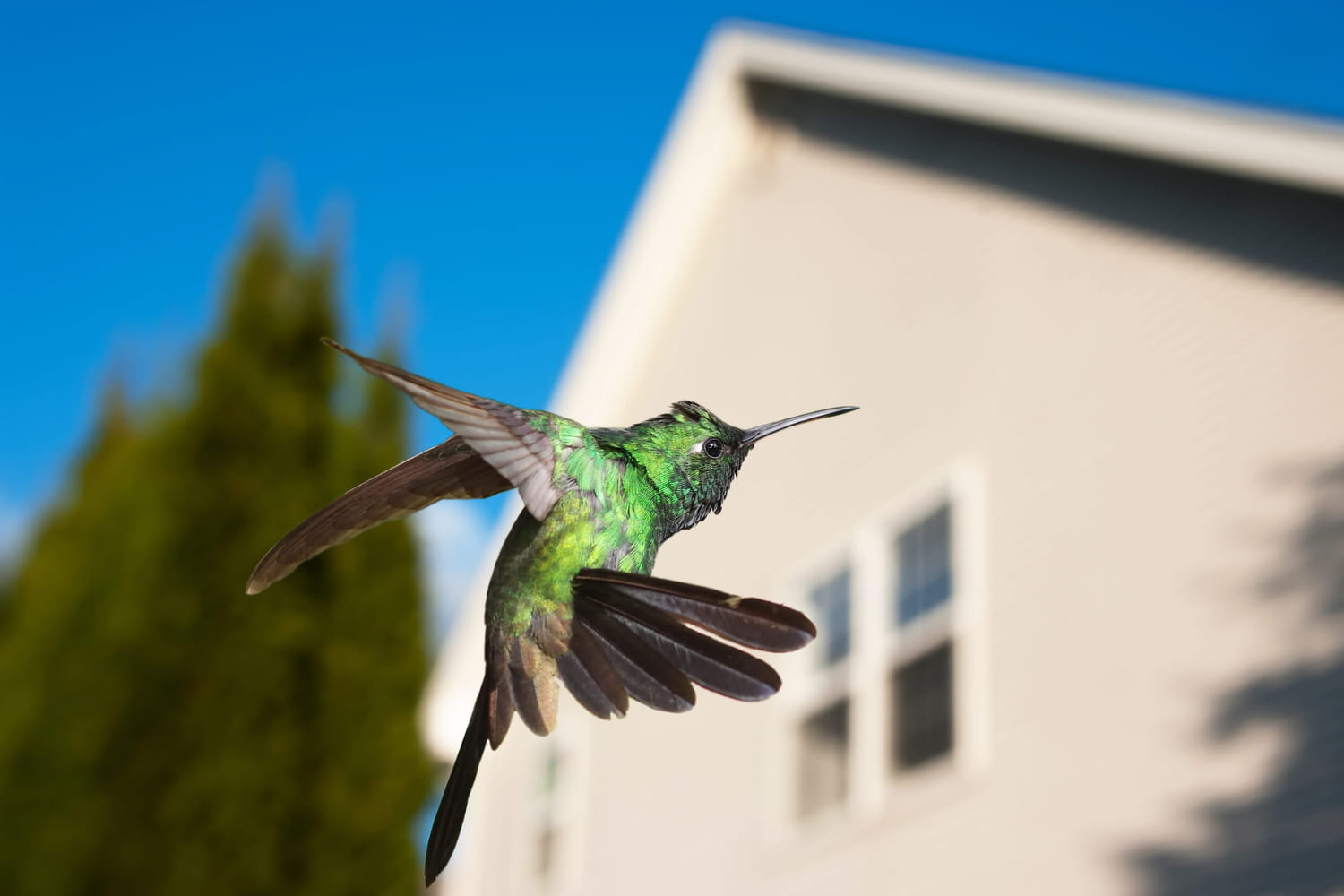
Sunny days go hand in hand with the birds’ breeding season. In the spring, they find themselves more excited, and often in danger for reasons that are often unknown.
Every spring, birds are exposed to a risk that is largely underestimated by most of us. The arrival of sunny days marks an essential period for them: that of reproduction. The days are getting longer, temperatures are rising, and their activity is intensifying. But this excitement also has a downside. More nervous, faster, sometimes even disoriented, they become less attentive to the dangers around them… including those that are a few centimeters from us.
It is not uncommon, at this season, to witness a scene as sudden as it is disconcerting: a bird violently crashing into a window before collapsing to the ground. The shock is sometimes fatal. Other times, the animal survives but remains stunned, unable to fly away for several minutes. In this state of extreme vulnerability, it becomes easy prey for cats or other predators. These collisions, much more frequent than we think, represent a real danger for many species.
But why do these accidents happen? Glass surfaces are in reality real invisible traps. Depending on the brightness and angle of the sun, they can reflect the sky, trees or gardens, giving the illusion of open space into which the bird thinks it can fly. Sometimes, it is his own reflection that he sees: believing he is facing a rival, he rushes to defend his territory. In both cases, he does not perceive the obstacle and collides head-on with the window.
Fortunately, there is a simple solution to limit these collisions: make the windows visible. Sticking stickers, silhouettes of birds, or even children’s drawings helps break this misleading mirror effect. The idea is to create visual cues spaced sufficiently apart to indicate the obstacle. A few colorful shapes, adhesive strips or discreet patterns can be enough to avoid the worst, while bringing a decorative touch to your windows. What if we took the opportunity to reveal our artistic talents during the Easter holidays?
Beyond individuals, this problem also concerns businesses and modern buildings with large glass facades. Some now adopt treated glazing or specific films to reduce reflections. On an individual level, other simple actions can help: closing the curtains during the sunniest hours, avoiding placing plants directly behind a bay window, or even installing mosquito nets. So many little touches which, taken together, can save many lives every spring.