



«I really didn’t think about getting behind the camera. I have always been an actor and I continue to love this profession. But then I fell in love with a story and with the production company Solea, which I founded with my wife Sandra Bonzi, we decided that it had to become a film and we needed to find a director. At that point my collaborators said to me: why don’t you do it? And in the end I was convinced. She was born like this Claudio Bisio’s first experience as director for the movie The last time we were childrenreleased on 12 October 2023, based on the book of the same name by Fabio Bartolomei published by E/O.
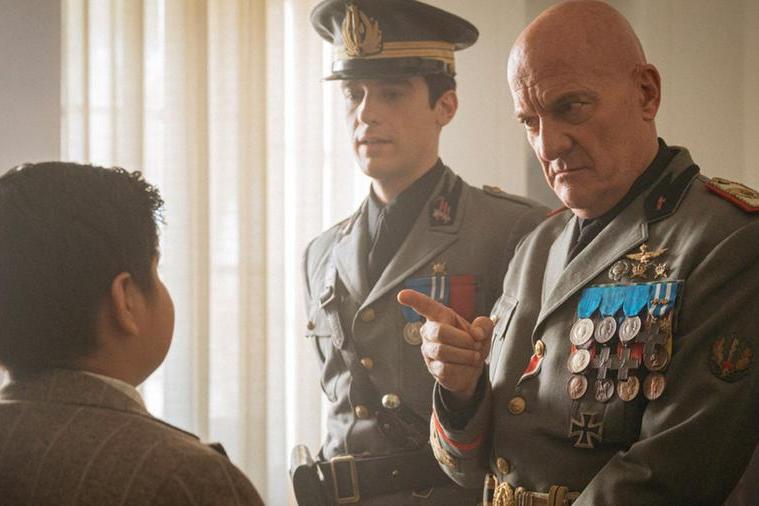
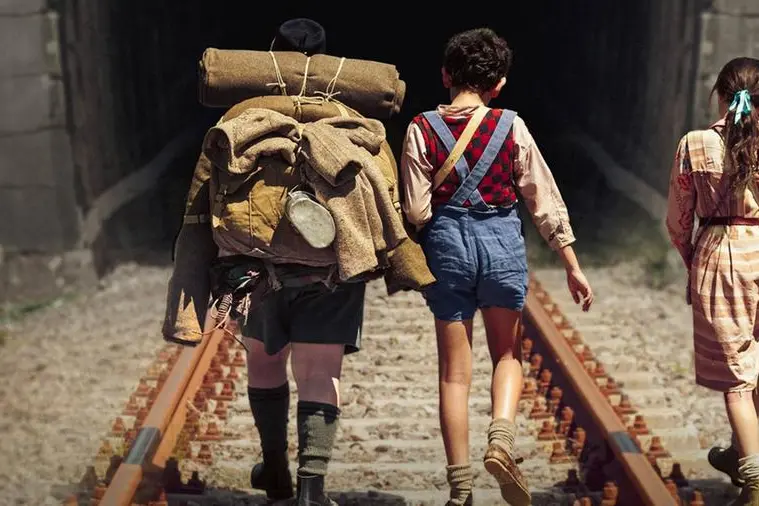
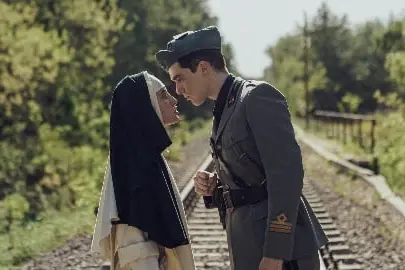
We are in Rome in 1943: three boys and a little girl form a strong friendship, despite their differences. Riccardo is Jewish and must wear the yellow star, Vanda grew up in an orphanage, Italo is the son of a fascist hierarch and Cosimo has lived with his grandfather since his mother died and his father was sent into exile. When Riccardo vanishes into thin air, his friends discover that he has been taken away by the Germans and has boarded a train bound for Germany. Their goal is to reach him and convince the Nazis that he is not really a Jew and then bring him home. Traveling along the railway tracks, the three friends begin a daring journey, chased by Italo’s brother, a war veteran who is a staunch supporter of fascism, and by a young nun who has a maternal bond with Vanda. A bittersweet fairy tale which, through the innocent gaze of children, shows all the contradictions and absurdity of war.
How did you come across Bartolomei’s book?
«I love this writer very much and I had also read his other books, including the one from which Edoardo Leo based the film Us and Giulia. I immediately thought it would be perfect for a film and I was afraid it had already been optioned, but instead it was free. But a few years passed from the moment I started thinking about the film until it was made.”
Did you have any particular film as a reference?
“Surely Life is beautiful by Benigniwhich I loved very much, an Oscar that was more than deserved. But also Train de vie, The boy in the striped pajamas, Jo Jo Rabbit, e another movie with child protagonists, based on a book, A bag of marbles. And then a film that has nothing to do with the Shoah, but talks about growing up, Stand by Me, from a story by Stephen King. I also included quotes from that film, such as the corpses that the children discover along the train tracks. A great job was done by the screenwriter Fabio Bonifacci, with whom I have been collaborating for some time and who was, among other things, the author of the screenplay for Welcome to the North And Welcome President! and one of the films I’m most proud of, It can be donewhich addresses another important topic, that of mental illness and the reform of mental asylums.”
How did you choose the little actors?
«Initially I would have liked them to be rookies. Those who offered me acting schools seemed too set up to me. I saw hundreds of children, but in the end the ones who convinced me the most had already worked in cinema. We saw Carlotta De Leonardis in The ArminutaAlessio Di Domenicantonio was Lucignolo in Pinocchio by Garrone and recently the protagonist of Mom, I’m in charge hereand Vincenzo Sebastiani, who due to his massive physique has always been called upon to be a bit of a character actor. When he learned he was the protagonist, he was very happy.”
Was it easy to direct the children?
«I really like children and I have already had experience with them when I conducted Kid’s Got Talent. They were really good at memorizing their parts. And to familiarize the whole cast, before filming I organized a sort of week-long camp during which we had a lot of fun. The children also learned to put up a tent, as happens in the film, and to become familiar with the chicken, which plays an important role in the story.”
The film is released on the anniversary of the roundup of the Rome ghetto, which took place on Saturday 16 October 1943. Is it important to keep the memory alive through cinema too?
«Absolutely yes. And I wanted to… The advice of the Jewish community was fundamental and I also spoke with some who escaped the ghetto raid and with the survivors of the extermination camps, including Liliana Segre, who liked the film.”
You presented the film as a preview at the Giffoni Festival to an audience of young people: how did they receive it?
«In Giffoni there were two screenings, one in the morning for the kids and one in the afternoon for the general public. The kids were active spectators, they commented on the most comical and dramatic moments with exclamations and jokes, in short they were very involved. The adult audience maintained a moving silence, I even saw handkerchiefs appear. I imagine it as a film that can unite families and we are already making arrangements to have it filmed in schools.”
Was the figure of the young nun who falters in her vocation already present in the book?
«Yes, even if I allowed myself a little romantic license, a curious thing: the little girl who plays Vanda comes from Abruzzo, from Spoltore to be precise, like her character, and it was she who coached Marianna Fontana, an actress from Salerno, to teach her the Abruzzo dialect».
He starred in other films set during World War II, Mediterranean, The truce, War fool: here he carves out the role of an obtuse and ridiculous hierarch. But were fascists really like that?
«Looking at the films of the time, in particular those on Mussolini, the fascists appear truly ridiculous, with those artificial poses, jaw protruding, eyes rolling, almost a caricature of themselves».
Have you enjoyed being behind a camera and do you already have a new project in mind?
«I liked the experience of directing, I felt very responsible, it’s a great job and I don’t rule out repeating it if I find the right project. In the meantime, I’m a producer, trying to give opportunities to young people too. But if I had to go back I would become an editor: it is a very fascinating profession, he is the true creator of a film.”