




There is a Trump who talks and talks too much. And then there’s a Trump who does things. It’s difficult to keep up with the first, between announcements, quick declarations, rallies, interviews, press conferences, bizarre and often contradictory messages written on social media, perhaps at night, in a riot of capital letters and exclamation points.
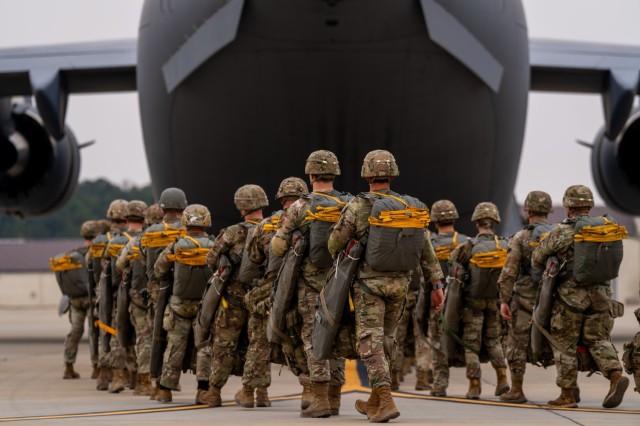
If instead we pay attention to concrete actions, we see that Trump is sending a thousand paratroopers from the 82nd Airborne Division to the Middle East. It is the only division in the United States Army capable of deploying anywhere in the world within 18 hours of its home base at Fort Bragg, North Carolina, maintaining what is called an “Immediate Response Force” capability. His motto is “All the way”.
According to the American media, the precise destination of these soldiers considered among the spearheads of the US armed forces is not yet clear, but their presence in the theater of war joins that of several thousand Marines traveling towards the Gulf. This is a new sign of escalation in the conflict that began on February 28 between Israel and the United States against Iran.
As CNN recalls, since the Second World War, the 82nd Airborne Division has fought in Vietnam, Grenada, Panama, Iraq and Afghanistan, as well as having participated in operations against ISIS in the Middle East. Now it could be used to conquer the strategic island of Kharg or to keep the Strait of Hormuz open and thus guarantee the transit of oil tankers. These would not be high-risk interventions, but very high ones. The armed intervention on the ground (the infamous boots on the ground, boots on the ground) would truly be the last resort for a president who appears increasingly in difficulty in managing a conflict that began in total recklessness, driven by the brilliant and painless military operation that in January led to the capture of the Venezuelan dictator Nicolas Maduro. After so many words in the wind (we won, Iran is annihilated, we are negotiating for an agreement, the Ayatollah and I will manage the Strait of Hormuz…) sending soldiers to the Gulf may instead represent a new instrument of pressure while seeking a diplomatic way out of the war.
Tehran denies that negotiations are underway with the United States. Spokesman for Iran’s central headquarters Khatam al-Anbiya, the country’s main military command, Ebrahim Zolfaghari, said in a video message addressed to the United States and published by Iranian media that “has the level of your internal conflict reached the point where you are negotiating with yourselves?” “You will neither review your investments in the region nor previous energy and oil prices until you understand that stability in the region is guaranteed by the powerful hand of our armed forces. Stability comes from strength,” Zolfaghari said, adding that “someone like us will never find an agreement with someone like you. Not now, not ever.”
Beyond the rhetoric, something is moving. According to reports from Pakistan, which is acting as an intermediary at this stage, Iran has received a 15-point peace plan from the United States. The plan, which has not been made public, would involve Iran dismantling its nuclear facilities in exchange for lifting sanctions. On Tuesday, Trump, reiterating his statements about ongoing talks with a senior Iranian official, also said that Iran had given the United States a “very large gift, worth a huge sum.” It’s not clear what it means.
Meanwhile, if a negotiating table opens, the American side could see Vice President JD Vance and Secretary of State Marco Rubio as negotiators. Trump’s trusted real estate agent, Steve Witkfoff, who has been the unlikely and improvised mediator of all the crises on the planet for months, would thus be bypassed.
Right now there are active diplomatic channels between Washington and countries in the broader region (Türkiye, Pakistan and Egypt) which in turn can convey messages to Iran. Oman also continues to play a mediating role. But it also remains to be seen how the opening of a possible negotiation between the United States and Iran could be welcomed by Israel, always determined to render Iran harmless. The Israeli Minister of Economy, Nir Barkattold the BBC that Iran was “probably” unlikely to accept the 15-point plan, describing it as “nice on paper” but needing guarantees to be implemented.
But the point of view of other Gulf countries, such as Saudi Arabia, also countswhich continues to have to defend itself from Iranian missiles launched against its infrastructure. According to the revelations of New York Timesthe Saudi crown prince Mohamed Bin Salman (effectively leading the country in place of his elderly and ill father) would have asked Trump, in confidential telephone conversations, to go through with the military operations against Tehran.