



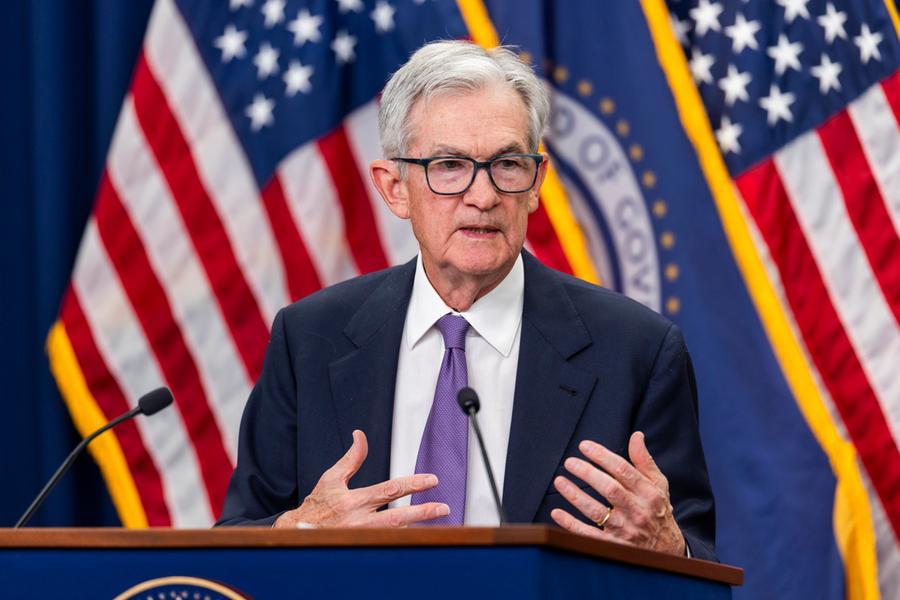
America is putting one of the invisible pillars of its power on trial. This is not an exaggeration: the unprecedented criminal investigation against Jerome Powell, president of the Federal Reserve, the American central bank, does not only concern an alleged falsehood to Congress on the costs of renovating a federal building. It is the most explicit clash in recent decades between the politics of Donald Trump, a power that does not allow borders and embankments, and the last great technocratic power remaining independent in the United States. Powell’s reaction – a two-minute video, harsh, direct, almost solemn – marks an irreversible break with the White House. Until yesterday the central banker had chosen the line of prudent silence, as befits a central banker, convinced that the strength of the Fed – a soft power by definition – lay in its discretion. Today, however, Powell openly accuses Trump’s administration of political intimidation: «At stake – he says – is whether interest rates will continue to be set on the basis of economic data or under the pressure of power». It is a language that is rarely heard in the United States. And it is precisely this that has alarmed global markets and capital. Formally, the investigation arises from the suspicion that Powell lied to Congress about the costs of the redevelopment of the historic Fed headquarters, the Eccles Building on Constitution Avenue, in Washington (among other things, a few steps from the White House and the Treasury headquarters), a 2.5 billion dollar project, which went beyond the budget. Leading the prosecutors is Jeanine Pirro, a symbolic figure of judicial Trumpism, with a career spanning the courts and hosted on Fox News, the TV Wizard par excellence. The White House talks about protecting taxpayers. But few in Washington take this version seriously. It is not just investors who say this, but the American economic establishment in its most institutional form. In a joint document, three former presidents of the Fed – the legendary Alan Greenspan, Ben Bernanke and Janet Yellen – together with former Treasury secretaries, denounce “attacks aimed at undermining the independence” of the central bank, evoking scenarios from countries with fragile institutions. A comparison that weighs heavily, because it touches a raw American nerve: trust in the rule of law as the basis of economic success. To understand why Trump wants to bend the Fed we need to move away from judicial detail and look at the macroeconomy. With a premise: the American Central Bank, unlike the ECB, which has the stabilization of inflation through interest rate levers as its guiding star, also has a say in economic policy choices.
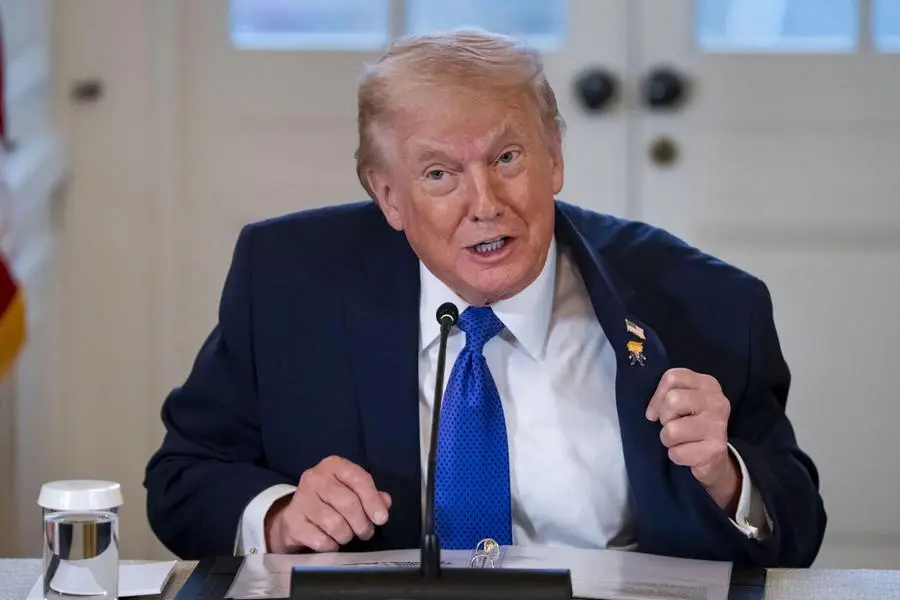
American President Donald Trump
(EPA)
American inflation, inflated by the extraordinary measures of the Covid period, laboriously fell to 2.7% in November 2025. But it is an average that hides much more painful increases for families: housing, insurance, used cars. Trump is calling for aggressive rate cuts (which in simple terms means making money cheaper, opening the credit taps to businesses and families) to boost growth ahead of the midterm elections in November. Powell resists, because he knows that injecting liquidity now risks reigniting inflation and exploding the already colossal American public debt, the mother of all the economic, geopolitical and strategic issues that beset the White House.
If American public debt were to truly get out of hand, the consequences would not be confined to Wall Street charts. They would be concrete, daily effects. Mortgages and loans would become more expensive, credit cards would stifle consumption, businesses would reduce investments and employment. Pension funds, full of Treasury bonds, would yield less. The dollar would lose part of its status as a safe haven currency, making imports and inflation more expensive and would end up becoming the world currency par excellence.
This is why the independence of the Federal Reserve is not a technocratic fetish, but a systemic guarantee: as long as monetary policy remains credible, America can afford enormous debts. When trust falters, even the empire finds itself vulnerable. It’s a clash of visions. On the one hand, the president-real estate developer, who in 2016 defined himself as “the king of debt” and sees credit as political leverage. If it were for Donald Trump, Powell would have to print banknote after banknote, get on a helicopter and throw wads of dollars from above onto the Americans (Milton Friedman called the immoderate use of money “helicopter money”) like The Joker or a Marvel comic would do. On the other, a central bank created to do the exact opposite: say no, when everyone – including probably the most powerful man in the world – asks yes. It is no coincidence that the Fed is today the last barrier in the system of so-called checks and balances, because Trump controls Congress and the “justice” (the name of the judges) of the Supreme Court, with a narrow but disciplined majority. The precedent of Lisa Cook, threatened with removal in 2025 and still in a legal battle, shows that the strategy is clear: use judicial pressure to induce resignations, free up seats, appoint loyalists. Because for Trump the only barrier is himself. Powell is the biggest target. If he also leaves the board before 2028, the White House would have free rein on monetary policy for years. The consequences go far beyond Washington. The credibility of the dollar as the world’s reserve currency since Nixon (who broke with the gold-based Bretton Woods agreements) is based on an implicit promise: that American monetary policy is not hostage to the electoral cycle. If that promise falters, the risk is priced in. And the bill comes in the form of higher rates on US debt, just as tax cuts cause it to explode. Not to mention that Trump openly prefers cryptocurrencies (which are based on nothing, or rather, on mysterious control rooms) to the greenback. Trump looks to the midterms. Powell looks to global markets. The real stakes lie in this asymmetry of horizon. Paradoxically, today the most effective defender of America First sits not in the White House, or even in Congress, but at 2051 Constitution Avenue. Because without credible institutions, even the greatest power discovers that it is fragile.