




The countdown to the 58th edition of Vinitaly, the international wine and spirits exhibition scheduled at Veronafiere from 12 to 15 April. One of the richest editions ever, with almost 4 thousand companies and over 100 events, which confirms the role of the event as the heart of Italian wine.
The heart remains the attractiveness towards foreign countries: over a thousand sector operators selected and hosted by more than 130 countries and a geography that sees North America in the lead (with exploits from Canada), growing Asia – led by China, followed by India, Japan and South-East Asia – and dynamic markets in South America and Africa, without forgetting Germany, Northern Europe and Eastern Europe. A system built with the Italian Trade Agency to intercept qualified demand and create concrete opportunities for businesses.
«In an increasingly complex international scenario», underlined the president of Veronafiere, Federico Bricolo, «Vinitaly strengthens its role as a driver of internationalization thanks to highly profiled presencescapable of accompanying companies towards new markets and supporting the competitiveness of the sector”. A strategic commitment that does not end during the days of the fair, but continues throughout the year with events around the world to support the promotion of Italian wine in a historical period that presents undeniable critical issues for the sector.

Among the strongest areas of the 2026 edition is wine tourism, on which Vinitaly is pushing the accelerator. With Vinitaly Tourism, which is also consolidated as an exhibition space, the offer is increasingly integrated with global tourism: international presence of specialized tour operators, food and wine travel operators, cultural tourism and luxury experiences, meetings and new itineraries in the territories and in the cellar. Wine tourism thus becomes a true strategic asset, no longer an ancillary activity but a development lever for businesses.
Verona is already the protagonist from the Fuorisalone, with over 70 events including tastings, masterclasses, guided tours and talks, where there is no shortage of proposals related to gastronomy such as tasting with master pizza chefs, mixology (mixing) experiences with extra virgin olive oil and guided tastings of oils from Valpolicella and Garda, while the Loggia Antica is dedicated to the magic of mixology with the most accredited bartenders of the moment. OperaWine, on the other hand, brings 150 of the best Italian wineries selected by Wine Spectator to the stage, with a look also at the new generation of wine.
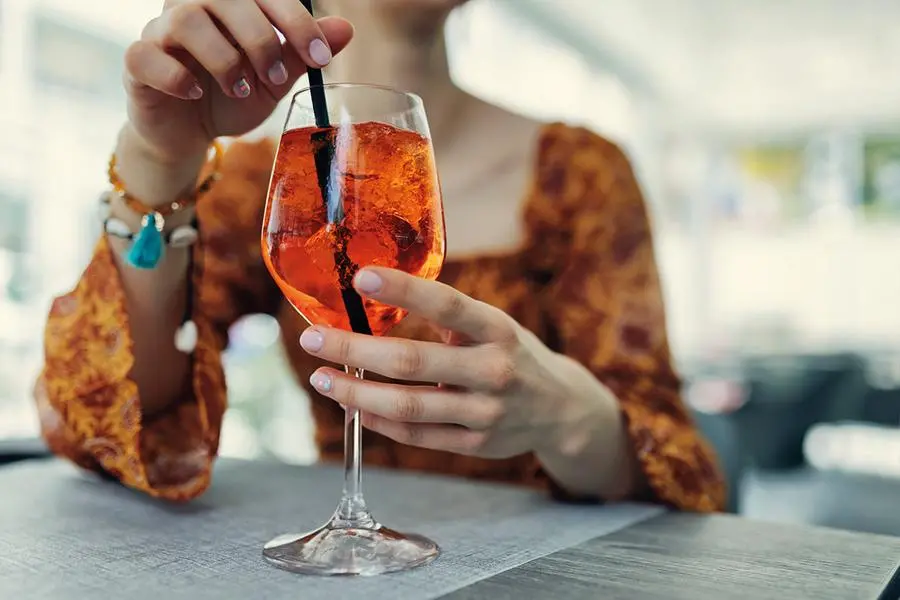
On the news front, the fair intercepts emerging trends. NoLo-Vinitaly Experience debuts in a new guise (2nd floor Palaexpo), dedicated to No and Low alcohol wines: a market which in Italy is currently worth 3.3 million euros but could increase fivefold in four years, while on a global level it is estimated at 2.4 billion dollars with growth prospects of up to 3.3 billion by 2028. And the Xcellent Spirits pavilion (hall C) is born, dedicated to spirits and mixology, a rapidly expanding segment: Italian exports of spirits reached 1.75 billion euros in 2024 (placing Italy in fifth place among world exporters), with a growth of 41% in the last five years.
Vinitaly thus confirms itself as a strategic platform to accompany, on the markets and in the territories, Italian wine (and not only), increasingly at the center of an experience that combines product, tourism and identity, in a phase of profound turbulence between geopolitical instabilities, conflicts, trade duties and changes in consumption.
Italian wine closed 2025 with a negative sign: exports at 7.78 billion euros, down 3.7% on 2024, equal to approximately 300 million euros less, with volumes at -1.9% (Uiv Observatory based on Istat). Above all, the US market weighs heavily, recording -9.2% (1.76 billion), affected by duties and the devaluation of the dollaraccounting for almost 60% of the overall decline. Other non-EU markets are also in difficulty, while European ones are holding up (+0.5%), with Germany stable and positive signs from France and the Netherlands. «Europe has limited the loss and we must start again from here», underlines Lamberto Frescobaldi, president of the Italian Wine Union, indicating the need to strengthen the internal market and at the same time to seek new outlets, from India to South America, thanks to the trade agreement with Mercosur, where there is room for growth.
The second semester proved to be particularly difficult. «The difficulties in third countries are unprecedented», observes Paolo Castelletti, UIV general secretary, «with the United States in strong contraction and negative peaks especially for still bottled red wines, which record the most marked declines». A picture that also involves competitors: France closes with a double decline compared to Italy, while maintaining leadership, a sign of a widespread crisis. Italy limits the damage and gains shares but, Castelletti warns, it is “a Pyrrhic victory”.
Alongside the tensions on the markets, the increases in prices – from glass to packaging – and above all the change in consumption are worrying. You drink less: today six out of ten Italians consume wine occasionally, while only four out of ten do so regularly, the opposite of 2006 (Uiv-Vinitaly Observatory based on Istat and Iwsr). The “occasionalisation” of consumption, including that of boomers, who in the past had turned to wine, and a growing moderation, are having an impact. A cultural change, even before an economic one, which redesigns the future of the sector.