






The best are not necessarily those we think. Mégane Heudiard, dietician-nutritionist, reveals the three key figures to urgently check on your labels so as not to drink “empty water” and ensure strong bones.
“Dairy products are our friends for life”? Yes, and particularly for bone health. But between the aisle of milks from animals (cow, goat, etc.) and the explosion of plant-based milks (almond, coconut, etc.), it’s difficult to make the right choices. Mégane Heudiard, dietician-nutritionist who participated in the book “The Good Choice at the Supermarket” (ed. Thierry Souccar) gives us her simple advice for choosing the best milk for our bones.
First thing to know: milk is considered beneficial for bones when it contains three essential nutrients. “Calcium because it is the builder of bone strength, vitamin D because it allows the body to effectively absorb calcium (without it, calcium is not fixed) and proteins because they actively participate in the very structure of the bone“, our interlocutor immediately specifies. Concretely, good milk must contain around 120 mg of calcium, 0.75 to 1.5 µg of vitamin D and 3 g of protein per 100 ml.
This is naturally the case for milks of animal origin. “The choice of milk depends on its taste and lactose tolerance. If you have no intolerance problems, I recommend semi-skimmed cow’s milk which offers the best compromise in terms of fat while retaining its mineral contributions. If you have difficulty digesting it, you can opt for lactose-free cow’s milk (Matin Léger from Lactel, Lactose-free milk from Candia), sheep’s or goat’s milk which are more digestible.“.
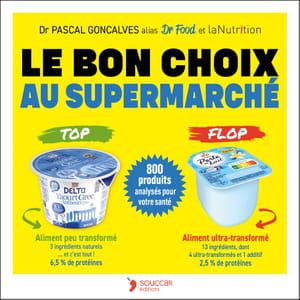
Plant “milk”, on the other hand, are poorer in nutrients. “To be truly useful for your bones, all plant-based drinks (almond, oat, rice, coconut, soy, etc.) must be labeled “enriched with calcium” and ideally with vitamin D.“, specifies the expert. Even enriched with calcium and vitamin D, almond or oat milks remain less complete than soy milk for one reason: proteins. “Enriched soy milk remains the big winner in the plant-based section because it is the only one to also provide the 3 g of protein necessary for bone structure.“. In the guide to “Good choices at the supermarket”, the three most interesting soy milks are: Nature soy drink from Céréal’Bio, Lima natural soy drink and Bjorg Vanilla soy drink.
Please note, new standards now prohibit the calcium enrichment of certain organic plant-based milks. Also, be wary of ultra-processed products: some plant-based drinks add oil or numerous additives to improve the texture. Favor milks with short ingredient lists. Finally, Mégane Heudiard gives us 3 tips to boost our bone capital: split up your intake. “The body cannot absorb all the calcium at once. We only assimilate 30 to 40% per intake. The trick is to spread your consumption of dairy products throughout the day (a glass of milk in the morning, a yogurt at lunchtime, a piece of cheese in the evening) rather than taking it all at once.“. And don’t just rely on milk.
If you are vegan or don’t like milk, other solutions exist: mineral waters rich in calcium (very well assimilated), dairy-derived products (cheeses, yogurts). Beware of “false friends”: vegetables contain calcium, but it is much less well assimilated by the body than that of milk or water. They are a bonus, but rarely a sufficient single source.